



Sign in to share
Shikha Sharma
Every year, companies do performance reviews. They sit everyone down, go through the numbers, ask hard questions, figure out what's working and what isn't, and make a plan for the next quarter. It's uncomfortable, occasionally awkward, and almost universally considered a good use of everyone's time.
Relationships, which are significantly more important than most companies, get none of this. You just keep going. No review, no audit, no one asking whether the current structure is still working for everyone involved. You just wake up one day seven years in and realise you've been running the same operating system since 2019 and nobody has checked for updates.
I find this remarkable. We service our cars. We review our mutual funds. We have annual health check-ups where someone we barely know asks us deeply personal questions about our lifestyle habits and we answer them honestly. But asking our own partner seven structured questions over the weekend feels somehow too formal, too intense, too much like we're in couples therapy before anything has gone wrong.
Which is, if you think about it for more than thirty seconds, completely backwards.
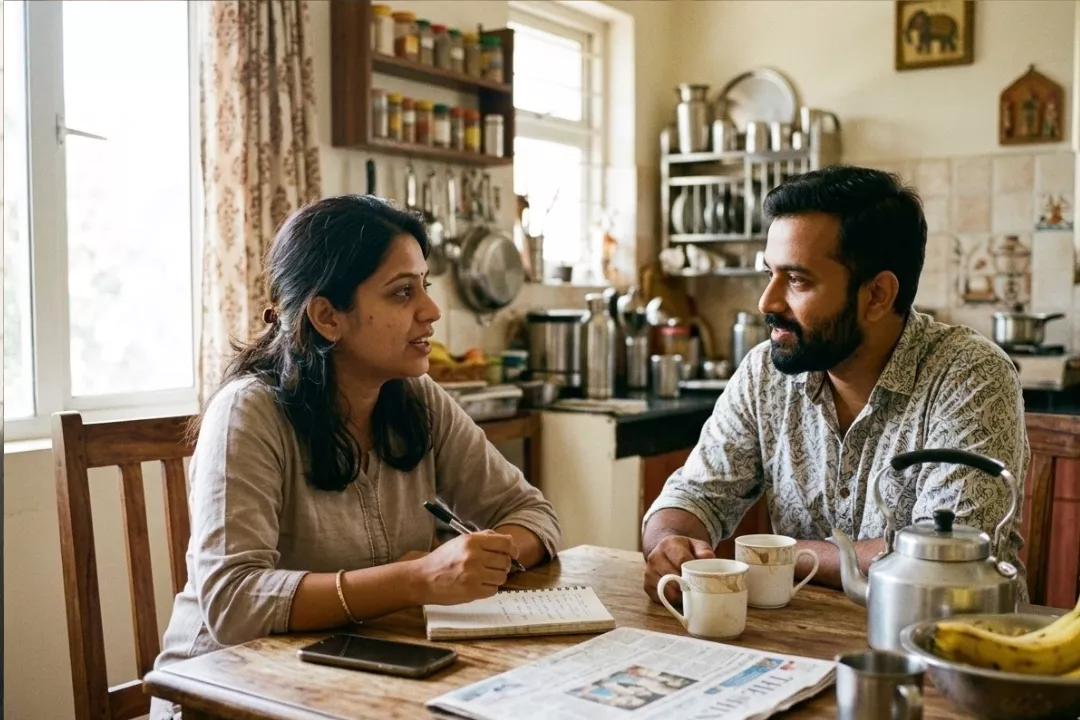
I did this audit with my husband for the first time about two years ago, partly out of genuine curiosity and partly because I'd watched enough couples hit walls that were entirely preventable and decided I didn't want to be interesting in that way. His reaction when I suggested it was the face of a man who was trying to assess whether this was a normal request or the opening move in a very organised argument. It was neither. It was just chai and seven questions on a Saturday afternoon, which is a significantly better use of a Saturday than whatever we would have otherwise done.
We've done it every year since. I recommend it to everyone I know with the enthusiasm of someone who has discovered a restaurant they want all their friends to try. Most of them look at me the way my husband did the first time. A few of them have actually tried it and reported back that it was surprisingly useful and not at all as terrifying as it sounded.
So here are the seven questions. Do them over chai. Put Sunfeast Marie Light on the table because good questions deserve good biscuits and also the ritual of sitting down with something familiar signals to both of you that this is not a fight, this is a conversation, and those are different things even when they cover similar territory.
Question 1: Are we dividing our life fairly right now, and is there anything one of us is carrying that the other doesn't know about?
This is the one that opens the most doors. Because most imbalances in relationships aren't the result of bad intentions. They're the result of invisible labour that never got made visible. Someone started doing a thing, kept doing it, and the other person simply doesn't know it's happening because it happens quietly and competently and without drama.
Ask this question and then actually listen to the answer without getting defensive. The goal isn't to assign blame for past imbalances. The goal is to see the full picture together, possibly for the first time.
My friend Shalini did this question with her husband and discovered he'd been managing their entire investment portfolio alone for three years without telling her, partly because he wanted to handle it and partly because he'd never thought to loop her in. She'd meanwhile been managing every single social obligation, family birthday, and household supply situation without him realising the full scope of it. They'd both been carrying things quietly and feeling vaguely underappreciated. Twenty minutes of honest conversation sorted what three years of silent resentment hadn't.
Question 2: Do we still like each other?
I know. I know how this sounds. But I want you to sit with it for a second, because loving someone and liking someone are genuinely different things, and long-term couples often have enormous quantities of the first while running dangerously low on the second.
Liking someone means you find them interesting. You enjoy their company. If you weren't in a relationship with them, you'd still want to be in the room with them. It means when they start talking about something they're excited about, you're at least mildly curious rather than just waiting for them to finish.
If the honest answer to this question is "not as much as I used to," that's not a death sentence for the relationship. It's useful information. It tells you that somewhere in the routine of sharing a life, you've stopped investing in actually knowing each other. Which is fixable, but only if you know it's happening.
Question 3: What's one thing I do that makes your life easier that I probably don't get enough credit for?
This question exists to do something very specific: to make both of you feel seen. Because in most relationships, both people are doing things that go unacknowledged, and the accumulation of unacknowledged effort is one of the quieter ways resentment builds.
My husband's answer to this the first time was that I always refill the water filter without being asked, which I found both touching and slightly hilarious because I had no idea he'd noticed. My answer was that he takes out the trash every single time without it ever becoming a conversation, which he received with the humble satisfaction of someone who has been doing a thankless job for years and is finally getting their moment.
We spent the next ten minutes appreciating each other for things that had been happening invisibly in the background of our marriage for years. It cost nothing. It was unexpectedly lovely.
Question 4: Is there something I've been wanting to say to you that I keep not saying?
This is the question that requires the most courage and produces the most useful answers. Because most of us are walking around with at least one thing we've been meaning to raise, haven't raised because the timing was never right or it didn't seem important enough or we didn't want to start something, and it's been sitting in the background quietly gathering weight.
The answer to this question is not always comfortable. Sometimes it's something small. Sometimes it's something that turns into a longer conversation. But it is almost always better out than in, and asking the question explicitly gives both people permission to say the thing they've been filing away.
Question 5: Are we growing in the same direction?
People change. This is not breaking news. But the specific way people change is something most couples never explicitly track, which means you can end up years into a relationship having both evolved significantly without ever checking whether you're still pointing in roughly the same direction.
This doesn't require identical ambitions or perfectly synchronised life goals. It just requires enough shared direction that you're not accidentally pulling against each other. If one of you wants to move cities and the other has never considered it, that's worth knowing. If one of you is fundamentally changing what they want from their career or their life or their daily existence, that's worth sharing before it becomes a source of unexplained friction.
Question 6: What do you need more of from me right now?
Not in general. Right now. Because what people need from their partners shifts constantly depending on what's happening in their lives, and most of us are still responding to what our partner needed two years ago rather than what they actually need today.
Ask this question and then, crucially, believe the answer. Don't argue with it or immediately explain why providing that thing is difficult. Just receive it. Then answer it yourself. Then figure out together what actually doing something about it looks like.
Question 7: What's one thing we should do more of together, purely for fun, that has nothing to do with being productive or responsible adults?
This one is my favourite because it's the antidote to every other question on this list. All the others are about maintenance and honesty and making sure the partnership is structurally sound. This one is about remembering that the point of all that maintenance is to protect something that's actually enjoyable.
My husband said road trips the first time we did this. I said trying restaurants we've never heard of on someone else's recommendation. We've done both more in the past two years than in the three before that combined.
That's the whole audit. Seven questions, one Saturday afternoon, and whatever biscuits are in the house. No consultants required.
Your relationship probably doesn't need fixing. But it might benefit from a check-in. Most things do.


