



Sign in to share
Shikha Sharma
Nobody tells you when you have been approved.
There is no announcement. No moment where someone sits you down and says we have discussed it and the verdict is in your favour. The approval happens quietly, across multiple visits, through a series of signs that you have to know how to read because nobody will explain them to you while they are happening.
I did not know how to read them when I started. I learned by paying attention and by asking my husband things after the fact that I should have been able to figure out in real time but could not because I did not yet have the vocabulary.
Six years later I have the vocabulary. I am going to share it.
The first sign, and the most important one, is the tea that appears without being asked.
In the early visits, tea was offered. Formally. Someone asked if I wanted tea and I said yes and tea was made. This is hospitality. This is what you do for a guest. It says nothing about approval. It says you are in our house and we are not animals.
The tea that appears without being asked is different. This tea says you are expected here. Your presence has been factored into the household. Nobody had to ask whether you wanted tea because the answer was already known and the tea was already being made.
The first time this happened I did not notice. My husband noticed. He mentioned it on the way home, casually, in the way he mentions things that matter more than he presents them as mattering.
He said his mother had made tea without asking.
I said that's nice.
He looked at me and said yes, it is.
I understood later. By then we were home and the moment had passed but the information had been filed in the correct folder.
We were sitting in his parents' living room last month, all four of us, chai on the table and Sunfeast Marie Light on the plate because his mother keeps them for when I visit, which is itself a sign I only identified after several visits, and I thought about that first tea that appeared without being asked and how far we were from that first visit where I did not know what anything meant.
The WhatsApp Group
Being added to the family WhatsApp group is a milestone.
Not the outer group. Every family operates multiple WhatsApp groups at different levels of intimacy. The outer group has the announcements, the birthday wishes, the festival greetings. Being added to this group means nothing. You are on a mailing list.
The inner group is different. The inner group is where things actually happen. The planning. The complaints. The family news not for general circulation. The photograph of something funny that only people who know the context will find funny.
Being added to the inner group means you are trusted with the interior of the family.
I was added to the outer group after the third visit. I was added to the inner group eight months later, without announcement. I woke up one morning and there was a group I had not been in the night before and there were forty-three messages from the previous evening that I had missed and one of them was a photograph of my husband's uncle doing something at a family dinner that was apparently very funny to everyone who had been there.
I did not know the context. I was in the group. I would learn the context. The being in the group was the part that mattered.
The Food to Take Home
The food that is pressed into your hands as you leave is the most Indian expression of approval available.
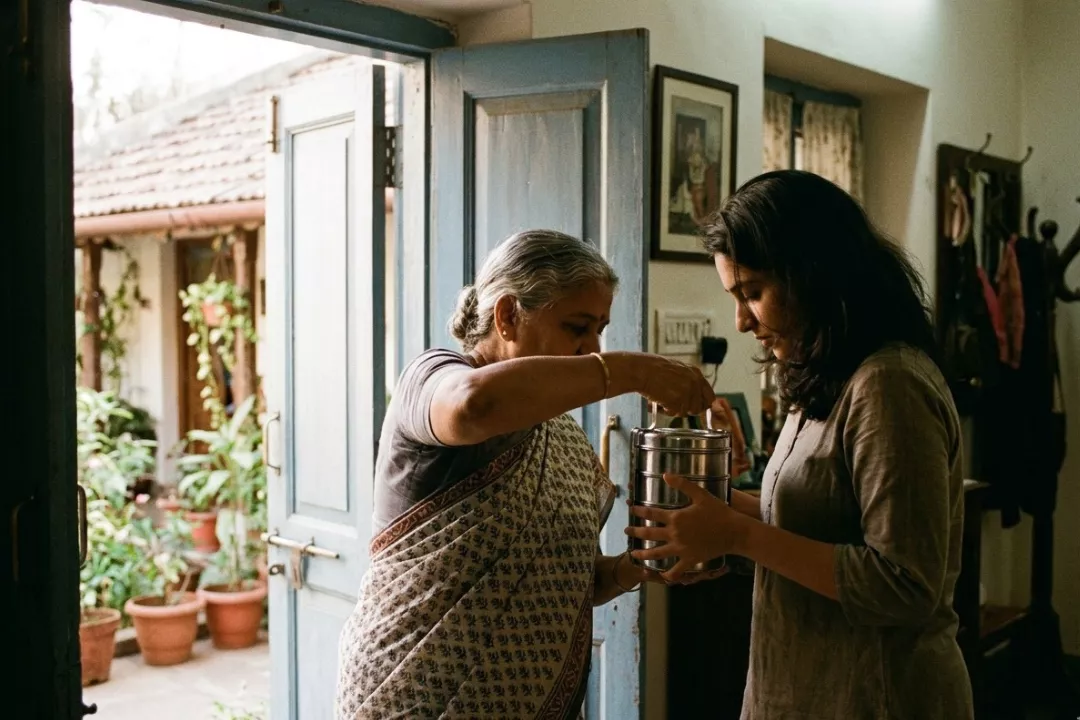
Not the formal meal. The meal is always there. The meal is hospitality. The food to take home is personal. It is selected for you. Packed for you. Handed to you at the door with instructions about heating and storage delivered in the tone of someone who expects you to follow them because they know you well enough to give you instructions.
The first time my mother-in-law sent food home with me it was a single container. Something she knew I had mentioned liking at a previous meal. I had mentioned it once. She had remembered. She had made it the next time and packed some for me to take.
I did not say anything about it in the car. My husband did not say anything either. We both knew what it meant.
The containers have multiplied over six years. I now leave their house with a bag of things regularly. She tracks what I have liked across multiple visits and produces it at intervals that suggest a level of attention I find both touching and slightly astonishing.
The Opinion Request
Being asked your opinion about something real is a specific category of approval that is easy to miss.
Not your opinion about neutral things. Your opinion about the food, whether you enjoyed the evening. These are courtesy questions. They do not require trust.
Being asked your opinion about a real thing is different. A family decision. A situation involving one of the members. Something where your answer matters and could be acted on. This means you are being treated as a person whose perspective has value inside this family.
My husband's mother asked me something about a family matter about two years in. A real thing. Something with genuine stakes. She asked me quietly, in the kitchen, while we were doing something together, in the way that real questions get asked, sideways, without making a production of it.
I gave her my honest answer. She listened. She said that was useful.
We went back to what we were doing. Something had shifted and we both knew it and neither of us mentioned it directly.
The Name
The last sign, and the most subtle one, is what they call you.
In the early visits there is a careful neutrality to the address. You are being referred to without a name that places you, because the right name has not yet been decided.
Then at some point a name appears. A version of your name modified in the way Indian families modify names. Shortened, changed, given an ending that marks affection. Or a term entirely, something that places you in the family structure by relationship rather than by name.
The first time my husband's grandmother called me something one syllable different from my name I was mid-conversation and I almost missed it. I registered it and continued talking and said nothing and later, in the car, I mentioned it to my husband very quietly.
He said yes.
Just yes.
We drove the rest of the way home in a silence that had nothing empty about it.
The name means you are no longer a newcomer. You are someone they have made a word for. Someone who has a place in the vocabulary of this family.
That is what approval looks like. Nobody announces it. You just notice, one day, that you have it.


