



Sign in to share
Dhruv Saxena
I moved to Bangalore three years ago. My mother, who lives in Delhi, has not moved anywhere. But she has, in that time, become a leading expert on Bangalore's weather patterns, traffic situation, air quality index, civic infrastructure, political climate, and approximate flood risk by neighbourhood.
She did not ask to become this expert. She just started watching the news and couldn't stop applying it to me.
The first time I realised something had changed was about two weeks after I moved. There was a minor waterlogging situation in some part of Bangalore after heavy rain. I didn't know about it. I was at work. My mother, however, had seen it on the news, cross-referenced it with the approximate location of my office, pulled up Google Maps, identified two alternative routes home, and called me to share her findings.
I was eating lunch at my desk. I did not know it had rained.
This is when I understood that moving cities doesn't just change your life. It changes your mother's entire relationship with information.
The Transformation
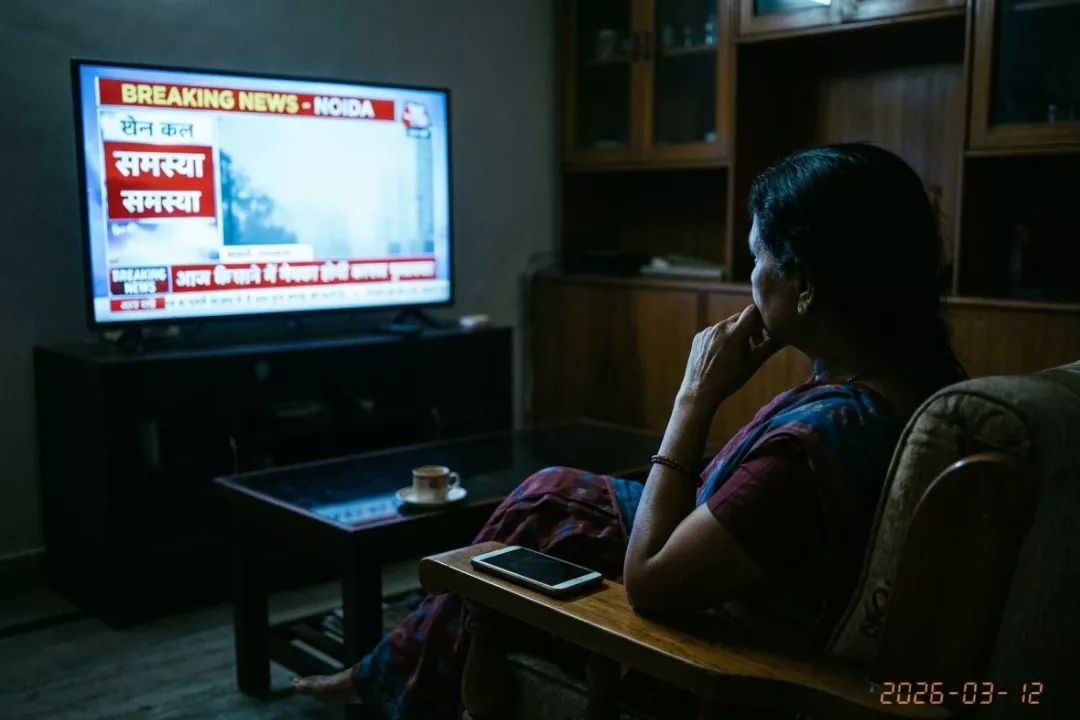
Before I moved, my mother watched the news the way most people watch the news. Passively. With mild interest. Occasionally tutting at something. The news was about the world.
After I moved, the news became about me. Every headline is now personally evaluated for its relevance to my continued existence. A heatwave in Karnataka is not a weather event. It is a direct threat to her son who she is fairly certain doesn't drink enough water even in normal temperatures. A traffic pile-up on the Outer Ring Road is not a traffic update. It is an incident that may or may not involve someone she loves and she will not rest until she has confirmed otherwise.
I sat with my mother during one of my visits home last year. She'd put out Mom's Magic biscuits with the evening chai, which she does automatically now whenever I'm home, like my presence activates some kind of hospitality reflex. We were watching the news together and a story came on about protests somewhere in Bangalore. Mild protests. Very far from where I live.
She turned to look at me immediately.
"I don't live there," I said, before she could speak.
She turned back to the TV. Took a biscuit. Did not look entirely convinced.
The Threat Assessment System
My friend Karan moved to Mumbai two years ago. His mother in Lucknow has since developed what he describes as a forensic interest in Mumbai's monsoon situation. Every year, around June, she begins sending him rainfall updates with the regularity of a weather service. Not just general updates. Specific updates. Area-wise. With opinions.
"Dharavi mein bahut baarish hai," she will text, at 7am, as if Karan has requested a daily briefing and she is simply delivering it.
He has not requested a daily briefing. He gets one anyway.
The thing is, she's not wrong to be worried. Mumbai floods are genuinely serious. But Karan lives in Powai, which is on a hill, and is arguably the safest place in Mumbai during monsoon season. He has explained this to her multiple times. She receives this information politely and continues sending the updates.
My other friend Shreya moved to Chennai and her mother in Pune has become so well-informed about Chennai's cyclone situation that Shreya jokes she could probably be hired by the meteorological department. "She knows the names of cyclones I've never heard of," Shreya told me. "She tracks them. She has opinions about which direction they're going. Last year she called me before the IMD had even issued an alert."
Her mother, when asked about this, said she just keeps an eye on things. Just in case.
The Calls
The pattern is always the same. Something happens somewhere in the city you live in. It appears on the news. Your phone rings within a timeframe that suggests your mother was either watching live or has set up some kind of alert system that you were not informed about.
The call begins with a question that is technically a question but is actually a demand for proof of life. "Did you see what happened?" she asks. What she means is: are you alive, are you nearby, can you confirm your continued existence, because I just saw something on television and I need data.
The correct response is immediate. If you don't pick up, she calls again. If you don't pick up again, she texts. If you don't respond to the text, she calls your sibling or your father or, in extreme cases, your friend whose number she saved three years ago for exactly this kind of emergency.
I know this because I once missed two calls during a meeting and came out to find a small but decisive family mobilisation had begun on my behalf. The incident in question was a minor power outage in a different part of the city. I had experienced no power outage. My mother had experienced significant anxiety.
What It Actually Is
Her behaviour is not irrational. It just looks irrational from the outside.
When I lived at home, my mother had real-time information about my whereabouts at all times. She knew when I left, when I was expected back, what route I took, who I was with. If something happened in the city, she could locate me in her mental map and determine my proximity to danger.
When I moved, she lost that real-time feed. All she has now is the news and a phone that I don't always pick up immediately. So she watches the news more carefully. She tracks things. She builds a model of my city in her head so that when something happens, she can at least make an educated assessment of how worried to be.
It's not anxiety. It's data collection under difficult conditions.
I find it equal parts touching and mildly exhausting. Mostly touching.
The Part That Gets Me
Last monsoon, there was actual flooding near my area. Not dangerous, but real. Water on the roads, the whole thing. I called my mother before she could call me, which I've learned is the superior strategy.
She picked up immediately. "I saw," she said.
Of course she had.
I told her I was fine, I was inside, I had food and water, everything was okay. She listened. Then she asked if I had enough biscuits at home. Because apparently in an emergency, after confirming basic survival, the next priority is snacks.
I did have biscuits. I told her so. She seemed genuinely relieved.
That's the whole thing, really. She's not watching the news because she's a worrier. She's watching the news because she loves someone who lives somewhere she can't see. And until she can see that you're okay, the news is the closest thing she has to knowing.
The least you can do is pick up the phone.


