



Sign in to share
Shikha Sharma
I was on the phone with my friend Deepika last month when she said something that stopped both of us cold.
Her husband had left a wet towel on the bed. Again. And she’d walked into the room, seen it, and said, out loud, to no one in particular, “does this look like a towel stand to you?”
She called me immediately after. “I heard my mother’s voice come out of my mouth,” she said. “Her exact words. Her exact tone. I even did the thing where you pick up the towel with two fingers like it’s evidence.”
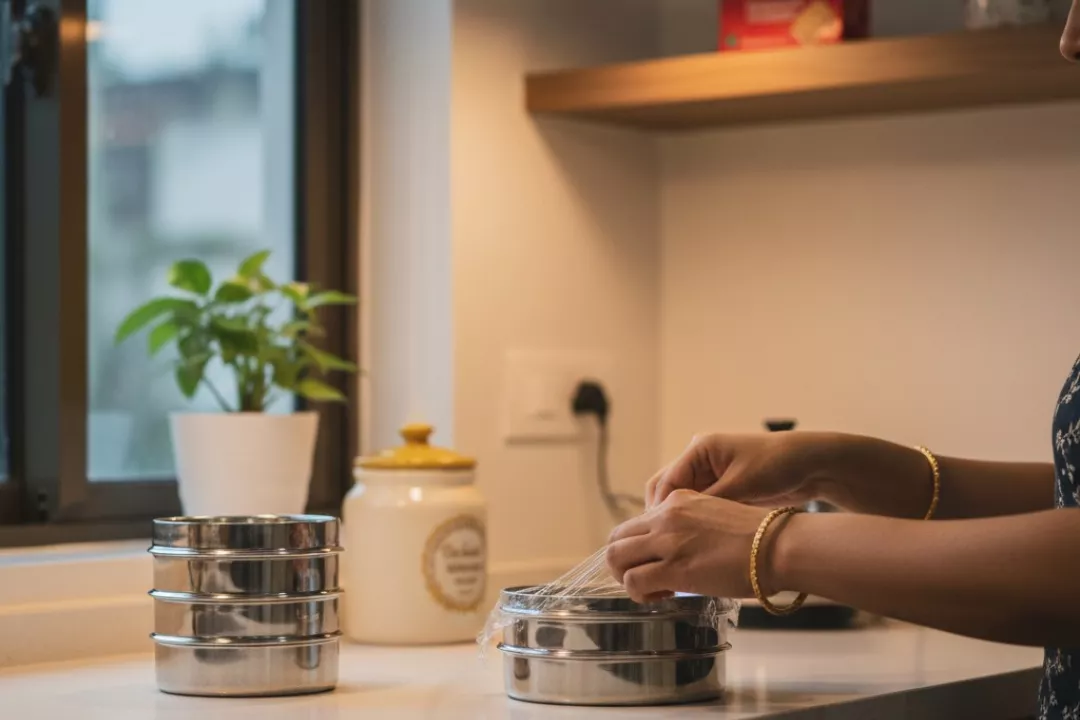
I laughed for a long time. Then I told her about the week before, when I’d covered a half-cut onion in the fridge with a little steel bowl, smoothed the cling wrap over a container of leftover sabzi with unnecessary care, and then stood back and looked at my fridge with quiet satisfaction. Exactly the way my mother does. The head tilt and everything.
We’ve become them. And the funniest part is we never saw it coming.
The Moment It Happens
There isn’t one moment, actually. It’s a series of small ones that you only notice in retrospect.
It starts with the fridge. You begin caring about how it’s organised. Things have sections now. The dal goes on the second shelf. Leftovers get covered properly, not just shoved in with the pot lid balanced on top. You find yourself mildly irritated when someone puts the curd where the curd does not go.
Then it moves to food in general. You start sending people home with containers. You cannot help it. Someone visits, they’re leaving, and your hands are already in the kitchen packing up whatever’s left. “Take this, it’ll just sit here.” Your mother has said this ten thousand times. Now you say it. You mean it exactly as much as she did.
Then come the phrases. Oh, the phrases!
The Phrases
Every Indian daughter has a personal roster of things she swore she would never say. And every Indian daughter is now saying all of them.
“Khaya kya?”
As a greeting, before hello, before anything else. The first words out of your mouth when someone you love picks up the phone.
“At least have some chai before you go.”
Said to people who are already putting their shoes on. Said with genuine distress.
“You look thin.”
Said to people who have not lost a single gram. Said with the confidence of someone who knows better.
“I made extra, it's no trouble.”
It was trouble. You made it anyway.
My cousin Rhea told me she caught herself telling her 26-year-old flatmate to “wear a vest, it’s getting cold.” A vest. To a grown adult. In October. Her flatmate is from Ooty.
The Worry
This is the big one. The one that sneaks up on you most completely.
Indian mothers worry as a full-time occupation. They worry with focus and dedication and a creativity that borders on impressive. They can construct a chain of disaster from the most ordinary starting point. You mentioned you were tired, which means you’re not sleeping, which means your immunity is down, which means you need to start having haldi doodh, and also have you had your eyes checked recently?
I used to find this exhausting. I used to roll my eyes and say “Maa, I’m fine” and move the conversation along.
Now I do the exact same thing to people I love. My younger sister told me she was skipping breakfast because she was running late and I spent the next four minutes explaining, calmly but with increasing urgency, why that was not an acceptable long-term strategy. I sent her a follow-up voice note. I’m not proud of it but I stand by the content.
The worry doesn’t feel like worry from the inside. It feels like caring. It feels like just making sure. Which is probably exactly how my mother felt every single time.
The Food Thing
I want to spend a moment on food specifically because this is where the transformation is most complete and most undeniable.
I now own a dabba for every purpose. I have a system for making rotis in bulk and freezing them, which I once mocked openly. I know which brand of atta makes softer phulkas and I have opinions about this that I will share unprompted. I made my mother’s exact dal last Diwali, just from memory and instinct, adjusting as I went. And when I tasted it and it was right, I felt something very close to triumph.
I also discovered Sunfeast Mom’s Magic biscuits in my own pantry recently, bought on autopilot during a grocery run, and realised my mother has kept them in her kitchen my entire life. I didn’t even consciously decide to buy them. My hand just reached for them. Some things, apparently, get inherited without ceremony.
Why It’s Actually Fine
I’ve accepted it. She was right about most of it.
The wet towel does not belong on the bed. People should eat breakfast. It is cold enough for a vest sometimes, Rhea’s flatmate’s geographical origins notwithstanding. Sending people home with food is one of the most loving things you can do. Covering leftovers properly is just good practice. Chai does make most situations slightly more manageable.
Your mother wasn’t nagging. She wasn’t worrying unnecessarily. She was paying attention, in the particular way that only people who love you very specifically are capable of paying attention. And somewhere along the way, without meaning to, you learned to do the same.
The voice that comes out of your mouth when someone leaves a wet towel on the bed? That’s not an embarrassing accident. That’s years of watching someone love people loudly and without apology, finally finding its way into you.
The real joke isn’t that you became her.
The real joke is that it took you this long to realise she was the person you were always going to become. And that you’re genuinely okay with it.
Call her and tell her. She’ll say she knew all along. She’ll be right.


