



Sign in to share
Shikha Sharma
I know exactly when it happened for me.
We'd been together for about eight months. It was a Sunday evening, nothing special, and I was in a bad mood for no particular reason. The general low-grade irritability that descends sometimes with no clear cause and no obvious solution. On previous Sundays I would have managed it. Presented the fine version of myself. Smiled through it.
That evening I didn't. I just said, "I'm in a mood. I don't know why. I'm not going to be very good company tonight."
He looked at me. Then he said, "okay" and went back to what he was doing.
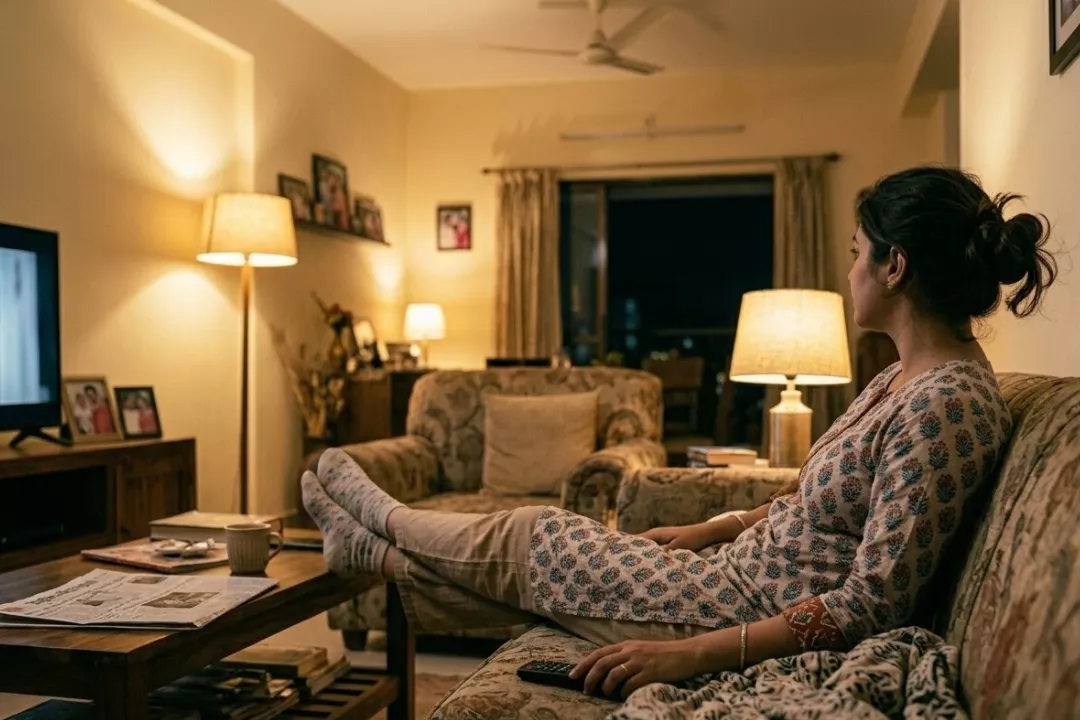
That was it. No interrogation. No attempt to fix it. No performance required from me and no performance demanded from him. We sat in the same room, both doing our own things, and I was in my mood and it was completely fine.
I remember thinking, oh. So this is what it's supposed to feel like.
I hadn't known I was performing until I stopped. That's always how it works.
The Performance We Don't Notice
In the early months of any relationship, you're on. Not dishonestly. Just with a heightened version of yourself that you present because you want to be liked, you want to be chosen, you want the other person to see you at your best.
This is normal. It's also exhausting, in a low-grade way that you don't fully register until you're allowed to stop.
My friend Priya told me the first time she cried in front of her husband, properly, ugly-cried about something that wasn't even that serious, she immediately felt embarrassed and started apologising. He looked confused. He said, "why are you apologising?" She didn't have a good answer. She'd just been so used to managing how she appeared to him that the idea of appearing like this, unmanaged, felt like a failure.
He handed her a tissue. She cried for a few more minutes. They had chai. She said it was one of the first times she felt like he actually knew her.
That's what the performance costs. It keeps people at the exact distance you're trying to close.
I'd bought Sunfeast Marie Light that evening, the Sunday of the bad mood, because I'd been at the shops earlier and it was the kind of day that required something familiar and low-effort. We ate them at some point, both still doing our own things, and I remember thinking that this was what I'd wanted without knowing I'd wanted it. Not the grand romantic version of a relationship. This. The version where you could just be a person having a bad Sunday and it was fine.
When It Happens
The moment is different for everyone. For some people it's a mood, like mine. For others it's saying something honest that they'd normally edit. For others it's showing a part of themselves they'd kept back.
My colleague Rohan said his moment was when he admitted he didn't like something his wife had always assumed he liked. They'd been doing a thing together regularly for over a year because she thought he enjoyed it. He'd gone along with it because he didn't want to disappoint her. When he finally said actually, I've never really liked this, she laughed for a long time. Then she said she didn't like it either. They'd both been performing for each other and neither had noticed.
They stopped doing the thing. The relationship felt immediately more real.
My friend Kabir's moment was messier. A fight, a bad one, where he said things he'd been carefully not saying for months. He expected it to damage things. It didn't. His wife said afterwards that she felt like she'd finally met the actual person she'd married. The fight had been unpleasant. The aftermath was closer than anything that had come before it.
What Makes It Possible
The performance stops when you trust that the real version will be okay.
That trust doesn't come from reassurance. It comes from accumulated evidence. Small moments where you showed something true and it was received well. Times when you were less than your best and the other person stayed. Evidence, collected over time, that you don't have to keep earning your place in this relationship.
My friend Divya told me she stopped performing the day her husband saw her genuinely struggling, properly struggling, not managing it, and didn't try to fix it or minimize it. He just sat with her in it. She said something shifted permanently after that. She'd been waiting, without knowing she was waiting, to find out what he'd do when she wasn't fine. When she found out, she was able to stop preparing for the worst.
That's the thing about the real beginning. It's almost never a grand moment. It's usually something small. A bad mood on a Sunday. An honest admission. An ugly cry that doesn't need an apology.
Why It's the Real Beginning
Everything before the performance stops is a version of the relationship. Everything after is the actual thing.
The actual thing is quieter. Less romantic in the cinematic sense. More comfortable. More sustainable. Built on the specific knowledge that this person has seen you unedited and stayed.
Sameer, my friend from the last piece, texted me last week. He said he'd had a moment with the person he's seeing. Nothing dramatic. He'd just been tired and said so honestly instead of being fine. She'd been tired too. They'd sat quietly together and he said it felt different from anything he'd managed before.
He said, "I think I stopped performing."
I said, "that's the beginning."
He said, "of what?"
I said, "everything."


