



Sign in to share
Shikha Sharma
My husband changes the gas cylinder with the seriousness of a man who has been called in by the government.
The rest of the house understands this as a cylinder change.
He understands it as an event.
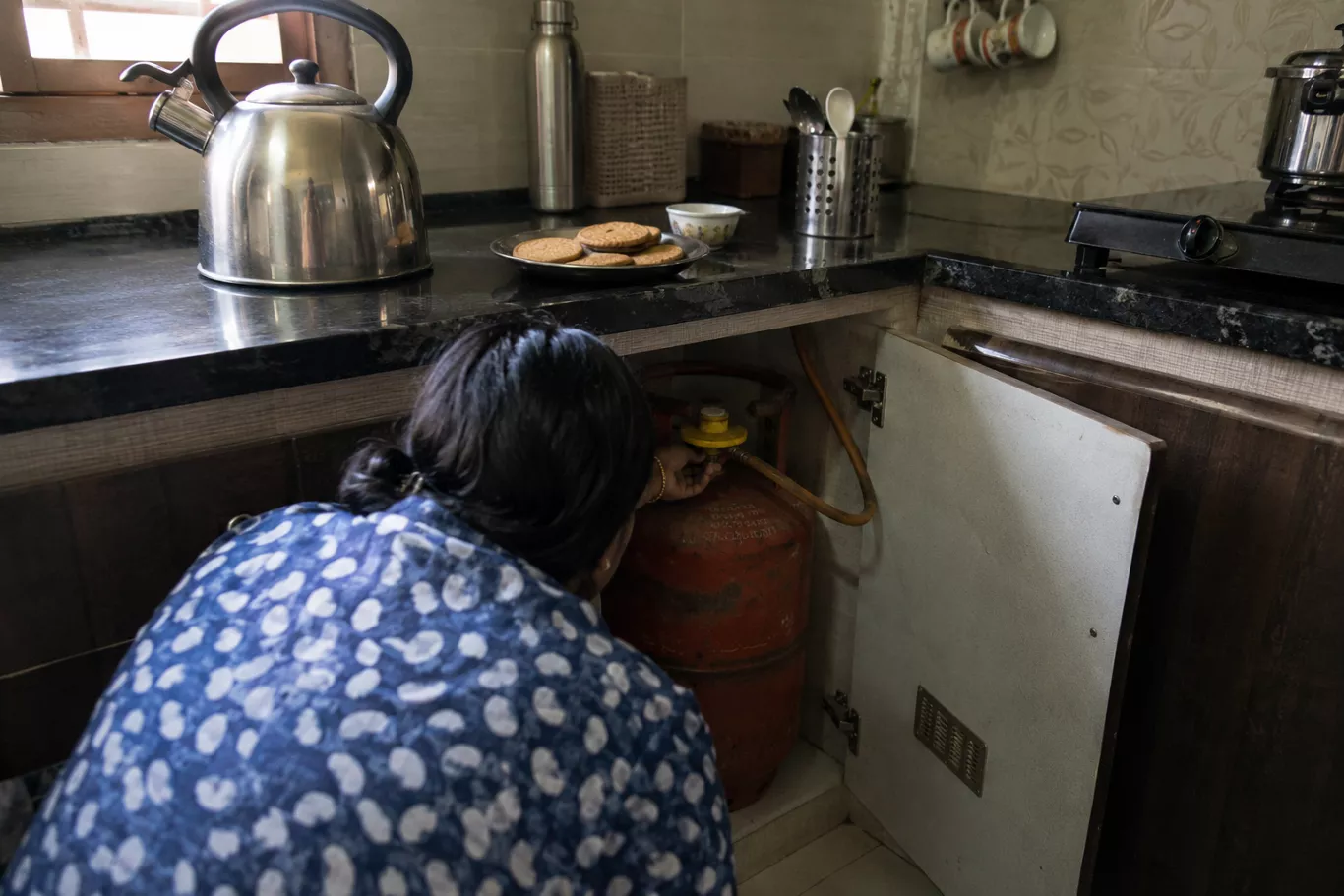
Last month, the flame became weak at 8:40 in the morning, which is the exact time a kitchen chooses when it wants to make a point. I was making tea. He was reading messages at the dining table, eating Sunfeast Marie Light biscuits in the slow, absent-minded way that makes crumbs appear in places nobody can explain.
The flame gave one tired blue sigh and lowered itself.
"Cylinder," I said.
He looked up.
His face changed.
Not fear, exactly. More like respect mixed with a small amount of theatre.
He stood up, wiped his hands, and said, "Move."
I moved because I wanted tea, and also because he had become unbearable in a useful direction.
**The Ceremony Begins**
First, he opens the kitchen window.
Then he turns off the knob.
Then he turns it again, to confirm what his own hand has already done.
Then he bends down and looks at the cylinder as if it might speak.
I stand near the counter and ask if he needs help.
He says no in a tone that means help would insult the operation.
There is always a cloth involved. I do not know why. The cloth is not used for anything I can identify, but it is held near the regulator like a prop from a training video. He loosens the old cylinder, pauses, listens, sniffs, then looks at me.
"Do you smell anything?"
"No."
He sniffs again.
"Wait."
We wait.
Nothing happens because the gas cylinder is not writing suspense.
My friend Priya says her husband also asks everyone to stand back while changing the cylinder. She once asked if she should evacuate the building. He said, "Don't joke." She said that made it harder not to joke.
I understand her.
**The New Cylinder Must Be Judged**
The full cylinder lives in the utility area, where it waits with the quiet threat of heaviness.
My husband drags it in with effort he tries to hide. I offer to help. He says, "I got it," while making the sound of someone who does not fully have it.
Then comes the inspection.
Seal intact. Cap removed. Regulator aligned. Rubber pipe checked. Stove knobs checked again. Window still open. My breathing apparently monitored without consent.
He says, "Don't switch anything on."
I am holding a spoon.
Still, I nod.
Karan once told me his father changes the cylinder in complete silence. Nobody is allowed to ask questions. When the flame comes on, the whole house returns to normal life as if a bridge has been crossed. Karan said he did not learn how to change a cylinder until he was twenty-eight because the atmosphere around it made it seem like family technology beyond his rank.
This is exactly how these things happen. One parent performs a task with such gravity that the child assumes there is a secret manual.
There is no secret manual.
There is a regulator and fear.
My own father treated the cylinder with less drama but more commentary. He would call me to watch, then explain every step while doing it too fast for learning. "See, press here," he would say, with his hand blocking the only useful view. By the time I was old enough to manage it, I had inherited the anxiety without the confidence. The first time I changed one alone, I opened every window in the flat, called my mother after attaching the regulator, and asked if it was normal that nothing had happened. She said, "What should happen?" I had no answer. I suppose I expected a certificate.
So when my husband becomes solemn, I recognise the family training. Different houses, same small fear wearing responsibility's clothes.
**I Am Not Better**
Before this becomes unfair, I should say I am no hero.
I can change the cylinder. I know the steps. I have done it alone. But when he is home, I let him do it because he has created the entire role for himself and it would be rude to remove the department.
Also, I enjoy the show.
This is not flattering, but marriage is full of small audiences.
He gets to be the calm cylinder man. I get to stand aside with tea leaves and watch him behave like one wrong click may alter the history of our flat.
Meera says she lets her husband reset the router for the same reason. She knows how to do it. She could do it faster. But he approaches the router with a kind of injured expertise that deserves space. He unplugs, counts, plugs, looks at the lights, and then announces, "Now it will come." Sometimes the internet returns. Sometimes it does not. Either way, he has served.
Our cylinder is his router.
**The Flame Test**
The final stage is the flame test.
He attaches the regulator. He presses. There is a click that sounds louder than usual because everyone is listening. He applies a little soap water around the pipe connection, which I once praised and have regretted ever since because now he does it with visible pride.
No bubbles.
He looks satisfied but not relaxed.
The first burner is turned on.
Click.
Click.
Flame.
For two seconds, we both look at it like people in an old science textbook discovering fire.
Then he adjusts the knob.
"Good," he says.
I say, "Tea?"
He says, "Wait two minutes."
For what, I cannot say.
Maybe the cylinder needs to settle emotionally.
Nikhil says his wife once changed the cylinder while he was on a call, then forgot to mention it. Later, he opened the kitchen cabinet and saw the new one attached. He said he felt both relieved and unemployed.
That is the danger of competence in marriage. It can remove someone's chosen identity before lunch.
**The Story Is Told Later**
By evening, the cylinder change becomes part of the day's record.
Not a large story. Just a line.
"Cylinder changed today," he says on the phone to his mother.
His mother says, "You checked properly?"
He says yes.
She says, "Again check at night."
Now I know where he got it.
After dinner, I find him in the kitchen, bending down to look once more at the regulator. He pretends he dropped something.
I say nothing.
There are moments when love is allowing a person their unnecessary second inspection.
Later, we sit at the dining table with tea. The Sunfeast Marie Light packet is open again. The house smells faintly of ginger, because the tea finally happened. He eats a biscuit and says, "Cylinder is fine."
I say, "Thank God you were here."
He looks up, suspicious.
I keep my face straight.
He decides to accept the compliment because marriage also requires selective blindness.
The next morning, the flame is strong. He lights the stove, watches it for one extra second, and leaves for work with the quiet dignity of a man whose department has performed.
I make tea.
I do not tell him I checked the regulator after he left.
Some habits are contagious.


