



Sign in to share
Shikha Sharma
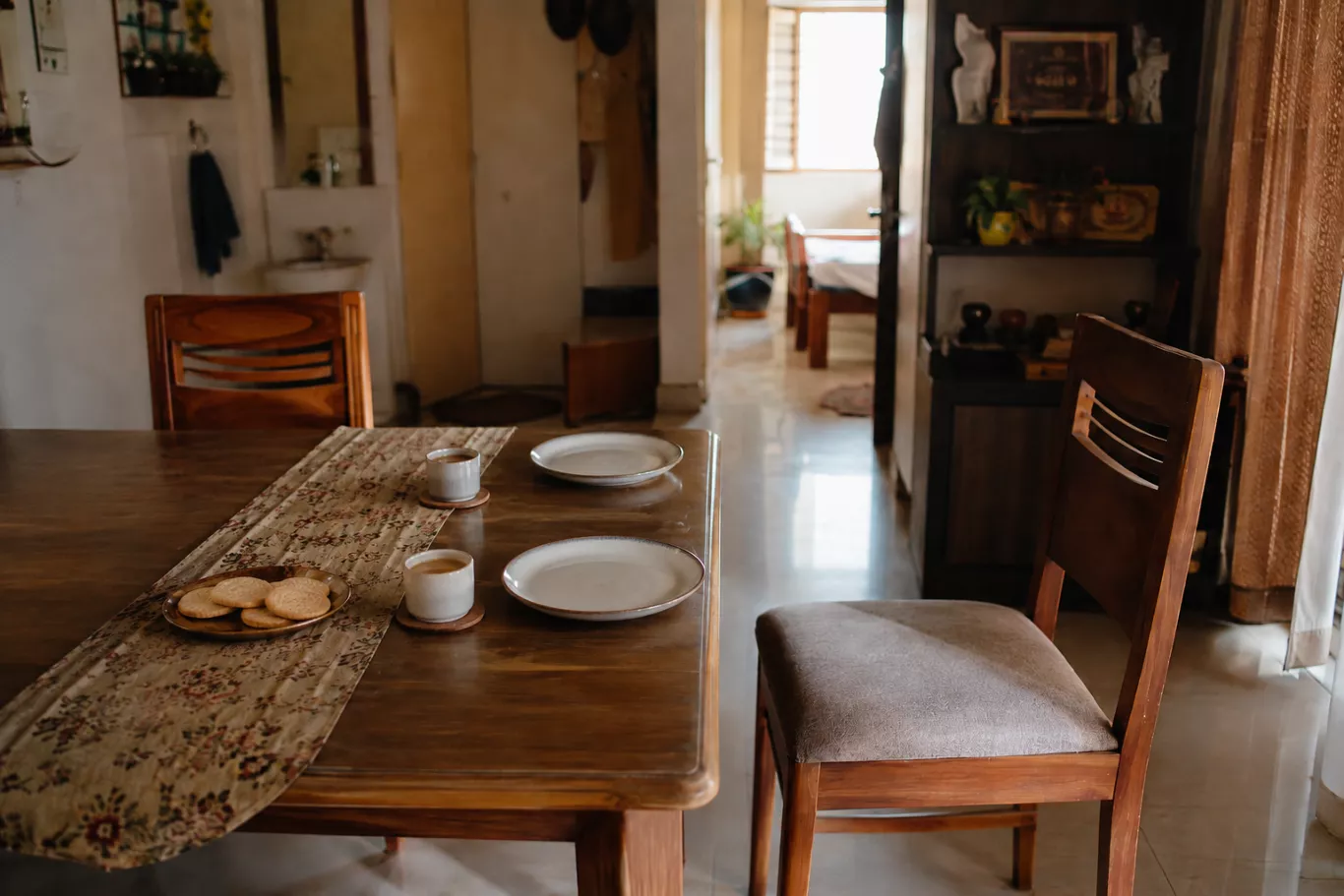
I sat in the dining chair nearest the fan and my husband stopped walking. That pause told me I had entered disputed territory. No one had told me this chair had an owner. The plates were out, the Sunfeast Marie Light packet was still on the table from tea, and he stood behind me like I had occupied a border.
The exhibit was the dining chair. The behaviour was simple: he stood behind me like I had occupied a province. That was enough for both of us to begin.
He saw me seeing the dining table seat.
That is the exact moment this marriage becomes a courtroom.
"What?" he asked.
No innocent man says what that quickly.
**The Chair Had a Secret Owner**
I pointed at the dining table seat.
He made the face men make when they are about to defend the dining chair from fair criticism.
He said that was his side, though no treaty had ever been signed over dal.
I repeated his sentence about the dining table seat back to him, because sometimes a person needs to hear the case in their own voice.
He said I was making it sound worse.
I said I was making it sound accurate.
The tea waited. The biscuits waited. Peace stood near the door and considered leaving.
**Fan Angle Became Evidence**
His logic had a shape.
According to him, the situation around the dining table seat was fine because nothing truly bad had happened yet. This is a full belief system in many homes. A thing is acceptable until it breaks, leaks, stains, overflows, smells, collapses, or invites a guest to notice it.
My belief system, at least in the matter of the dining chair, is less adventurous.
I like fixing small things while they are still small. With the dining chair, that preference was wide awake. I like a house where the next person does not need a warning label. I like not discovering a problem through wet socks, cold tea, foam, buzzing, beeping, or a husband saying, "Oh, that happened again?"
He called this overthinking about the dining table seat, which is what people say when they have run out of defence and still want to keep the tone.
I called it memory with receipts.
I moved only after asking for proof of ownership.
He watched me do it with the patient face of a man married to a department.
**Priya Had Heard This Speech**
I told Priya about it later.
Priya says her husband claims one dining chair because it has the best fan angle, which is a real sentence in their house.
That is the relief of these conversations. You start by thinking your house is odd. Then one friend says the exact same thing has happened near their sink, balcony, fridge, table, dustbin, or washing machine, and suddenly your private irritation about dining table seat becomes part of a wider married syllabus.
Nobody warns you about this before marriage.
They talk about values, families, money, careers, children, food, festivals. No one says, please discuss the future of the dining chair, where the scrubber will live, how full a dustbin may get, what counts as remembering, and how many beeps a microwave is allowed before someone becomes personally involved.
These are not side issues.
These are the issues with slippers on, usually standing two inches from the exact place where someone should have fixed them, as the dining table seat had kindly demonstrated.
**I Was Also Carrying My Own Case**
To be fair, I was not innocent.
I had arrived at the dining table seat argument with an old file already open in my head. Last week he had left a cupboard door open. The week before that he had called a missing lid "somewhere." Three days ago he had said he would handle something and then handled only the part visible from the sofa.
So when the dining table seat appeared, I did not react only to the dining table seat.
I reacted to the archive.
This is unfair, but very married, and it made the dining chair carry more weight than it deserved.
He does it too. He hears one sentence from me about dining table seat and suddenly remembers six earlier speeches about shoes, charger wires, napkins, lights, and one kurta I apparently washed with too much caution. We are both walking around with little files. We pretend each case is new. It rarely is.
He took another biscuit and said, "You are thinking of other things also."
I hated that he was right.
I said, "Maybe."
He looked satisfied, which was a mistake. A satisfied husband in the middle of an argument should be taxed.
Still, it softened the room by one inch.
The room needed that inch.
Before that, everything around the dining table seat had become slightly too sharp. The cup was too hot. The chair made too much sound when he pulled it back. Even the packet on the table seemed louder than a packet should be. I hate when an ordinary evening develops edges.
So I did what I do when I am trying to become reasonable without announcing it.
I poured more tea.
He noticed.
He also did not announce that he noticed, because there are small mercies in marriage.
For a few minutes we drank quietly. The Sunfeast Marie Light biscuits did their steady work beside the dining chair. They are useful in these moments because they give your mouth something to do while your ego comes down from the balcony.
By the time the cup was half empty, the fight had lost some of its costume.
The dining table seat was still there, of course. But now it looked less like betrayal and more like pending work.
**The Argument Had Terrible Timing**
The whole dining table seat hearing happened during tea, which made it worse.
Tea is supposed to soften people. Marie biscuits are supposed to make you feel that life can be handled in small bites. But marriage has a gift for selecting the exact minute when your guard is down and placing the dining chair in the middle of it.
He took a biscuit and chewed thoughtfully while the dining table seat waited for judgement.
I know this move. He thinks chewing gives him time. It does. It also makes him look like he is outsourcing accountability for he stood behind me like I had occupied a province to a biscuit.
I waited.
The dining table seat remained in the room, still doing the thing.
Then he sat down with royal relief.
He looked at it. Then he looked at me.
"Okay," he said, in the tone of a man granting partial citizenship to reality.
I did not celebrate. Celebration can reopen a matter.
**The Treaty Remains Unsigned**
The fix, as usual, was small.
That is the most annoying part. The debate over dining table seat can stretch, pause, return, collect examples, involve friends, and ruin perfectly good tea. The solution then takes four minutes and one drawer, switch, bottle, cap, cloth, lid, or reminder.
We fixed it.
Or rather, one of us fixed it while the other provided commentary from a legal distance.
After that, we stood there for a while, looking at the repaired dining table seat situation with the strange pride of people who had survived a problem no one outside the house would respect.
That is another private thing about marriage. Some wins are too small to report and too useful to ignore. You cannot call a friend and say, "Good news, the dining table seat has been handled." They will laugh, then understand, then tell you their version.
So the win stayed at our table.
He said, "Happy now?"
I said, "Yes."
He said, "Good."
Then he added something unnecessary, because apparently peace is too plain for him.
"It was almost fine."
I looked at him.
He smiled.
This is how I know he understands everything about the dining chair. He is not confused. He is enjoying the gap between being wrong and being forgiven.
Later, after the dining table seat hearing, the tea was colder but drinkable. The Sunfeast Marie Light packet had lost half its contents to the hearing. He pushed the plate toward me as if offering settlement.
I took one biscuit.
The house did not become perfect. No married house does. But the dining table seat had been handled, and for that evening, we had one fewer thing quietly testing us.


