



Sign in to share
Dhruv Saxena
My mother found my old college ID card in forty seconds.
I had been looking for it for two days because I needed one number printed on it for a form. I had checked my cupboards, drawers, old folders, laptop bag, suitcase, and one shoebox that contained wires from devices nobody owns anymore.
Nothing.
I told my mother.
She said, "Second drawer, left side, under the blue file."
I opened the second drawer. Left side. Blue file. There it was.
This would have been impressive by itself, but the card had not been used in nine years.
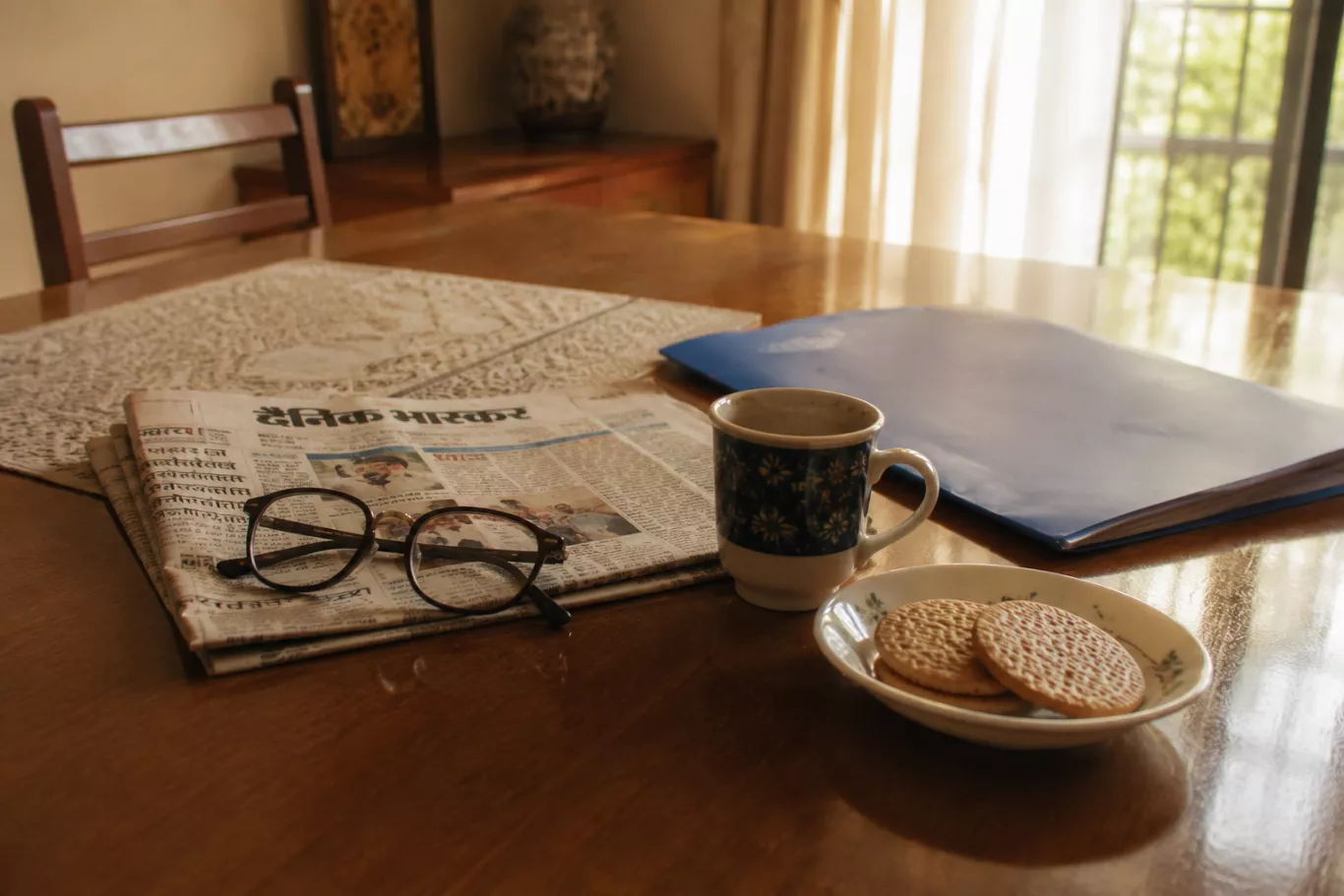
I brought it to the kitchen table where she was having chai with Mom's Magic biscuits and asked how she knew.
She said, "That is where it is."
Not where it was. Where it is.
As if objects have fixed addresses in her head, and the rest of us are the ones constantly sending them into illegal migration.
Ten minutes later, she could not find her glasses.
They were on her head.
**The Map Exists**
My mother has a map of the house that none of us can see.
It is not the physical house. It is the house as it should be. Keys in the bowl. Safety pins in the small round box. Spare buttons in the old toffee tin. Warranty cards in the plastic folder. Medicines in the top drawer, except the ones that are for travel, which are in the pouch, except the pouch that is for train journeys, which is different from the pouch for flights.
Every object has a place.
Every place has a logic.
Every logic is obvious to her and unavailable to the rest of us until we are being corrected.
My father once put the TV remote in the drawer below the TV.
This sounds reasonable.
It was not.
My mother said the remote belongs on top of the newspaper pile, because if it is in the drawer, nobody will know where it is.
I said the drawer was directly below the TV.
She said that was not the point.
The point, I have learned, is not proximity. The point is knownness.
**She Can Find Anything Except Her Own Things**
This is the part I cannot explain.
My mother can find my ID card from 2015, my father's missing cufflink, my sister's school certificate, a screwdriver bought during the previous government, and the small plastic attachment that came with the vacuum cleaner and has never been used because nobody knows what it attaches to.
But her glasses disappear six times a day.
They are on her head. Around her neck. Next to the gas stove. In the puja room. Inside the almirah because she went there to take out a bedsheet and apparently placed them down in the middle of the mission. Once, memorably, they were in the fridge.
She denies this.
They were in the fridge.
My friend Priya's mother does the same thing with her phone. Priya says her mother can find a missing birth certificate in a locked drawer inside a suitcase under a bed in another city, but loses her phone while holding it.
The phone will be in her hand.
She will still ask, "Where is my phone?"
Priya will point to the hand.
Her mother will say, "Not this one, the other one."
There is no other one.
This is not forgetfulness. I have decided it is a genre.
**The Search Has a Tone**
When my mother searches for our things, she is calm.
When she searches for her glasses, the house changes temperature.
First comes the quiet checking. Table, counter, bed, bathroom shelf. Then the second round, which repeats the same places with more suspicion. Then the questions begin.
"Did you see my glasses?"
This is not a question. It is the opening statement.
If you say no too quickly, she assumes you are not taking the matter seriously. If you say you will look, she says she has already looked. If you ask where she last kept them, you have made a beginner's error because if she knew where she last kept them, the situation would not exist.
Karan told me his mother once asked the entire family to stop moving until her glasses were found.
Not help. Stop moving.
She said movement was making the search harder.
His father was standing near the sofa holding a cup of tea and was told to remain there until further notice. Karan said everyone froze like a school assembly during inspection.
The glasses were in her blouse pocket.
Nobody laughed until she laughed first.
That is another rule. You do not laugh before she does. The glasses may be found, but the case is still sensitive.
**Her System Has One Blind Spot**
I think I know why this happens.
The house map works because my mother is always mapping other people's needs. Where my father keeps receipts. Where I leave chargers. Where my sister's certificates should be. Where guests will look for a spoon. Where the electrician will ask for tape. Where the spare bulb should be when the tube light goes on a Sunday evening.
Her attention is pointed outward.
Her own glasses are not part of the system because she is wearing them, using them, putting them down in between solving other people's object problems. They disappear in the gaps between her usefulness.
This sounds too serious for glasses, but I think it is true.
Meera's mother once spent twenty minutes helping Meera find a lost earring before a wedding. She found it in the fold of a dupatta. Everyone praised her. Then, five minutes later, she could not find the bindi packet she had placed on the dressing table herself.
Meera said her mother looked at the table three times and did not see it.
Meera pointed it out.
Her mother said, "I was looking for your thing."
That is the whole operating principle.
**I Have Become Part of the Search Team**
I am better now.
Not good. Better.
When I am home and my mother asks for her glasses, I do not ask where she last kept them. I begin the route. Kitchen counter. Newspaper pile. Puja room. Bedroom side table. Top of washing machine. Fridge, quietly, because we have history there.
She appreciates this, though she will not say it.
Last week, I found them on the balcony ledge behind a plant. She had gone to water the tulsi, removed the glasses because some water had splashed, then come inside and accused the universe of hiding them.
I brought them to her.
She said, "There only?"
There only. As if the balcony ledge behind a plant was a reasonable place and I had merely completed an obvious route.
We sat down after that. Chai had gone slightly cold. The Mom's Magic packet was open. She took her glasses, wiped them with the edge of her dupatta, and put them on.
Then she looked at me and said, "Your brown file is not in the right place."
I said I knew.
She said, "Then why is it there?"
I had no answer.
She got up, found the file, moved it to where it apparently lives, and came back.
Five minutes later, she asked if I had seen her glasses.
They were on her face.
I waited.
She realised.
She laughed first.
Then I laughed.
That is also where things belong.


