



Sign in to share
Dhruv Saxena
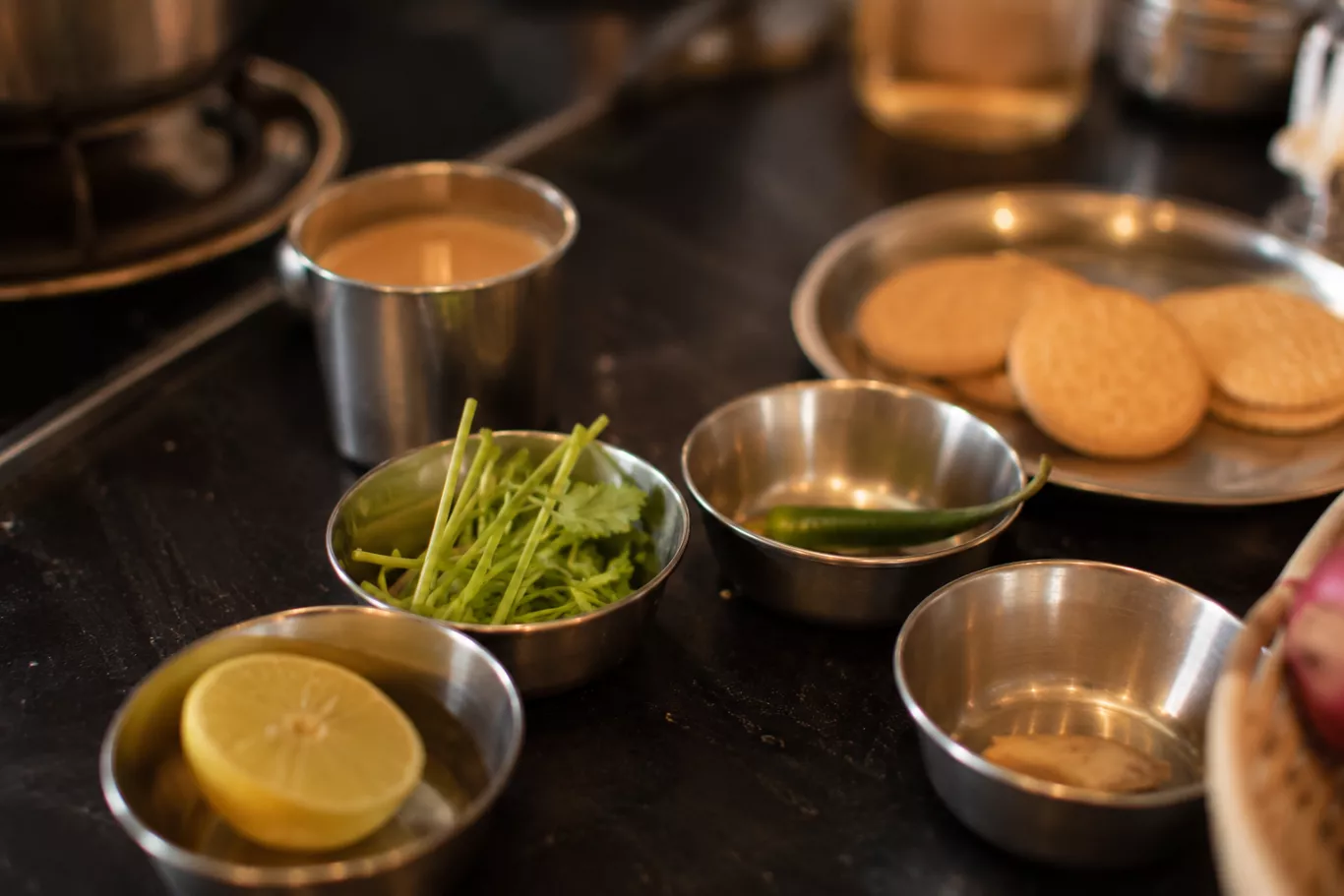
There is a small steel bowl in my mother's kitchen that contains half a lemon.
Not a lemon half, exactly. That would be too simple. It contains half a lemon, two coriander stems, one green chilli, and something that may once have been ginger but has now entered a more philosophical state.
I asked if I could throw it.
My mother turned around so fast I regretted the verb.
"Throw what?"
I pointed.
She looked at the bowl, then at me, then at the bowl again, as if trying to understand how a son she had raised could fail to recognise active kitchen material.
We were at the kitchen counter. Chai was on the table. Mom's Magic biscuits were open because I had opened them and, as usual, had not closed them correctly. The small bowl sat between us with the confidence of an object that knew it had legal protection.
"This is for tomorrow," she said.
I looked at the contents.
Tomorrow looked uncertain.
**There Are Categories I Do Not Understand**
In my mother's kitchen, food is not divided into food and waste.
That is a child's system.
There are many middle categories.
Things that are technically still useful. Things that are too small to cook but too good to throw. Things that will go into tadka. Things that will go into chutney if someone remembers. Things that are waiting for dal. Things that are for the maid if she wants. Things that are for plants. Things that are for smelling before final decision.
Each has a container.
The containers are not labelled because the labels are in my mother's head.
My friend Priya says her mother has a bowl called "for later," except nobody calls it that aloud. It contains half onions, two pieces of tomato, a small amount of grated coconut, and the optimism that something will become lunch.
Priya once threw away a half onion from that bowl.
Her mother noticed at dinner.
This is the frightening part. Not immediately. At dinner.
The onion had a future and Priya had interrupted it.
**The Half Lemon Is Never Alone**
Half lemons are their own community.
There is always one somewhere. On a plate. In a bowl. Inside a tiny steel katori covered with another tiny steel katori. In the fridge door. Near the stove. Looking dry but apparently still capable of contribution.
My mother knows each one's status.
This one is for squeezing over poha. This one is for cleaning the pressure cooker stain. This one is too old for food but fine for rubbing on the sink. This one is not old, it only looks old because I do not understand lemons.
I asked why she could not use a new lemon.
She said, "Why?"
The question defeated me.
Karan's mother has the same system with green chillies. Half chillies. Slightly bent chillies. Chillies with one end cut. Chillies that have been promoted to chutney. Chillies that are too aggressive and must be used carefully. He says he cannot identify any of these categories, but his mother can from across the kitchen.
He once threw two chillies away.
His mother asked where they were the next morning.
He said he had thrown them.
She said, "Those were good."
He said they were soft.
She said, "For tadka."
Soft for life, good for tadka. Another category.
**Waste Is a Serious Accusation**
The word waste carries weight in my mother's kitchen.
You cannot say something is waste unless you are prepared to defend it.
A coriander stem is not waste. It can go into stock, chutney, dal, or a small pile that will be inspected later. Rice stuck to the bottom of the vessel is not waste if water can be added and something can be done. One spoon of sabzi is not waste because someone may eat it with curd at 5 pm.
Someone is often my father.
My mother is not miserly. That is the wrong reading. She is exact about use.
She knows what things can still become.
This is a skill I do not have. I look at a plate and see leftovers. She sees possible paratha stuffing, sandwich filling, tadka support, curd-rice companion, or tomorrow's breakfast problem solved in advance.
Meera's mother once made excellent cutlets from things Meera had mentally thrown away the previous night. Meera said she did not know what was in them. Her mother said that was for the best.
Some knowledge is not required for enjoyment.
**The Containers Are Tiny for a Reason**
I asked why the small things could not all go into one larger box.
My mother looked genuinely concerned for me.
Because they are different things.
The half lemon cannot sit with the coriander stems because the lemon will make them wet. The green chilli cannot sit with the ginger because then someone will forget which is which in the morning. The soaked almonds cannot sit with anything because they have status. The one spoon of coconut chutney cannot be put in a large box because then it looks sad.
This last point is true.
Small quantities need small containers or they lose dignity.
Nikhil says his mother's fridge contains what he calls "museum bowls." Each has one small thing. One spoon of coconut. Four curry leaves. Two raisins. A piece of paneer. A lime wedge. He used to make fun of it until he started cooking and realised one curry leaf can become the difference between decent and missing something.
He has become a bowl person now.
His mother is very pleased and trying not to show it.
**I Have Started Saving Things**
This is the dangerous part.
The habit spreads.
Last week in Bangalore, I cut a lemon and used only half. I almost threw the other half. Then I heard my mother's voice in my head asking why. Not angrily. Worse. Reasonably.
I put it in a small bowl.
I do not own many small bowls, so it went into a coffee mug. This is not ideal, but civilisation begins somewhere.
The next morning I used it on poha.
I felt absurdly competent.
I told my mother. She asked if I had covered it.
I said no.
She said, "Then it will dry."
There is always another level.
Covering things is also a system. A plate over a bowl means one thing. A bowl over a bowl means another. Foil means it is travelling somewhere or someone important is coming. The smallest lid in the kitchen belongs to no container I can identify, yet my mother finds it when needed. I once covered curd with the wrong lid and she spotted it before opening the fridge. Apparently the wrong lid leaves too much air. I had not realised air was also being managed by department.
When I was leaving home this time, I saw the small steel bowl again. The half lemon had been used. The coriander stems were gone. The green chilli remained, slightly wrinkled but still under protection.
I pointed at it.
"Still useful?"
She said, "Of course."
Then she took it, chopped half of it into the chutney, and put the remaining half back in another smaller bowl.
A smaller bowl.
The chilli had moved departments.
I ate a Mom's Magic biscuit and decided not to ask.


