



Sign in to share
Dhruv Saxena
My mother has a different voice for bad news.
I noticed this properly last month, although I think I have known it for years without knowing I knew it.
I was home on a Tuesday afternoon, which already made the day feel slightly wrong because home on a weekday has a different texture from home on a weekend. On weekends there is a sense that everyone is expecting you. On weekdays you are interrupting the normal functioning of the house. My mother was in the kitchen, making tea, and I was at the dining table pretending to work while actually doing the thing where you open your laptop and then look around your childhood home as if it is going to say something new.
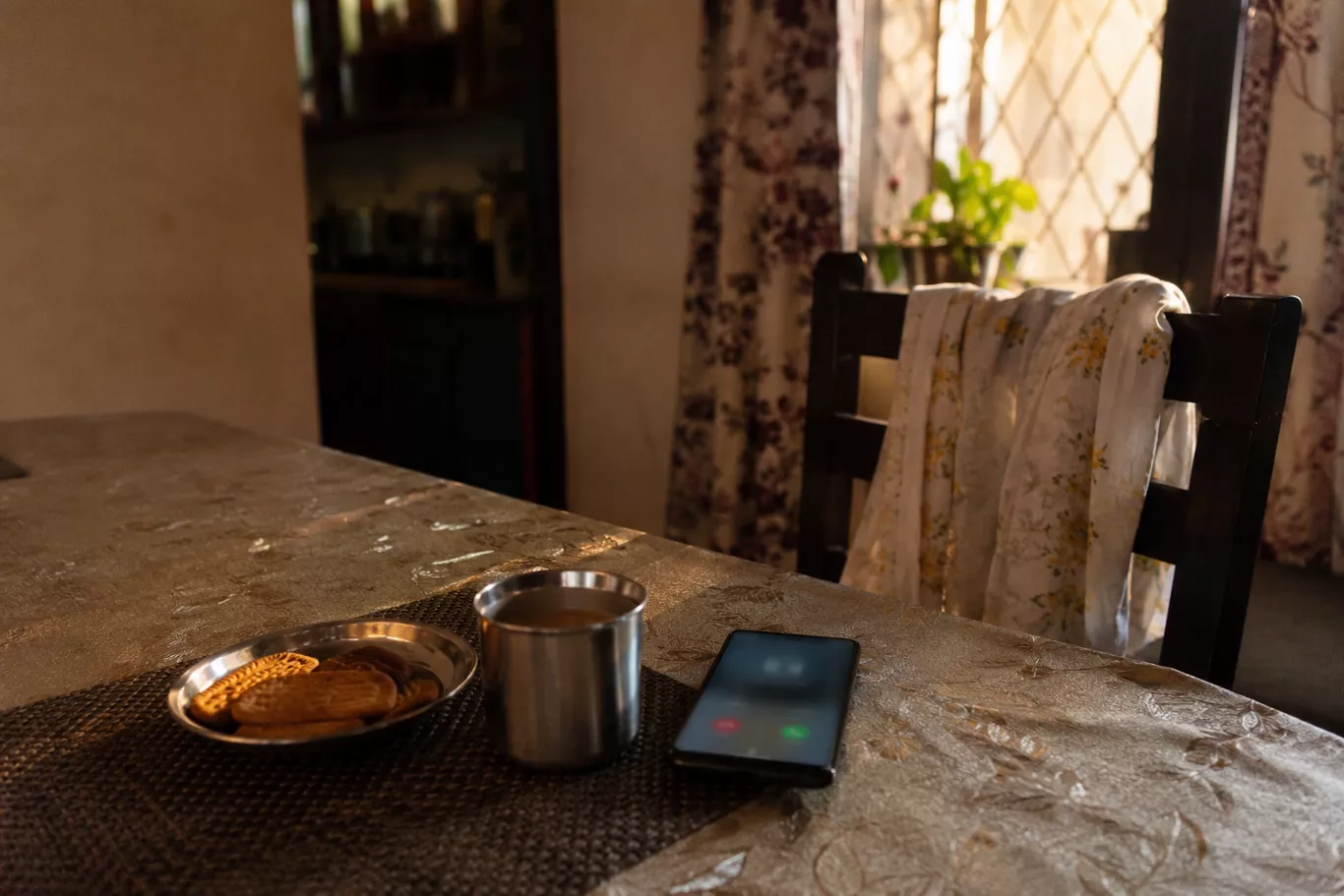
Her phone rang.
She looked at the screen and said, “Haan, bolo,” in her normal voice.
Then the voice changed.
Nothing dramatic happened. She did not sit down suddenly or say “hai bhagwan” or do any of the things people do in films when something has gone wrong. She just became quieter. Her shoulders changed slightly. She turned the gas low and said, “Accha. Tell me slowly.”
I looked up.
There it was.
That voice.
The one she uses when someone has fallen, or someone’s test report has come, or someone’s son has done something foolish, or someone in the extended family has said they are “fine” in a way that clearly means they are not fine.
She was still standing in the kitchen. The chai was still on the stove. There were Mom’s Magic biscuits on the plate because I had asked for them ten minutes earlier in the exact tone of someone who was visiting home and therefore allowed to behave eight years younger than his actual age.
Everything in the room was ordinary.
Only her voice had changed.
The Medical Voice
The medical voice is the calmest one, which is what makes it the worst.
My mother can say “nothing to worry” in a tone that makes the whole room start worrying.
It is always the opening line.
“Nothing to worry, but Papa went to the doctor.”
“Nothing to worry, but your Mausi has to do one test.”
“Nothing to worry, but the doctor has asked for a scan.”
At this point I have learned that “nothing to worry” means there is definitely something to discuss and she has spent some time deciding how much of it I can handle in the first sentence.
I used to get irritated by this.
“Maa, just tell me properly.”
“I am telling only.”
“No, you’re preparing me.”
“I am not preparing you.”
She was preparing me.
My friend Karan says his mother does the same thing, except she begins with “Are you sitting?” which is objectively a terrible way to begin any phone call. Once she called him and said, “Are you sitting?” while he was in a cab on Outer Ring Road. He said yes because he was, technically, sitting. She then told him his father’s cholesterol was slightly high.
Slightly.
He said he spent the rest of the cab ride recovering from the sentence before the news.
Our mothers do not always understand suspense, but they understand impact. They know the news has to land somewhere and they are trying, in their own way, to put something soft under it before it falls.
The Father Voice
There is another voice my mother uses when the bad news is not really bad news but is related to my father.
This voice is different. It has irritation in it. Not anger exactly. More like evidence.
She calls and says, “Talk to your father.”
That is the whole introduction.
No hello. No warm-up. No context.
Talk to your father.
This can mean many things.
He has bought the wrong medicine.
He has tried to repair something that did not need his involvement.
He has told someone on the phone that he knows the address and now he does not know the address.
He has moved something heavy by himself and is now pretending his back is fine.
The thing itself is usually small. But my mother’s voice carries the weight of all the similar things that came before it. She is not reacting to the incident. She is reacting to the pattern.
I understand this now.
When I was younger, I thought she was being dramatic. Now I have seen my father confidently take charge of simple tasks and turn them into family events. My mother is not being dramatic. She is maintaining an archive.
The “I Told You” Voice
This is the voice I fear most.
Because she does not actually say “I told you.”
She says, “Hmm.”
That is enough.
You did not carry a jacket. Now you are cold.
You did not eat before leaving. Now you have acidity.
You did not leave early. Now you are stuck in traffic.
You ignored her advice about the plumber, the tailor, the medicine, the route, the weather, the suitcase, the charger, the mosquito coil, or the packet of food she tried to put in your bag.
And now you are calling her from the exact situation she had predicted.
She will not celebrate being right. That would be easier to handle. She is right with restraint. She is right sadly. She is right like a person who gave you the answer key and watched you fail the test anyway.
My mother has a specific “hmm” for these moments. It has no more than one syllable but somehow contains the full transcript of the earlier conversation.
I once called her from the airport after refusing to carry something to eat because I was not a child and airports have food. The flight was delayed. Everything at the airport was either closed or expensive in the way airport food is expensive, where you begin to question your life choices over one sandwich.
She said, “I had told you to keep biscuits.”
Then silence.
Then, “Hmm.”
I deserved it.
The Money Voice
The money voice is careful.
It never starts with money.
It starts with health. Then work. Then food. Then whether I am sleeping. Then some comment about how expensive everything has become. Then, slowly, as if she is moving furniture in the dark, she arrives at the actual question.
“Managing, na?”
That is the question.
Not “do you have money?”
Not “how much is in your account?”
Not “are you struggling?”
Managing, na?
Indian mothers have a way of asking financial questions without touching the word money directly. They circle it. They stand near it. They let you decide whether to open the door.
I used to answer too quickly.
“Yes yes, all good.”
She never believed the fast yes.
Now I try to answer properly.
“Managing. This month is tight, but manageable.”
She listens differently when I say it that way. The worry does not disappear, but it becomes less active. She has been allowed into the room. That is sometimes enough.
The Voice After the News
The thing I noticed that Tuesday was not just the voice during the bad news. It was the voice after.
When the call ended, my mother stood quietly for a few seconds. Then she turned the gas back up. The chai had not boiled over. The biscuits were still on the plate. I asked what happened.
She told me. It was something manageable. A relative. A hospital visit. A test that had to be done. Nothing immediate. Nothing that required panic.
She told me all this in the voice she had chosen for me.
Not the voice she had used on the phone. A different one. Lighter. More arranged.
That is when I understood something I should have understood earlier.
By the time news reaches us through our mothers, it has already passed through them once.
They have received it raw. They have reacted internally. They have decided what to say, what not to say, how much to soften, how much to hold back, who needs to know immediately and who can be told after dinner.
They are not just passing on information.
They are processing it on behalf of the family.
This must be exhausting.
What I Do Now
I am trying to be gentler when I hear that voice.
I do not always manage it. Sometimes I still interrupt. Sometimes I still say, “Maa, just tell me clearly,” because the suspense makes me anxious and because being thirty-two has not made me as mature on family phone calls as I would have hoped.
But I try.
I try to let her speak in the order she needs to speak.
I try not to punish her for softening news.
I try to remember that the softening is the love.
The next time your mother calls in a voice that is not her usual voice, listen properly. Not just to the news. To the work she has already done before calling you.
Ask what happened.
Ask what needs to be done.
Ask if she is okay too.
She may say she is fine because that is the oldest sentence in the Indian mother vocabulary. Ask again later.
That evening, after the relative’s situation was discussed and redistributed across the family network, my mother finally sat down. Her tea had gone cold. She drank it anyway, which is something mothers do and no one can explain.
I pushed the plate of biscuits toward her.
She took one and said, “You eat also.”
Even then.
Even after everything.
Still making sure the room had someone fed in it.


