



Sign in to share
Dhruv Saxena
My mother bought a pressure cooker whistle that did not whistle.
I know this sounds small. It was not small in our house.
The whistle had one job. It failed at that job. My mother discovered this at 11:20 in the morning while making rajma, and by 11:32 the matter had moved from kitchen inconvenience to active case.
She kept the bill.
Of course she kept the bill.
The bill was in a small plastic folder in the drawer where she keeps bills, warranty cards, visiting cards of electricians, one passport photo of me from 2009, and evidence from household disputes that none of us knew were still open.
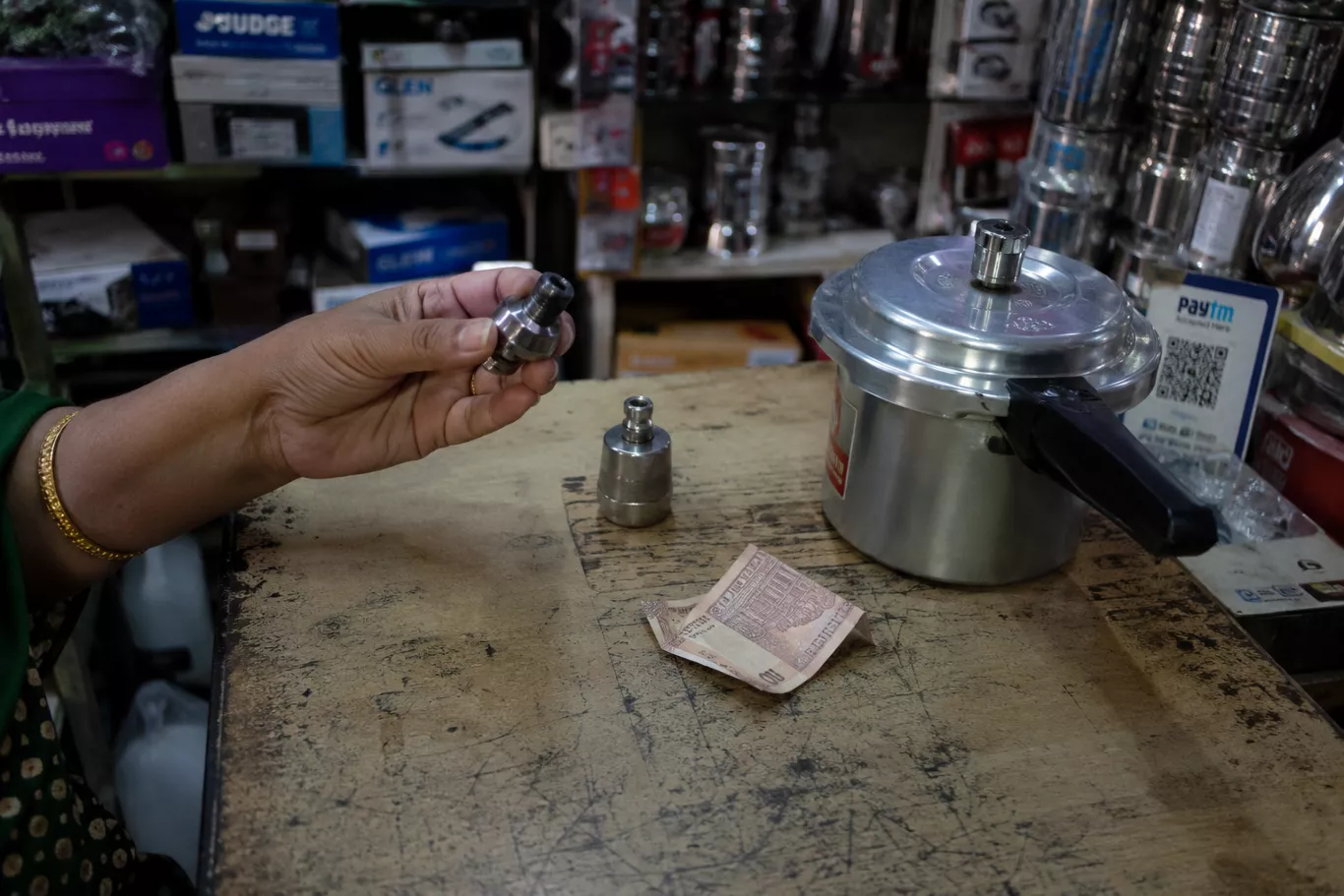
I was home that day, sitting at the kitchen table with chai and Mom's Magic biscuits, watching her prepare the file. She placed the whistle, the bill, the old whistle for comparison, and the packet it came in on the table.
"You are coming with me," she said.
I asked why.
"Because he will say I used it wrong."
This was not a prediction. This was legal strategy.
**The Case Was Built Before We Left**
My mother does not return defective things casually.
She builds a case.
First, she confirms the defect. Then she checks whether anyone in the house can be blamed for it. Then she removes that possibility, usually by asking three questions that sound simple and are not. Then she gathers proof. Bill. Packet. Date. Time. Comparison object. Memory of the shopkeeper's exact words when he sold it.
Only after that does she go to the shop.
I have seen lawyers less ready.
She asked me to look at the old whistle and the new whistle. I looked. They both looked like small metal objects whose personalities were not available to me.
"See the hole," she said.
I saw a hole.
"This one is not clean."
I looked again. It still looked like a hole.
She sighed with the patience of someone who had expected very little and received it.
My friend Meera's mother once returned a mixer jar after eleven days because the handle had begun to shake. The shopkeeper said it was because they must have dropped it. Meera's mother opened her handbag and produced the original thermocol, the packet, the receipt, and a photo she had taken on the first day because, in her words, "I did not trust the handle."
Meera said the shopkeeper became quiet.
That is the sound of a man meeting documentation.
**The Shopkeeper Also Knows the Game**
We went after lunch.
The shop is five minutes from our house. It sells utensils, plastic buckets, school water bottles, pressure cooker parts, and at least twelve things hanging from the ceiling whose function I could not identify.
The shopkeeper saw my mother and smiled in the way people smile when they know the next ten minutes will require attention.
"Haanji, madam."
She placed the whistle on the counter.
Not angrily. This is an important point. My mother does not begin with anger. Anger is a later tool. She begins with facts.
"This does not whistle."
He picked it up, turned it once, and said, "Maybe the cooker..."
My mother placed the old whistle beside it.
I watched respect enter his face.
She said, "Same cooker."
He said maybe the gas was low.
She said the rajma cooked with the old whistle.
He said maybe water was less.
She said she had measured.
I stood beside her, technically part of the legal team but contributing nothing.
The shopkeeper tried one more path. He said these things happen sometimes.
My mother said, "Yes. That is why I have brought it back."
I enjoyed that line very much.
**She Is Not Fighting About Money**
This is what I used to misunderstand.
I used to think my mother returned things because she did not want to waste money. That is part of it, but not the center.
She returns things because she believes objects should do what they promised to do.
If a whistle is bought as a whistle, it should whistle. If a bucket says twenty litres, it should hold twenty litres. If a shopkeeper says this plastic will not crack, it should not crack in the first week and then act innocent near the drain.
There is a moral order to things.
My mother is defending that order.
Nikhil's mother once returned a bedsheet because the colour ran in the first wash. The shopkeeper said colour can run a little. She asked him if he would accept money that disappeared a little after she paid.
Nikhil said he had never been prouder and more afraid at the same time.
The bedsheet was replaced.
Karan's mother has a different style. She is quieter. She asks the shopkeeper to explain the defect back to her. This sounds polite. It is not. It forces the person to say, in his own words, that the thing is faulty. Karan says by the end of the conversation the shopkeeper often feels like he has discovered the defect himself.
There are schools of thought in this field.
**The Witness Has One Job**
I asked my mother later why I had to come.
She said, "Witness."
This was flattering until I understood the role.
I was not there to speak. I was there to confirm that the cooker had been used correctly, the whistle had failed, the old whistle had worked, and my mother was not inventing a domestic drama for entertainment.
I told her I could have said all that at home.
She said home was not court.
Fair.
At one point the shopkeeper looked at me and said, "You tried also?"
I almost said no.
My mother looked at me.
I said, "Yes."
This was technically false. But as part of the household legal department, I understood that testimony sometimes serves a larger kitchen truth.
The shopkeeper opened a drawer, took out another whistle, and gave it to her. My mother inspected it, blew through it once, which I was not prepared for, and said this one was fine.
No apology was issued by the shopkeeper.
None was required.
The replacement had been secured.
**The Victory Was Quiet**
On the way back, I asked if she was happy.
She said, "Why happy? It was defective."
This is another thing about my mother. She does not treat victory as victory when she believes the outcome was already owed.
We came home. She washed the new whistle, put it on the cooker, and tested it with water. It whistled.
She nodded.
Case closed.
Then she made chai again because, apparently, legal proceedings create thirst. We sat at the kitchen table. The Mom's Magic packet was still there from the morning, slightly softened because I had not closed it properly. She noticed, closed it, and said nothing, which was merciful.
I told her the line about disappearing money was very good.
She said Nikhil's mother sounded sensible.
This is high praise in my mother's language. Sensible is above nice, below very good, and miles above modern.
That evening my father came home and asked why there was a new whistle on the cooker.
My mother said, "Old one was defective."
He said, "Oh."
That was the whole briefing.
I wanted to tell him about the evidence folder, the old whistle, the same cooker argument, the way the shopkeeper became quiet. I wanted to tell him I had served as witness in a matter of pressure cooker law.
But my mother had already moved on.
The whistle had whistled.
That was the record.


