



Sign in to share
Dhruv Saxena
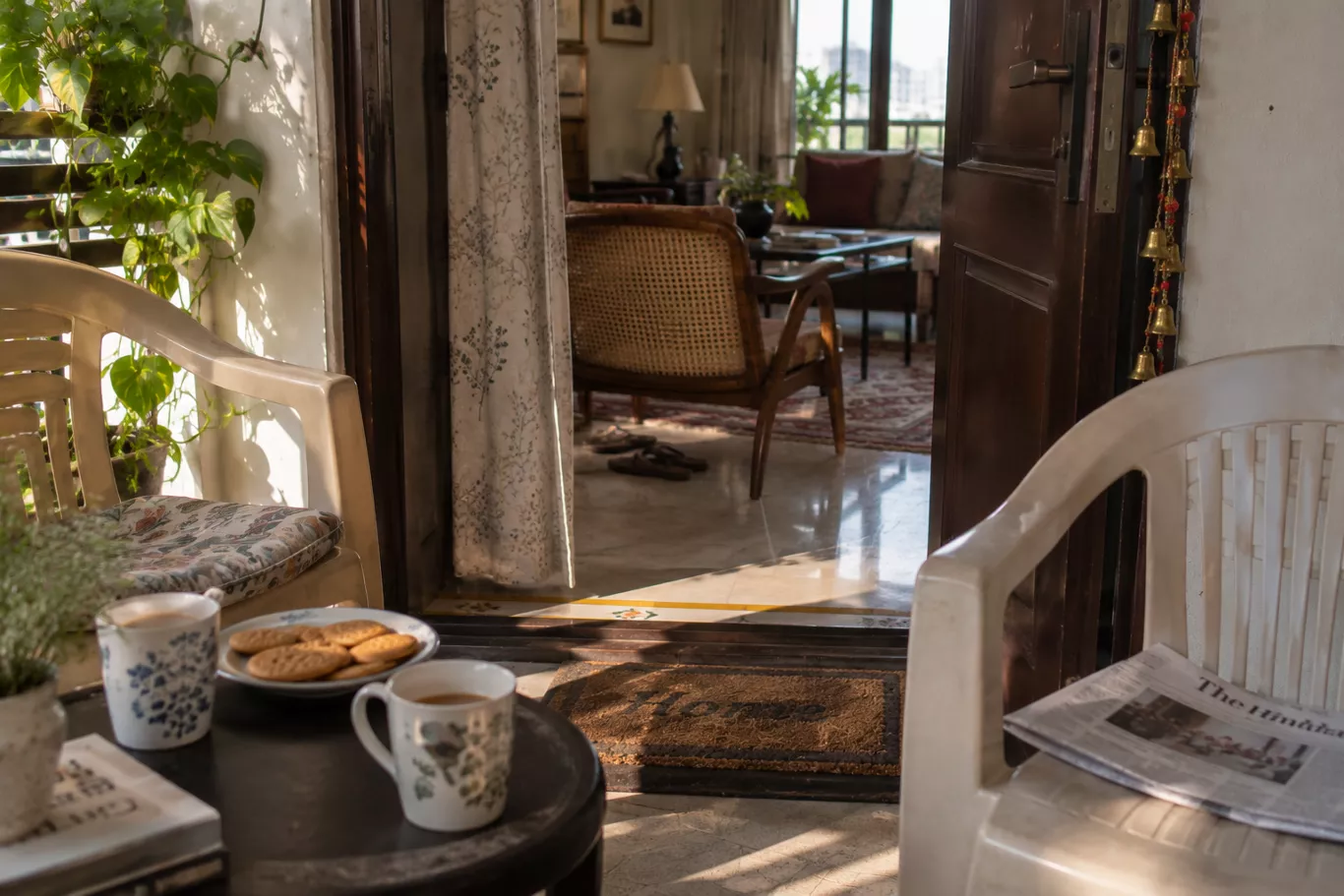
Two plastic chairs stood near the front door, waiting to leave the house for a neighbour's function. My mother was inspecting them like visa documents. I was eating a Mom's Magic biscuit and pretending this was normal. Then I made the mistake of saying any chair could be sent.
The matter was chair diplomacy, though I did not know that yet. I had missed the scratch on one leg, and missing that detail was enough to turn me from visiting son into active case file.
My mother did not shout about the borrowed chairs. Shouting would have been kinder. She only turned her head and looked at my hand, then at my face, as if matching the offender to the offence.
"Why this one?" she asked.
I gave the worst possible answer.
"It was there."
In my mother's house, "it was there" is not a reason. Around the chair diplomacy, it is evidence that you have not understood the house at all.
**Not Every Chair Travels**
She took over and placed the borrowed chairs back with the patience of a person returning a temple bell to its hook.
Then came the explanation: one chair is stable, one chair is embarrassing, and the cane chair does not leave the house under any condition.
I looked again and saw the scratch on one leg, the tiny detail that had apparently been visible to everyone except me. This is the problem with visiting your own parents' home as an adult. You think you know the rooms because you grew up in them. Then one evening a spoon, a chair, a cap, or a glass exposes you.
I tried to laugh.
My mother did not join.
She was not angry in the dramatic way. She was busy being correct about the scratch on one leg. That is harder to argue with. Anger has openings. Correctness has shutters.
**The Cane Chair Stayed Home**
No one had written this rule down because no one in the house needed it written down.
My father knew it. My father tested each chair by sitting with great seriousness. My sister would have known it. The neighbour aunty probably knew it from one visit and half a glance. Only I, the educated adult child, had walked into the rule with confidence.
My mother said, "You never observe."
That sentence hurt because it was accurate in a very domestic way.
I observe large things. Office deadlines. Flight prices. Bank messages. Traffic patterns. The unreadable mood of a client call. But the borrowed chairs had beaten me. At home, my observation gets lazy. I become ten years old again and assume the house will explain itself.
It does not.
The house expects you to remember.
**Kabir Recognised the Scratch**
When I told Kabir about it later, I expected sympathy.
Instead, I got recognition.
Kabir says his mother once lent a chair and then recognised it at a building meeting by one scratch on the leg.
This is how you know a mother's system is real. The chair diplomacy may be ours, but the instinct travels across cities, languages, cupboards, and families. The object changes, but the rule has the same face. Do not mix the good with the daily. Do not send outside what belongs inside. Do not use the dry spoon for wet work. Do not disturb the thing that is becoming something else. Do not pretend all caps fit all bottles because the first leak will find your bag.
These rules sound small until you are the person cleaning up after ignoring one.
I had ignored one.
The house had noticed.
**The Second Mistake Was Smaller**
After the first correction, I tried to help again.
This was brave and foolish.
I watched my mother's hands near the scratch on one leg. I waited. I asked one question. Then I did the thing I thought she had shown me.
Not exactly.
I picked the wrong chair for lending and almost caused public shame.
My mother closed her eyes for one second.
That one second contained an entire review meeting.
"Slowly," she said.
Slowly, in her language, does not only mean reduce speed. With the borrowed chairs, it means stop acting like the house is a hotel. It means look at the thing before touching it. It means ask why this object lives here and not there. It means respect the invisible work that made the visible order possible.
I tried again.
This time, she allowed it.
Allowed is not praise. It is the ground floor of praise.
I stayed near her for another minute, which is what you do after surviving a correction. You do not leave too quickly. Leaving too quickly suggests you were only waiting for release. So I stood there and watched her return the borrowed chairs to its place.
The place mattered. The angle mattered. The distance from the next object mattered.
I wanted to say this was too much.
But the arrangement looked right after she did it.
This is the trap. My mother is often unbearable and correct in the same breath.
**The Rule Had a Backstory**
After tea, my mother told me the old incident in pieces.
She never tells a household backstory from the beginning. She starts from the part where someone did something foolish, then expects you to reconstruct the years around it. There was a guest, or a cousin, or a festival morning, or a day when the maid was late, or some combination of all four. The borrowed chairs had been involved. Someone had hurried. Someone had said it would do. Someone else had used the wrong thing because the right thing was one shelf away.
My mother had fixed the mess then. Nobody had made a speech about the borrowed chairs. Nobody had written a family rule. The next morning, she had quietly shifted the object, changed the way it was stored, or told my father one sentence that became law.
That is how the chair diplomacy entered the house.
The rule did not arrive with drama. It arrived because my mother was tired of repairing the same small stupidity around the chair diplomacy twice.
I understood that more than I wanted to admit.
There are things in my own flat that I arrange in odd ways because one bad evening taught me. My version is not about the scratch on one leg, but the instinct is related. I do not call those rules. I call them knowing my life.
My mother calls them common sense and looks at me as if the matter is settled.
**The Chairs Returned From Society**
By evening, the matter had become part of the day.
My mother moved around the kitchen. I sat with tea and Mom's Magic biscuits, still thinking about the chair diplomacy. My father appeared, assessed the air, and chose not to ask any question that might attach him to the case.
Smart man.
The funny thing is that once you know the rule of the borrowed chairs, you begin to see why it exists. It is never only fuss. It is memory doing housework. Someone once broke something, stained something, embarrassed someone, wasted something, lent the wrong thing, washed the wrong thing, or said "it is fine" before making more work for my mother.
After enough such days, a rule is born.
After enough rules, a house starts looking effortless.
Only it was never effortless. The chair diplomacy was one more proof. It was my mother remembering thirty things before breakfast and acting as if she had done nothing.
Later, before leaving the table, I went near the borrowed chairs again.
This time I paused.
My mother saw the pause.
That was enough for her to know that some part of the training had entered my skull.
She did not smile fully. She only moved the biscuit plate toward me.
That is how affection arrives in our house after the chair diplomacy incident. Not as a speech. As a plate being moved two inches closer.
The chairs came back. My mother checked them like schoolchildren returning from tuition.


