



Sign in to share
Dhruv Saxena
My mother has never asked me how much I earn.
Not once.
This is surprising only if you do not know Indian mothers, because Indian mothers will ask everything around the thing before they ask the thing.
They will ask if work is stable.
They will ask if the company pays on time.
They will ask if rent has gone up.
They will ask if the electricity bill is too much in summer.
They will ask if I am eating properly, which is, in her mind, both a health question and a financial question.
They will ask if I am saving.
They will ask if I have “kept something aside.”
They will ask if the credit card is being paid fully.
They will ask if I need anything, but in a tone that makes it very clear the question is not casual.
But the exact salary?
Never.
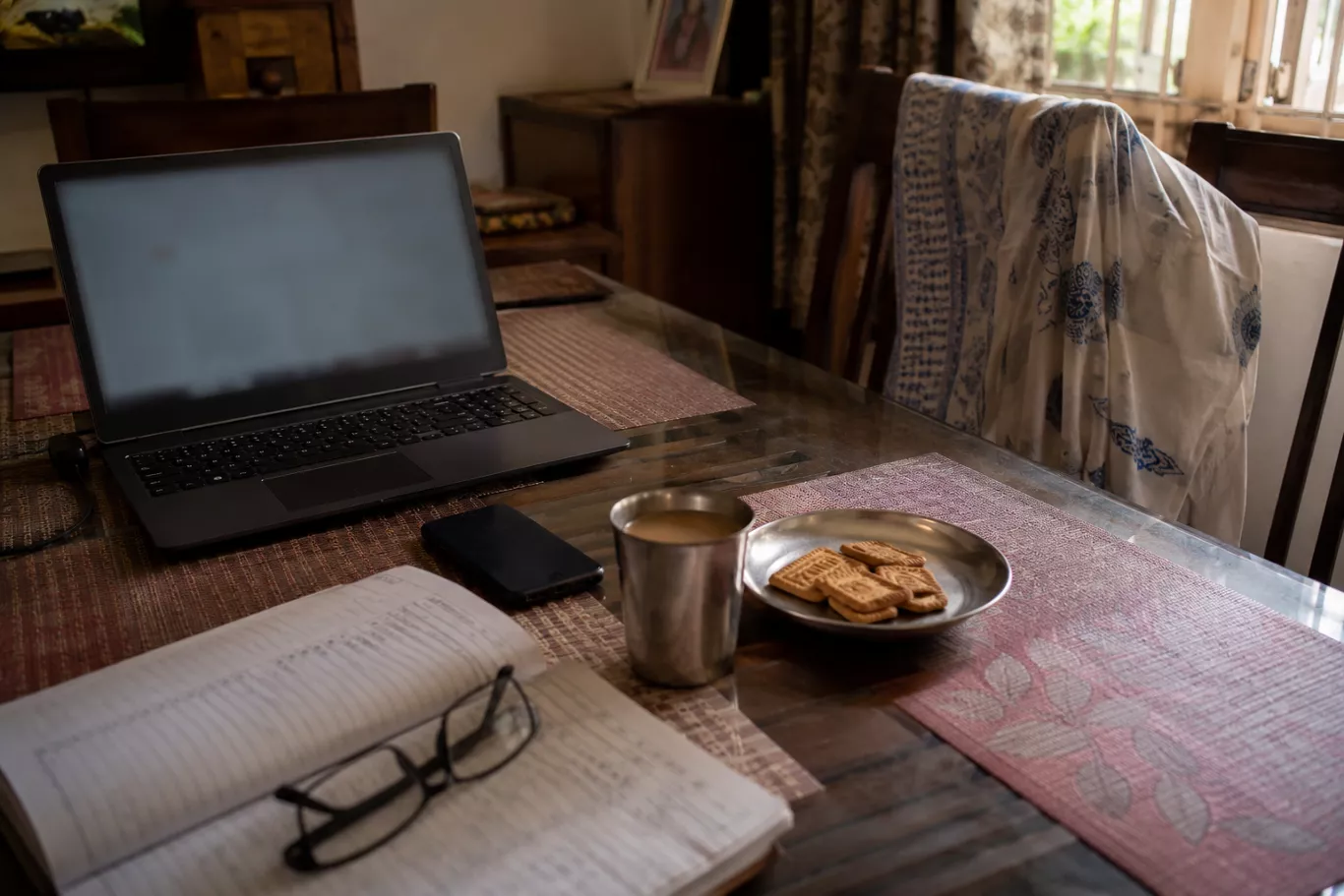
I noticed this properly last month. I was at home on a Sunday afternoon, sitting at the dining table with my laptop open and my bank app open on my phone, doing the monthly adult ritual of looking at numbers and feeling accused by them.
My mother was sitting across from me, having chai. There were Mom’s Magic biscuits on the plate between us. She had eaten one and then broken the second into two pieces for no reason I could understand. My father was in the other room watching news at a volume that suggested the entire neighbourhood needed to be informed.
My mother looked at my face and said, “Money tension?”
I closed the bank app immediately, which was pointless because she had already seen my face, not the numbers.
I said, “No.”
She said, “Hmm.”
This was not belief.
This was a mother placing a bookmark.
The Questions Around Money
My mother asks about money the way someone checks whether a vessel is hot.
Carefully. From the side. Never directly at first.
“Work is okay?”
“Yes.”
“Payments are coming on time?”
“Yes.”
“Expenses are too much these days, no?”
“Yes.”
“Still managing?”
There it is.
Still managing.
That is her salary question.
It is not asking how much I earn. It is asking whether the life I am living is heavier than the money I am making. It is a better question in some ways. More accurate. More dangerous.
Because a salary number can sound respectable and still not be enough for the month you are having. A salary number can impress relatives and still disappear into rent, EMIs, bills, travel, gifts, repairs, and the mysterious category called “small expenses” that somehow eats entire accounts.
My mother knows this without needing the number.
She has run a house too long to be impressed by income alone. She wants to know what remains after life is done with it.
My friend Karan says his mother has also never asked his salary. She asks, “Are you able to save or only spend?”
He says this is a much worse question.
Because it removes all performance.
What She Does Ask
There are standard questions.
“Are you eating from outside too much?”
This means are you wasting money and also damaging your stomach.
“Why did you take cab? Metro was there.”
This means do you understand the difference between convenience and habit.
“Do you really need this subscription?”
This means she has somehow noticed one of the four expenses I was hoping no one would notice.
“Petrol is very expensive now, no?”
This means she is thinking about my monthly movement.
“Flight ticket was how much?”
This is not curiosity. This is audit.
She will ask these questions with the calm seriousness of someone who has balanced household budgets through years of changing prices and unexpected repairs and school fees and medical bills and guests arriving without warning.
My mother does not know how to use half the apps on my phone. But she understands leakage. She understands that money does not only go in big places. It goes in small daily decisions that do not feel like decisions when you make them.
She has a respect for small amounts that I am still trying to learn.
The Envelope Memory
When I was younger, money in our house had physical form.
Cash in envelopes. Cash in steel boxes. Cash folded into the corner of a cupboard. Money kept aside for the milkman. Money kept aside for the maid. Money kept aside for school. Money kept aside for something that might happen.
My mother had categories.
Not written categories. Mental categories.
She knew which money was for what. If my father gave her cash, it would enter the system and immediately acquire a purpose. This much for groceries. This much for bills. This much for the month. This much not to be touched.
I remember once opening a drawer as a child and finding an envelope with money in it. I asked if I could use some for something. I do not even remember what.
She said, “No, that is not that money.”
At the time, this sentence made no sense.
Money was money.
Now I understand.
Money is never just money in a household. Money has timing. It has destination. It has responsibility attached to it. Some money can be used. Some money is already gone even before it leaves the drawer.
My mother knew this early.
I learned it late.
The Offer
The closest my mother comes to asking about my finances is when she offers money without offering money.
She will say, “If anything is there, tell.”
That is the sentence.
If anything is there.
Not if you need money. Not if you are short. Not if you are struggling.
If anything is there.
The anything does a lot of work. It protects my pride. It protects her from making it too direct. It leaves the door open without standing in the doorway.
I usually say, “Nothing is there.”
Sometimes this is true.
Sometimes it is not fully true.
But the sentence stays with me. Because underneath it is the old structure of the relationship, still available if needed. The child can come back. The parent can still help. The door has not closed just because I am grown and have bills in my own name.
My friend Priya says her mother once transferred her money without asking during a difficult month. Priya called and said, “Why did you send this?”
Her mother said, “Keep. Return when you become rich.”
Priya said she laughed and cried a little after the call.
Mothers have a way of making help sound like a joke so you can accept it without feeling small.
What She Knows Anyway
I think my mother knows more than I tell her.
Not exact numbers. Not salary, not expenses, not the full machinery of my adult life.
But she knows enough.
She knows from how often I visit.
She knows from what I buy and what I postpone.
She knows from whether I take the cab or the metro.
She knows from whether I say yes immediately to a family plan or ask for dates first.
She knows from the speed with which I answer the “managing?” question.
She knows from my face when I am looking at my phone.
This is the same skill she uses everywhere else. The noticing. The small data. The things around the thing.
She does not need the salary number because the salary number is only one part of the story. She is reading the whole month.
The Silence Around It
There is also dignity in the way she does not ask.
I did not appreciate this earlier.
I thought maybe she did not ask because she did not understand my work fully, or because she did not want to interfere, or because money was awkward.
All of that may be partly true.
But I think there is also respect in it.
She knows money is one of the places where adulthood wants privacy. She knows asking the exact amount may make me feel inspected. She knows there are questions a parent can ask that make the child feel younger than they want to feel.
So she asks around it.
She lets me decide how much to open.
This is not distance.
This is care with manners.
I find that moving now.
The Report I Give
I have started giving her a better report.
Not full details. Not spreadsheets. She would hate that and then immediately ask why one line item is so high.
But a better report.
“Month is tight, but okay.”
“This payment is delayed, so I’m planning around it.”
“I saved a little this month.”
“I spent too much on travel.”
“I’m managing.”
When I say it properly, she relaxes differently.
The worry does not go away. It never fully goes away. But it stops searching.
That Sunday, when she asked “money tension?” I said no too quickly. She did not believe me. Later, after tea, I told her the actual version. Not everything. Enough.
She listened.
Then she said, “Keep some buffer always.”
I said, “I know.”
She said, “Knowing and doing are different.”
This was unnecessary and correct.
Then she pushed the plate towards me.
“Eat one more.”
I said I was full.
She said, “This is not expensive.”
I laughed.
She did too.
The Question She Has Been Asking
My mother has never asked me how much I earn.
Maybe she never will.
Maybe one day she will, if the situation requires it, and I will answer because age has made both of us more direct in some ways and more careful in others.
But until then, she will keep asking the questions around it.
Are you managing?
Are you saving?
Are you eating?
Are you sleeping?
Is work okay?
Do you need anything?
If anything is there, tell.
It took me years to understand that these are not separate questions.
They are all the same question.
Are you safe inside the life you are building?
That is what she is asking.
The salary number is just a number. She wants to know whether the life is holding.


