



Sign in to share
Dhruv Saxena
I put poha in the wrong plate.
This is how many conflicts begin in Indian homes. Not with large statements. With one adult man putting breakfast in a plate that has offended an older woman's sense of order.
The plate was white. Round. Clean. Available.
To me, these were the relevant facts.
My mother walked into the kitchen, saw the plate, and said, "Not in that."
I looked down at the poha.
It looked comfortable.
"Why?"
"That plate is for snacks."
I said poha is sometimes a snack.
She looked at me for a long second.
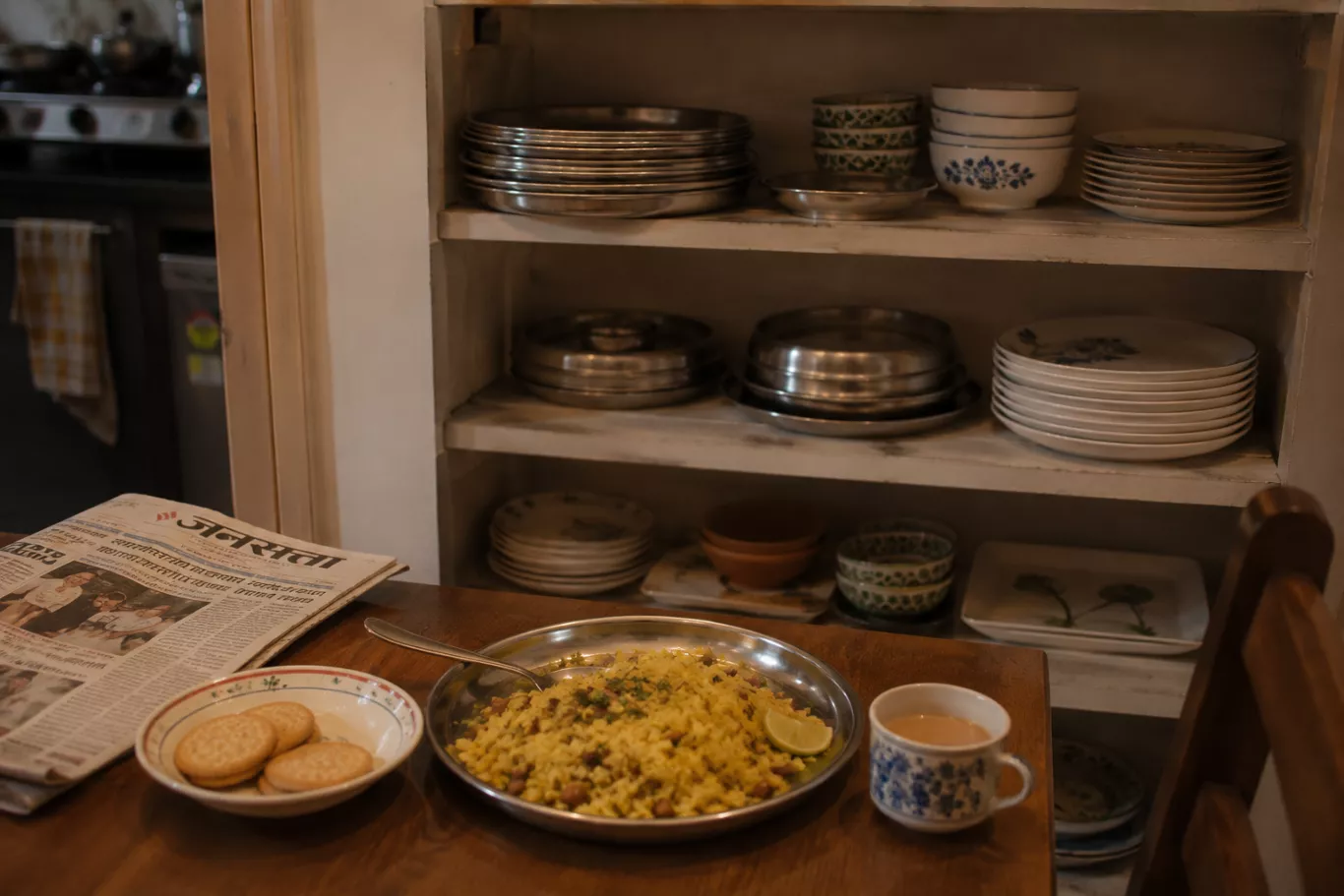
We were at the kitchen counter. Chai was already made, Mom's Magic biscuits were on the table because she had put them out while the poha was cooking, and I had somehow managed to turn breakfast into a classification dispute.
She took another plate from the shelf. Steel. Slightly deeper. Correct, apparently.
"Use this."
I transferred the poha.
The house relaxed.
**Every Plate Has a Job**
My mother does not believe in neutral plates.
There are breakfast plates, dinner plates, guest plates, fruit plates, snack plates, plates for fried things, plates for things with chutney, plates that can go to the balcony, plates that must never go to the balcony, and plates that are technically in use but nobody is allowed to use because they belong to a set.
The set is always waiting for an occasion.
The occasion never comes.
I once asked why we had plates nobody used.
She said, "For when people come."
People have come. Many people. Over decades. The plates remain waiting for a more plate-worthy class of visitor.
There is also a hierarchy within the ordinary plates. Some are for family dinner. Some are for when one cousin has come over and the house wants to be slightly better than usual. Some are for food that stains. Some are for food that slides. One plate is apparently too flat for anything with gravy and too large for anything dry, which raises the question of why it remains in the house. My mother says it is useful.
Useful for what, I have not discovered.
My friend Kabir's mother has a glass bowl that has been waiting for twenty years. It is for dessert, but only if the dessert is good enough and the guest is close enough to deserve glass but not so close that steel is acceptable. Kabir says no one has qualified yet.
I respect the bowl. It has standards.
**Steel Has Moral Strength**
In my mother's system, steel is the most honest material.
Steel plates can handle real food. Dal, sabzi, rice, paratha, poha, anything with heat, anything with oil, anything that might stain a plate with weaker character.
Ceramic is for snacks, guests, cake, and things that look better than they taste.
Plastic is for children, picnics, and situations where everyone has given up.
Glass is for people who will not drop it.
I am not always in that category.
My mother says steel keeps food warm and washes properly. She says this with the certainty of a person who has tested every material through years of breakfast, lunch, dinner, guests, festivals, and children who left plates under beds.
She is not making an aesthetic argument. She is making a life argument through crockery.
Priya told me her mother refuses to serve rajma in shallow bowls because, according to her, rajma needs "space." Priya once used a pasta bowl. Her mother said rajma was not comfortable.
We laughed when Priya told us.
Then all of us understood exactly what her mother meant.
**The Wrong Plate Changes the Food**
This is the part that annoys me because I think she may be right.
Food does taste different depending on what it is served in.
Curd rice in a steel bowl tastes correct. Curd rice in a flat plate looks abandoned. Pakoras need a plate wide enough that they do not steam themselves soft. Mango should be cut into a bowl where juice can collect. Biscuits should be on a small plate, never directly on the table, unless my father is eating them, in which case all rules appear to collapse under his personal habits.
My mother has thought about this.
Or maybe she has not thought about it. Maybe she has lived inside it long enough that the thinking has become automatic.
Nikhil says his mother can look at a food item and choose its vessel the way some people choose music. Instinctively, but with taste. If someone serves upma in the wrong bowl, she will not say anything at first. She will move it. Quietly. Correctively.
He said he once asked whether it mattered.
She said, "Eat and see."
He ate and saw.
That is the annoying thing about mothers. Sometimes the lesson is hidden inside the plate.
**The Guest Plate Is a Trap**
The guest plates are the most dangerous.
They are nicer than everyday plates but not the best plates. The best plates are in a box. The guest plates are accessible but emotionally guarded. You may use them, but you must know you are using them.
I once took a guest plate for Maggi.
My mother entered the room as if summoned by ceramic distress.
"Why this plate?"
I said it was clean.
She said many things were clean.
This is another mother sentence that seems small until it knocks your reasoning over.
Meera said her husband used one of her mother's guest bowls for peanuts during a cricket match. Her mother watched him do it and said nothing because he was new to the family then. Now, years later, she brings it up whenever he claims to have good judgment.
Families keep records in strange places.
Sometimes in memory.
Sometimes in crockery.
**I Know Some Rules Now**
I am learning.
Poha goes in the steel plate. Pakoras go in the wide plate with paper towel only if there are many people. Chai biscuits go on the small plate, unless someone is unwell, in which case a tray appears. Fruit for guests goes in ceramic. Fruit for family goes wherever my mother decides the fruit deserves that day.
I still make mistakes.
Last week I put curd in a cup.
My mother saw it and said nothing for three seconds.
Then she said, "You are not in a hostel."
I moved it to a bowl.
Progress is uneven.
My sister is better than me at this. She knows the snack plates, the dinner plates, the plates that can be taken to the bedroom when my mother is in a generous mood, and the plates that should not leave the dining table under any conditions. She says this knowledge entered her through years of being corrected while carrying food from one room to another.
I respect that. I am still at the level where I have to pause before serving anything and imagine my mother's face.
That evening, after dinner, we were sitting at the table. The Mom's Magic biscuits were on the small plate. Correct plate. I know this now. My father reached over, took two, and placed them directly on a newspaper.
I looked at my mother.
She looked at the newspaper.
Then she looked at him.
He did not notice. This is one of his strongest skills.
She picked up the biscuits, put them back on the plate, folded the newspaper away from the food, and continued drinking her chai.
No speech.
No lecture.
The plate had spoken.


