



Sign in to share
Dhruv Saxena
My mother still keeps snacks ready for guests who never come.
I noticed this last month, around 5:30 in the evening. I was home, sitting at the dining table and doing nothing useful. My mother was in the kitchen making tea. The TV was on in the other room. My father was looking for his glasses, which were on his head. The maid had just left and my mother was reorganising something that did not need reorganising.
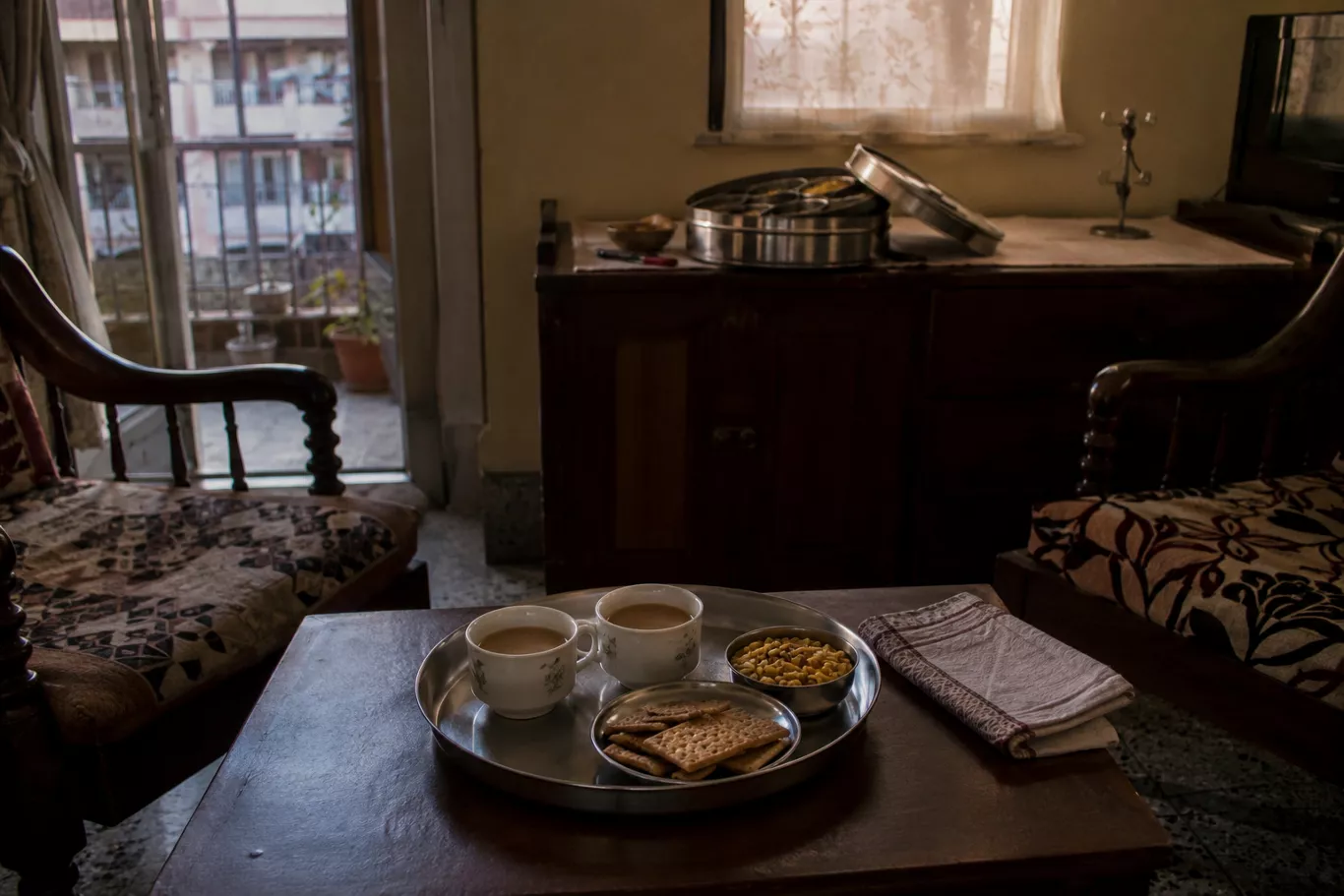
Then she took out a steel dabba from the second shelf.
Inside were namkeen, a few packets of Mom’s Magic, and something wrapped in an old bread packet with a rubber band around it. I asked who was coming.
She said, “No one.”
“Then why are you taking all this out?”
She looked at me as if I had asked why the ceiling fan was on.
“Someone may come.”
No one came.
We had tea. My father found his glasses. The snacks went back into the dabba after an hour.
But I kept thinking about that sentence.
Someone may come.
The Prepared House
My mother’s house is always prepared for a person who might arrive.
Not a specific person. Not a confirmed guest. Just the possibility of someone.
There is always something to offer with tea. There is always a clean glass available. There is always an extra packet of biscuits somewhere. There is always namkeen that is not for the house but for “in case.” In case a neighbour drops in. In case a relative comes without calling. In case my father brings someone home and informs her only from the gate, which he has done enough times for this to become a system.
This is not hospitality in the big sense. It is not dinner parties or planning menus or calling people over. It is smaller than that. A readiness. A house that refuses to be caught with nothing to serve.
My mother does not think of this as effort. She thinks of it as basic functioning.
I think of it as one of those things women of her generation do so completely that no one counts it as work.
The Guest Who Might Come
When we were younger, guests came all the time.
Neighbours came without calling. Relatives came if they were passing by. My father’s friends came and sat for tea. My mother’s friends came and somehow one cup of tea became two hours. Someone would ring the bell and the house would rearrange itself around them.
I remember the speed of it.
My mother would open the door and her voice would change into the guest voice. Warmer, louder, slightly more energetic. “Arre, aaiye.” Come in. Sit. I’ll make tea.
By the time the guest sat down, the tray had begun assembling itself.
Cups. Plates. Biscuits. Namkeen. Something sweet if there was something sweet. If there was nothing sweet, my mother would still find something from somewhere. This remains one of her gifts. She can produce snacks from a house that appears empty to everyone else.
Now people call before coming. Or they don’t come. Plans are made on WhatsApp and cancelled on WhatsApp. Neighbours are polite but distant. Relatives say we must meet and then everyone gets busy. The doorbell rings mostly for deliveries.
But my mother’s shelf has not accepted this change.
The shelf is still ready.
My friend Priya says her mother has a “guest drawer.” It has napkins, unopened biscuit packets, dry fruits, two kinds of namkeen, and a chocolate box someone gifted in 2022 that is not to be opened because it is “for guests.”
Priya once opened it.
Her mother behaved like a minor crime had taken place.
“That was for guests.”
“Which guests?”
“Guests.”
There is no arguing with the category.
The Visit That Did Not Happen
A few months ago, my mother thought one of my aunts might come over.
Might.
Not confirmed. Not planned. Just mentioned in passing.
My mother prepared as if the visit had been registered with the government. She checked what was in the house. She told my father to get fresh milk. She made sure the living room was straightened. She took out the better cups. She asked me if I thought the sofa cover looked old, a question no child should be made responsible for answering.
The aunt did not come.
Something came up. There was traffic. The visit became “next time.”
My mother said, “Haan haan, no problem,” on the phone.
Then she put everything back.
Not angrily. Not sadly. Efficiently.
That was somehow worse.
I asked if she was disappointed.
She said, “No. Why disappointed?”
Then after a few minutes she said, “I had made chutney also.”
That was the disappointment.
Not the cancelled visit itself. The chutney that had been made for someone who did not arrive.
The Waiting Nobody Names
I think a lot of our mothers are waiting in ways they would never call waiting.
They are not sitting by the window dramatically. They are not saying they are lonely. They are not asking people to visit more. They are just keeping things ready.
A packet in the dabba. Extra tea leaves. A clean bedsheet. Something in the freezer. A mental list of what can be made quickly if someone comes.
Read one way, this is hospitality.
Read another way, it is hope.
Not big hope. Not the kind that announces itself. Just the small domestic hope that the bell may ring and someone may stay long enough for tea.
My friend Karan’s mother still buys a particular namkeen because his uncle used to like it when he visited. The uncle has not visited in three years. The namkeen is still bought.
Karan asked her why.
She said, “If he comes, he’ll ask.”
That sentence stayed with me.
If he comes.
The whole system is built around if.
What I Do Now
Now when I go home, I try to eat the guest snacks.
If my mother takes out the nice biscuits and says they are for guests, I say I am a guest. I live elsewhere now. I have arrived with a bag. This qualifies.
She says, “Don’t be silly.”
I take one anyway.
Sometimes I make her take one too. She will say she does not want it. Then she will say she will have it later. Then she will say she has already had tea.
So I put it on her saucer.
She eats it eventually.
There is a lot of love in making sure your mother eats the thing she was saving for someone else.
The Guest Who Did Come
That evening, no one came.
But I was there.
This is the part I think I missed for years. I kept thinking the snacks were waiting for someone else. Maybe they were. But I was also someone who had come home. I was also sitting at the table. I was also being offered tea.
When your mother says “someone may come,” maybe some part of her still includes you in that someone.
You, who left.
You, who now visit.
You, who ring the bell at your own house and wait for someone to open it.
My mother put the snacks back after tea. I watched her close the dabba, tighten the lid, and return it to the second shelf.
“Keep it outside,” I said.
“Why?”
“I’ll have it later.”
She looked pleased in the smallest possible way.
Later that night, I did have it. Not because I was hungry. Because I wanted the dabba to have been opened for someone.
Because someone had come.


