



Sign in to share
Dhruv Saxena
I mentioned a backache in passing during a phone call in November.
Not even a proper mention. It was background information. I said something like "yeah it's been a long week, my back is a bit sore" and then immediately moved on to whatever else we were talking about. It was not a medical update. It was not a request for intervention. It was filler.
Three days later my mother called with a list.
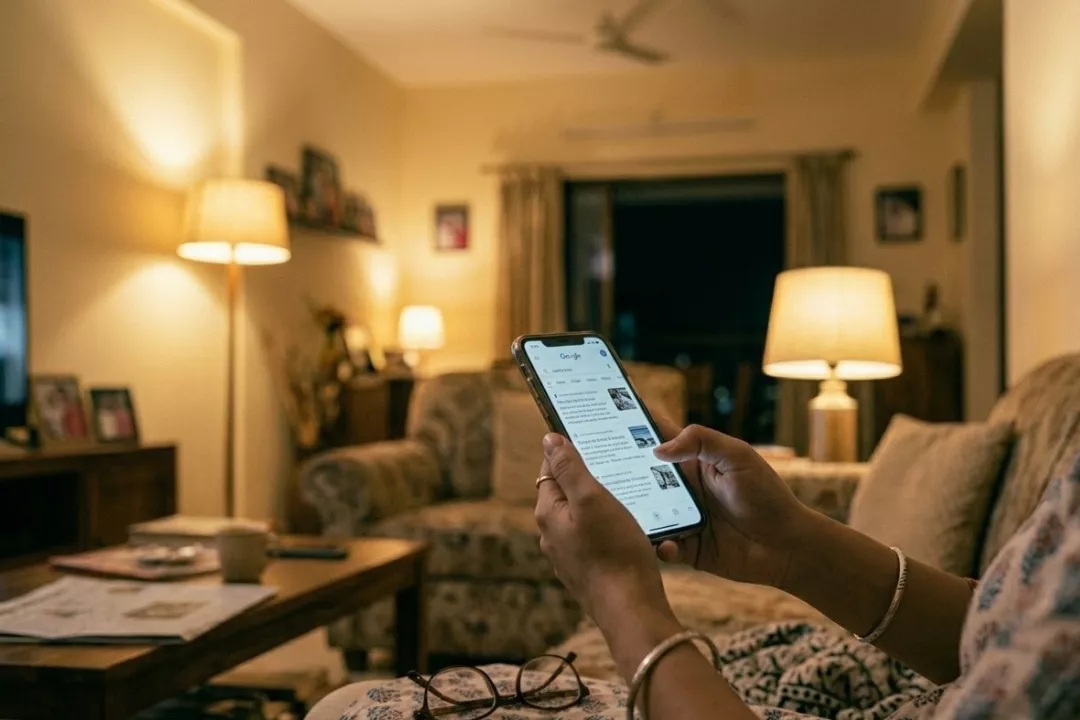
She had Googled "back pain in men in their thirties." She had cross-referenced it with my job, which she knows involves sitting at a desk, and my diet, which she suspects is inadequate, and my sleep schedule, which she is certain is wrong. She had consulted one of her friends whose son is a physiotherapist. She had a theory about my posture. She had the name and number of a specialist in Bangalore. She had dietary recommendations. She was ready.
I had forgotten about the backache entirely. I had slept on it and it had gone away.
She had, in that same period, done more research on my back than I have ever done on any part of my own body.
I was sitting at home when she called, eating Mom's Magic biscuits for no particular reason except that I had them and they were there, and she walked me through her findings with the focused energy of someone presenting a case. I listened. I said I felt fine. She said that's what people say before it gets worse. I said my back was genuinely okay. She said the specialist was very good and it couldn't hurt to just call.
I did not call the specialist. She did not mention this again. But I know, with absolute certainty, that she still has his number saved.
The Research Operation
I only found out the full extent of what she does because my sister told me.
My sister, who is two years older and has been subject to this system longer, had figured it out before I had. "She Googles everything," my sister told me. "Every single thing we mention. She just doesn't tell us she's doing it."
She doesn't tell us because telling us would require admitting she was worried, and admitting she was worried would mean we'd tell her not to worry, and she has no intention of not worrying. So she just researches quietly, privately, and deploys the findings when she deems it appropriate.
My sister once mentioned she'd been feeling tired. Standard adulthood tired. My mother, without saying anything, had by the next week looked up iron deficiency, vitamin B12 deficiency, thyroid issues, and general fatigue causes in women in their thirties. She had assembled a shortlist. She called my sister under the guise of a regular catch-up and casually mentioned that maybe she should get a blood test done.
My sister, who was just tired from working too much, got the blood test done. Her iron was slightly low.
My mother said nothing about having predicted this. But her silence had a very specific quality. The quality of someone who has been proven right and is choosing not to make a thing of it.
The WebMD Problem
The issue with this system, and my mother is not alone in this, is that the internet is not designed to reassure people. It is designed to surface every possible explanation for every possible symptom, ranked in no particular order, with equal visual weight given to "you're probably fine" and "this could be serious."
My mother does not take "you're probably fine" as a conclusion. She takes it as a starting point.
My friend Rohan told his mother he had a mild headache one evening. By the following morning she had sent him three messages. The first was about hydration. The second was about screen time. The third contained a link to an article about migraines that was, in his estimation, not remotely applicable to his situation but which his mother had clearly read in full.
He had taken a paracetamol and gone to sleep. He was fine. His mother had been awake, researching.
My other friend Ankita made the mistake of mentioning that she sometimes got heart palpitations. She said it casually, in the context of being stressed at work. Her mother, within forty-eight hours, had consulted two doctors she knew personally, looked up every possible cardiac and non-cardiac cause, and developed a strong opinion about Ankita's caffeine intake.
Ankita's palpitations were stress-related and resolved when she took a week off work. Her mother has not fully accepted this conclusion and continues to monitor the situation.
My cousin Sameer mentioned to his mother that he'd been sneezing a lot. She sent him an article about dust mite allergies, a recommendation to change his pillowcase more frequently, and the name of an allergist. He had been sneezing because he'd run out of antihistamines and bought the wrong brand. His mother, to this day, believes it was the dust mites.
What The Googling Actually Is
My father pointed something out to me once that I've thought about since.
He said that when we were small and lived at home, my mother always knew when something was wrong. She could tell from how we looked, how we moved, whether we'd eaten, how we slept. She had a full set of data about us at all times.
Now we live in other cities. We call and we say we're fine. She has no way of verifying this. All she has is what we tell her, which is always some version of fine, and the occasional passing mention of a symptom that we've already forgotten about by the time we hang up.
So she Googles. It's the only tool she has. She can't examine us so she researches instead. It's not anxiety. It's data collection under difficult conditions.
I find it equal parts touching and mildly exhausting. Mostly touching.
The Part Where I Stopped Being Annoyed
I used to find the calls with the specialist's number mildly exhausting. I don't anymore.
I think about her, sitting somewhere in Delhi, reading an article about back pain in men in their thirties, making notes, thinking about her son who she can't see and can't check on. Doing research she'll never fully explain because explaining it would mean admitting how much she worries.
She Googled my backache before I thought to. She knew about my sister's iron levels before my sister did. She is, in her own quietly anxious way, still keeping track.
That's not suffocating. That's love with a search bar.
Pick up the phone. Tell her you're fine. She'll believe you. Then she'll Google it anyway, just to be sure.


