



Sign in to share
Dhruv Saxena
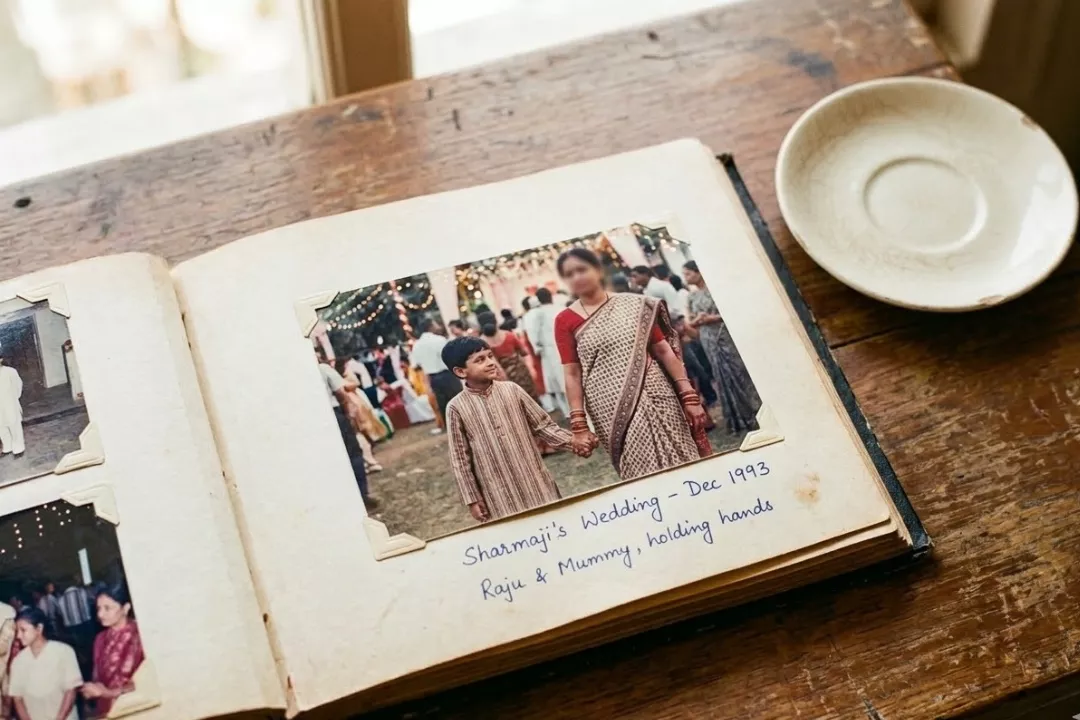
I was going through old family photos last month. The ones that live in a physical album nobody has opened in years. My mother produced it from her bedroom cupboard as if she had been waiting for exactly this moment.
We sat at the kitchen table going through it. She had her chai and a Mom's Magic biscuit. I was eating them off her plate without asking. It’s something I've done my entire life and have no intention of stopping. Hehe.
And that's when I noticed it.
In every photograph from before I turned roughly ten, I am holding her hand. Sometimes it's just a finger. Sometimes it's the edge of her dupatta. But there's always contact. Always this unconscious reaching, like I had a homing instinct calibrated specifically to her.
And then somewhere around double digits, I just stopped. The photos changed. I'm still standing next to her, still smiling, but there's air between us now. The hand that always found hers had apparently decided it could manage on its own.
My mother pointed this out before I did. "You used to hold my hand everywhere," she said, in the tone of someone stating a simple fact and absolutely not making you feel guilty about it. "Even to get milk from the corner shop."
I had no memory of this. But she remembered it precisely.
The Withdrawal Nobody Announces
There's no conversation when this happens. No formal notice. No nine-year-old sitting his mother down to say, "I've been thinking and I feel it's time we established some boundaries in public." It just happens. One day you're reaching for her hand at a crowded market. The next, you're walking three feet ahead and pretending you don't know her.
My friend Rahul told me his exact moment was his school's annual sports day. He was seven. His mother had shown up with a tiffin of his favourite food and proceeded to wave at him enthusiastically from the stands every time he looked in her direction. He was mortified. Not because she'd done anything wrong. Just because he was suddenly, acutely aware that other people could see him having a mother who loved him very loudly in public, and he wasn't ready for that level of exposure.
He didn't hold her hand that day. He's in his thirties now and still thinks about it sometimes.
What She Felt That You Didn't Know You Were Doing
When you talk to mothers about this, they always know exactly when it happened. The specific occasion. The specific withdrawal. The first time the hand wasn't taken.
They didn't say anything at the time because what would you even say. So they filed it away quietly. Adjusted. Recalibrated. Did what Indian mothers do with every quietly difficult thing. Absorb it, carry it, and mention it years later when you're sitting at the kitchen table looking at old photos.
I asked my mother when she first noticed it with me. She didn't hesitate. It was at a family wedding. I was about nine or ten. There was a crowd and some noise, and previously that would have been exactly the kind of situation where I'd have found her hand automatically. Instead, I apparently wandered off to find my cousins, and she stood there for a moment realising that her homing device had been quietly decommissioned without her knowledge.
She said it matter-of-factly. Then she took another biscuit and moved on to the next photograph. That's what made it hit harder than if she'd made a whole thing of it.
The Deal We Made Without Knowing
The withdrawal was never really about her. It was about figuring out who we were separately from her. Which is necessary, and healthy, and presumably what all the child development books say about independence.
But it came at a cost we didn't pay and she did.
She watched us practice being people without her, from close range, for years. She was the one who had to quietly update the image she carried of us, from the child who needed her hand to the person who was actively not needing anyone's hand in public. Nobody thanked her for letting go gracefully when we needed her to.
My cousin Arjun said the moment he stopped holding his mother's hand in public was the moment he started the long project of becoming someone she'd eventually have to let leave home entirely. The hand was the beginning of the goodbye, stretched out over a decade.
He meant it philosophically. His mother, who was in the room, immediately started crying and asked why he was doing this to her on a Sunday.
The Bit Where It Comes Back Around
What nobody tells you at ten, when you're busy practicing independence, is that you'll spend your thirties reaching for her again. Not literally, in public, at the market. But in the ways that count.
You'll call because you had a hard day and she's still the person who makes it better. You'll sit at the kitchen table and eat biscuits from her plate without asking. You'll find yourself, at a crowded family wedding, looking across the room to locate her before you've consciously decided to do it.
The homing instinct doesn't disappear. It just goes quiet for a while, waiting for you to stop being embarrassed about having a mother who loves you loudly.
I'm thirty-one and thoroughly over being embarrassed about it.
She'll probably read this and remind me that I still walk three feet ahead of her sometimes. She's right. I'm working on it.


