



Sign in to share
Dhruv Saxena
I found out my mother was proud of me from my mother's friend's neighbour's daughter. Haha. Seriously.
I'll explain.
I had just gotten a promotion at work. A good one. I told my mother. She said "okay, good" and immediately asked if I was eating properly, as if these two pieces of information were equally urgent and she'd already moved on to the more pressing one.
I was mildly deflated. I told myself it was fine. This is just how she is.
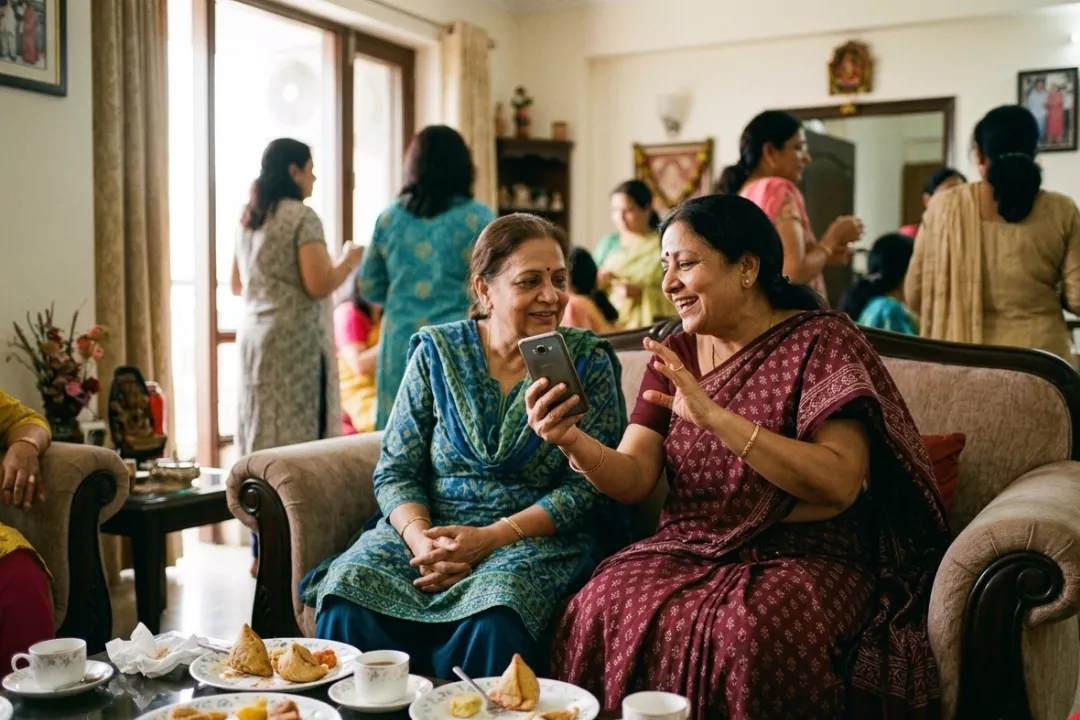
Three weeks later, I ran into Mrs. Sharma's daughter at a wedding. Mrs. Sharma is my mother's friend. Her daughter and I are not close. We have met maybe four times in our lives. She grabbed my arm and said, "Congratulations on the big promotion! Your mom was telling everyone at kitty party. She was so happy."
I stood there holding my drink.
My mother had told the entire kitty party. She had not told me.
When I got home I asked my mother about this. She was in the kitchen, putting out Mom's Magic biscuits with the evening tea because I was visiting and that's just what happens when I visit. I said, "Amma, Mrs. Sharma's daughter told me you were talking about my promotion at kitty party."
She didn't look up from what she was doing. "So?"
"So you didn't tell me you were proud."
She looked up then. She gave me the look. The one that says: what exactly do you want from me, a certificate?
"You know," she said, and went back to the biscuits.
I did not know. That is the entire problem.
The Indirect Pride System
Indian mothers have developed, over generations, a highly sophisticated system for expressing pride that involves telling everyone in the world except the person they're proud of.
It works like this. Your mother is proud of something you did. She cannot tell you directly because that would be too simple and also potentially dangerous, in the sense that you might get a big head and stop trying hard. So instead she tells Mrs. Sharma. Mrs. Sharma tells her daughter. Her daughter tells you at a wedding three weeks later while you're trying to eat your starters.
The information gets to you eventually. Just never directly. And never from her.
My friend Rohan got a paper published in a respected journal last year. His mother's response when he told her was to ask whether this meant he'd finally be able to get a stable job. That was the whole conversation. He was disappointed.
Two months later, his aunt called him to say his mother had been showing the paper to everyone at a family function. She'd apparently printed it out. She was carrying a printed copy of her son's academic paper to family functions and showing it to people.
She had not told him any of this.
The Compliment She Cannot Give
I've thought about this a lot. I've also asked around, because this seems universal enough to be cultural rather than just maternal quirk.
My colleague Priya's mother has never once directly complimented her cooking. Not once. In ten years of Priya cooking for her. But Priya knows, because her mother's friends have told her, that her mother talks about Priya's cooking constantly. Apparently there's a chutney Priya makes that has become something of a legend in the building.
Priya's mother has eaten this chutney probably fifty times. She has never said it was good. She once said it could use slightly less coriander, which Priya has come to understand, in retrospect, was basically a Michelin star.
The direct compliment is, for some reason, the hardest thing. Everything else is available. The worry, the advice, the questions about food and sleep and whether you're wearing enough layers. All of that flows freely and constantly.
But "I'm proud of you"? Stuck. Somewhere between the thought and the mouth, it just doesn't make it out.
Why This Happens
My father, who has observed my mother for thirty-five years and occasionally provides unsolicited analysis, has a theory about this.
He says her generation was never told directly either. Her mother didn't say it to her. So she doesn't quite have the muscle for it. She feels it completely. She just doesn't have a template for how to say it out loud to the person's face. It's not withholding. It's more like a language she never learned to speak.
I asked my mother if this was true.
She said, "Your father talks too much."
Which I'm choosing to interpret as a yes.
The Decoding Project
Once I understood the system, I started translating backwards. Going through my life and re-reading my mother's responses with the new key.
The time she called her sister immediately after I told her about my first job. I thought she was just making conversation. She was announcing.
The time a neighbour stopped me to say my mother had mentioned I was doing well. I didn't think anything of it at the time. Now I understand that was the equivalent of a press release.
The time she made my favourite food the evening I came home after a difficult month at work, without me asking, without me telling her things had been hard. She knew. She didn't say anything. She just made the food.
That was pride too, I think. And care. And the particular way she says I see you without ever quite saying it.
The Part I'm Still Working Through
I still wish she'd just told me. I'm not going to pretend the kitty party announcement is a full substitute for hearing it directly. It isn't. There's something about being told to your face, by the person, that the secondhand version can't replicate.
But I've stopped being deflated by the "okay, good" responses. I know now what they actually mean. She's already composing the announcement for Mrs. Sharma in her head. She's thinking about which relatives to call. She's planning the food she'll make when I next visit.
She's proud. She just needs Mrs. Sharma's daughter to tell you about it.


