

The Couple Fight That Happens Every 3 Months. And What It’s Really About


Sign in to share
Shikha Sharma
We’ve had the same fight seventeen times. That’s right. Seventeen!
I know because after the last one, I actually counted. I went back through old messages, old journal entries, the times I called my best friend in tears.
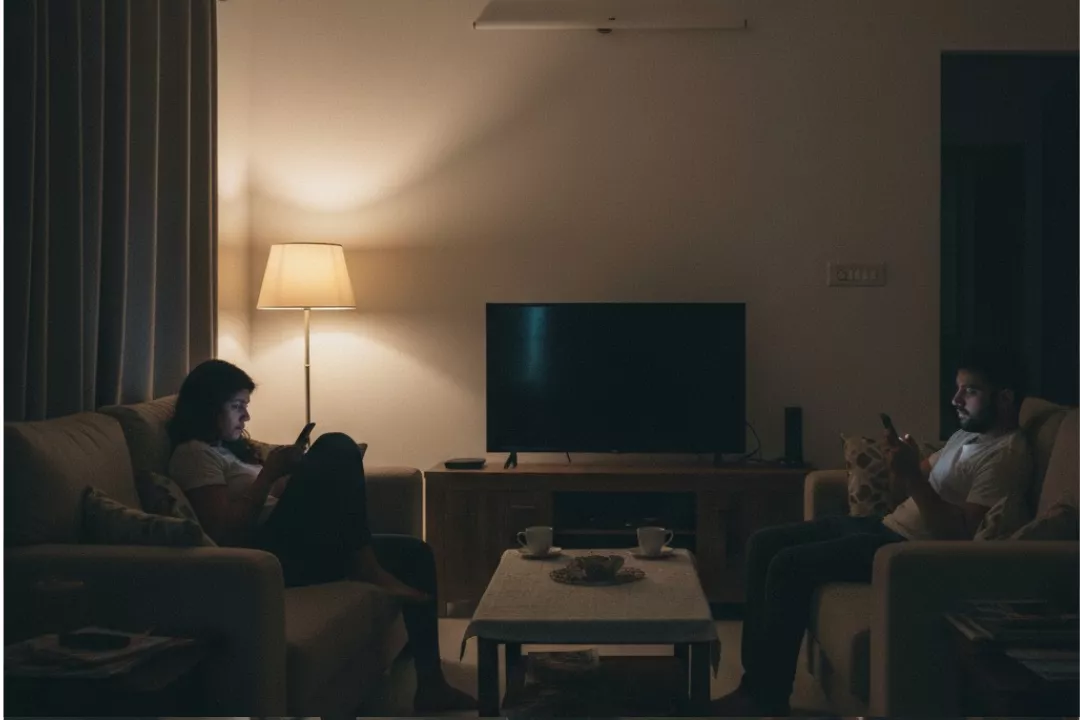
It starts with something small. He forgets to text me when he’s running late. Or I make plans without checking with him first. Or he leaves the kitchen messy again. Or I sound “short” over text.
And then we're off. The same loop. The same accusations. The same defences. And the same exhausted silence at the end.
For the longest time, I thought we were broken. I thought, healthy couples don’t fight about the same thing over and over. Healthy couples resolve things and move on.
Then I started talking to other people. Like my friends, colleagues, even my parents. And all of them had a recurring fight. Every single one of them.
The details, however, change. But the core fight? It’s always the same. And it’s never actually about what you think it’s about.
The Fight Looks Different Every Time
Our recurring fight has had many costumes over the years.
Sometimes it’s about him being on his phone too much. Sometimes it’s about me working late again. Other times it’s about whose family we’re visiting for the holidays. At times it’s about something as stupid as choosing which biscuit to buy. He loves Sunfeast Marie with his tea. I like chocolate cookies.
But if you strip away the surface details, it’s always the same fight underneath.
The thing is, I feel invisible. And he feels criticised. I want more attention. He wants less pressure. I need reassurance. He needs space. Trust me, that is it.
And do you know what’s the frustrating part? We both know when it’s happening. Mid-argument, I can feel it. The familiar shape of it. The exact same pattern we’ve been through before.
But knowing doesn’t stop it. We still spiral. We still say the things we’ve said a dozen times before.
Why Do We Keep Having the Same Fight?
I used to think recurring fights meant incompatibility. Like, if we were right for each other, we’d figure this out and stop doing it.
Then I read something that changed how I understood it.
Dr. Dan Wile, a couples therapist, and a former professor at University of California, has this line. “When choosing a long-term partner, you will inevitably be choosing a particular set of unsolvable problems.”
Note the last two words. “Unsolvable problems.”
And that’s not because you’re doing relationships wrong. It’s mostly because you’re two different people with different needs, different fears, different ways of being in the world.
And sometimes those differences create friction. Actually, not sometimes. It’s regular and predictable.
But you know, the recurring fight isn’t always a sign that something’s broken. It’s a sign that you’ve hit one of your core incompatibilities. The places where your needs don’t naturally align.
And you’re going to keep hitting it. It doesn’t go away.
What the Fight Is Really About
Over time, and after seventeen fights, I realised it’s never about the dishes. It is never about being late. It’s not really about the plans or the phone or whose family we’re seeing.
It’s about what those things represent.
When I get upset that he didn’t text me he’d be late, I’m not actually mad about the text. I’m scared that I don’t matter enough to be kept in the loop. That I’m an afterthought.
When he gets defensive about me “nagging” him to clean up, he’s not actually annoyed about the request. He’s frustrated that nothing he does feels like enough. That he’s always falling short.
Same fight, different day. But the core wounds are always the same.
Once I understood this, I started recognising the same pattern in other couples.
My friend and her husband fight about money every few months. On the surface, it’s about spending or saving. Underneath, she’s scared they’re not secure, and he's scared he's failing as a provider.
My cousin and her partner fight about social plans. Surface level, it’s about how much they go out. Underneath, she feels disconnected when they stay in, and he feels drained when they’re constantly around people.
My parents fight about my dad’s work schedule. But it’s not really about the hours. It's about my mom feeling like she’s managing everything alone, and my dad feeling like his effort isn’t acknowledged.
The Part We Get Wrong
I feel, we constantly and compulsively try to solve the surface problem.
He promises to text me when he’s running late. I promise to stop “nagging” about the kitchen. And we think, okay, good, we fixed it.
Except we didn't. Because the problem wasn’t the text or the kitchen.
The problem was the underlying need that wasn’t being met. And unless we actually address that, the fight just finds a new costume and comes back.
Three months later, we’re fighting again. This time it’s a different trigger but the same core issue.
I feel unseen. He feels inadequate. And around we go.
How to Actually Break the Cycle
I'm still figuring this out, to be honest. But there’s something that’s helped us.
First, name the real fight.
Not the surface one. The one underneath.
The next time we started spiralling, I stopped mid-argument and said, “This isn't about you being late. I’m scared you’re pulling away from me.”
He looked at me for a second. And then he said, “I'm not pulling away. I just feel like I can't do anything right.”
And there it was. The actual fight. Finally out in the open.
Once we could see it clearly, we could talk about it. We were not perfect. There was still some bit of frustration. But at least we were talking about the right thing.
Second, recognise the pattern early.
Now when I start to feel that familiar tightness in my chest, that urge to pick a fight over something small, I pause.
I ask myself, “Is this really about the thing I’m upset about? Or is this the fight trying to come back?”
Most of the time, it’s the old fight. And if I can catch it early, I can say, “I'm feeling disconnected from you” instead of waiting until I'm yelling about the dishes.
Third, accept that it's going to keep happening.
This was the hardest part for me.
I wanted to fix it. I wanted us to have that one big conversation where we finally resolve it for good and never fight about it again.
But that's not how it works. Does it?
Our needs are always going to be slightly out of sync. I’m always going to need more reassurance than feels natural for him to give. He's always going to need more space than feels comfortable for me to allow.
That’s just who we are. It’s not going to change. But what can change is how we handle it.
Instead of spiralling into the same argument, we can recognise it. “Oh, we're doing the thing again.” And then we can talk about the actual need instead of fighting about the trigger.
It doesn’t make the tension go away. But it makes it manageable.
The Difference Between Healthy and Unhealthy Recurring Fights
Let’s be honest, not all recurring fights are created equal.
Some recurring fights are just part of being in a relationship. The natural friction that comes from two different people sharing a life.
But some recurring fights are signs of something deeper. Something that actually does need to be addressed.
So, what’s a healthy recurring fight?
In this case, both people are trying. You fight, you repair, you try again. The fight doesn’t get worse over time, it just keeps resurfacing because the underlying tension is always there.
And what’s an unhealthy recurring fight?
One person stops trying. The fight gets meaner each time. There’s contempt, or stonewalling, or a refusal to engage. You’re not fighting about needs anymore, you’re fighting about worth.
If it’s the first kind, you can work with it. If it’s the second kind, you might need help. A therapist, or a a mediator maybe. Someone who can help you figure out if this is fixable.
Our latest fight was cute
It started with the same general shape. He was busy, I felt ignored, I said something sharp, he got defensive, and we spiralled.
But this time, about ten minutes in, I stopped.
“We're doing it again,” I said.
He nodded. “Yeah.”
“I don't actually care that you didn’t text me back. I just miss you. I feel like we haven’t really talked in days.”
He came closer, held my hand, exhaled, and said, “I know. I've been slammed. But I'm not pulling away. I'm just tired.”
And that was it. The fight deflated. In fact, we hugged. That’s never happened before. Who hugs mid-argument? We did. And I loved it. LOVED IT!
We still feel the tension. The misalignment is still there. I still want more connection than he has energy to give sometimes. He still needs more space than I’m always comfortable with.
But we’re getting better at naming it. At recognising the pattern. At talking about the real thing instead of the stand-in.
It’s not perfect. It’s still hard. But we're not fighting about dishes anymore.
We're fighting about what actually matters. And that, I think, is progress.
I’m going back to hugging him after this. I’ll probably make him some tea with a couple of Sunfeast Marie biscuits.


