



Sign in to share
Shikha Sharma
My husband and I drive to my parents' place four times a year.
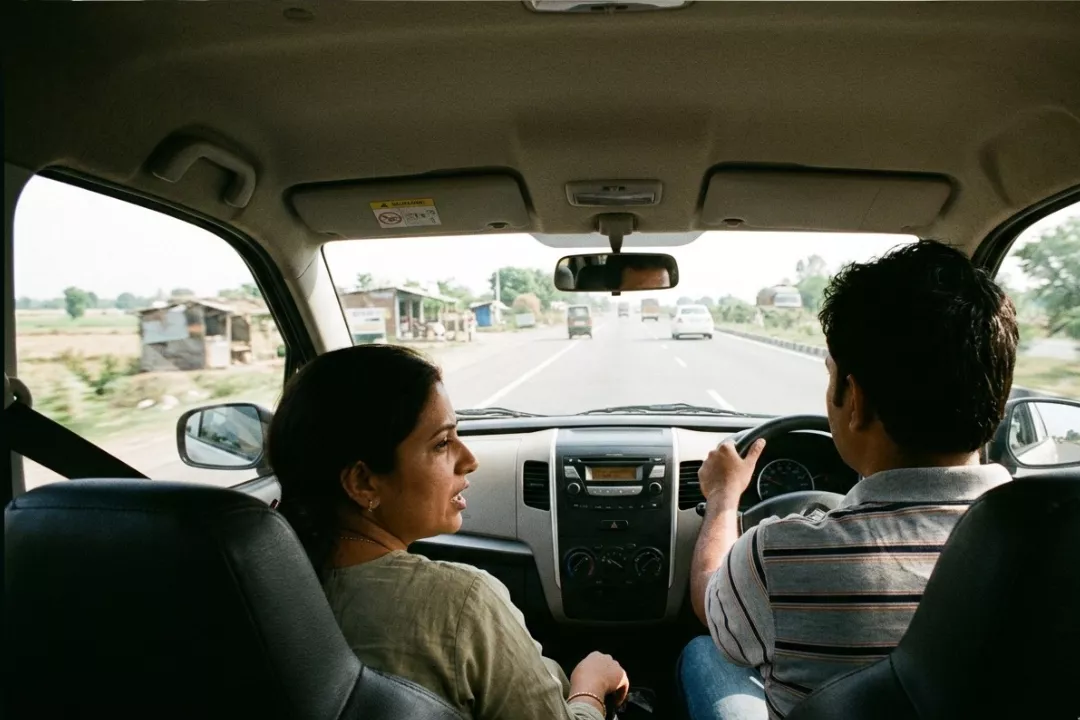
It is a three hour drive. Not difficult. Not interesting enough to require active navigation. Highway for most of it, familiar enough that neither of us needs to concentrate very hard, which means both of us have three hours in a car with nothing to do except be in the car together.
The first time we did this drive, two months after we got married, I expected it to be neutral. A transit between the leaving and the arriving.
It was not neutral.
By the time we arrived I had found out three things about my husband that I had not known before we got into the car. Not significant revelations. Just real things. Things that came out in the particular way that things come out when you are going somewhere together and there is nowhere else to be and the conversation has time to develop without being interrupted by arrival.
He talked about his childhood more specifically than he usually did. He told me something about his relationship with his father that he had mentioned in general terms before and now described with detail. He said something about what he wanted for us in the next few years that we had discussed but not like this.
I do not know exactly why the car does this. I have a theory.
There is no eye contact. That is the main thing. You are side by side, both facing forward, both technically engaged in being in a car. The absence of eye contact removes the performance pressure of a face-to-face conversation. The thing you say cannot be watched as it lands. You say it to the windshield and it lands and you both continue looking at the road and the landing is somehow easier.
I told him this theory about a year into the drives. He thought about it and said that was probably right. He then told me something he had been meaning to say for a while that he had not found the right moment for. We were on the highway. There was nowhere to be. The right moment had arrived.
We stopped about halfway for chai and I had Sunfeast Marie Light from the bag I always pack for drives, because three hours requires snacks and I am the person who plans for this, and we sat at a dhaba table for twenty minutes and then got back in the car and continued. It was one of the better drives we have done.
The First Hour
The first hour is decompression.
We have both left whatever the week has been. The work, the small accumulated tensions of domestic life that have not been addressed because there has not been time. The car creates distance from all of that, physically, which produces distance psychologically as well.
In the first hour we talk about easy things. The week. Logistics about the visit. Something that happened that we have not had time to properly discuss. Nothing heavy. The first hour is warm-up.
My friend Priya described the first hour of her drives as the downloading. She and her husband both arrive at the car with a mental list of things to cover. The drive is when the list gets addressed. She said they have more real conversation in those three hours than in an entire week at home. At home there is always something else. The drive has nothing else.
The Second Hour
The second hour is where the real things come out.
Not because anything is planned. Because the decompression of the first hour has done its work and the surface has cleared and what is underneath has room to surface.
My husband said something in the second hour of a drive last year that I do not think he would have said at the dinner table. It needed more runway than dinner provides. It needed the first hour of easy things before it could come out naturally.
I heard it differently in the car too. Face to face I might have responded too quickly, before he had finished. In the car I was looking at the road. I listened to the whole thing. The whole thing was what mattered.
My friend Kabir says the second hour of drives with his wife is when they have their best arguments. Not fights. Arguments. The kind where both people are actually saying what they think. At home their arguments have an audience. The car has no audience. The second hour of a long drive is when his wife says what she has been not-quite-saying all week and he responds with what he has been not-quite-saying and they sort it out before they arrive.
He says they have never arrived at a destination still fighting. The drive cannot be exited early. He suspects this is why.
The Arrival Problem
The problem with the long car drive is that it ends.
You arrive. You get out. The people are there and the visit begins and the conversation that was happening in the car gets suspended. Sometimes it gets resumed. Sometimes the arrival interrupts it at a point where resuming it later requires more effort than continuing it would have required.
The best drives end at a natural pause. The second best drives end mid-conversation and resume on the return. The worst drives end at a point where something was just getting said and getting back to it requires acknowledging that it was said.
We have gotten better at this. We now know which conversations need to be finished before arrival and which ones can wait for the return drive. This took about two years to develop.
The Return Drive
The return drive is different from the drive there.
Going, you are anticipating. Coming back, you are processing. The visit has happened and you are both carrying it and the car is where you talk about what you just experienced before you arrive home and re-enter the regular life.
My husband and I have had some of our most useful return drives. The debrief of a difficult family moment. The making sense of something that happened at the visit that we could not discuss while we were there. The quiet space between one place and another where everything is still fresh and we can look at it together before it becomes part of the past.
The drives to my parents' place have given us, across four years of quarterly trips, somewhere between twenty-four and thirty-two hours of car time. That is a significant amount of time. A lot of things said that might not have been said otherwise.
Three hours. Highway. No eye contact. Nowhere to be.
It turns out to be exactly the right conditions.


