



Sign in to share
Shikha Sharma
My husband and I planned a holiday last September.
Just us. Four days in a place we had been meaning to go to for two years, a hill station I will not name because it would date the piece and also because the specific place is not the point. The point is that it was planned as a particular kind of holiday. The kind where you go somewhere and you slow down and you eat at the good places and you walk and you read and you talk about things you have not had time to talk about because the year has been busy and the year is always busy.
We planned it for three weeks. We booked the place we wanted to stay at. We agreed on a rough shape for the days. We talked about it in the specific way of anticipating something that will be good.
And then, approximately sixteen hours before we were due to leave, his mother called with something that was not an emergency but was adjacent to one. The kind of thing that does not require you to cancel everything but does require someone to be available and the available person was going to be my husband and the availability was going to be from Delhi, not from a hill station.
We did not cancel. We modified.
His parents came. We went to a different place, closer, that could accommodate four people. The four days became three days and included two dinners with his parents and one afternoon where his father's requirements for the day were different from what we had planned.
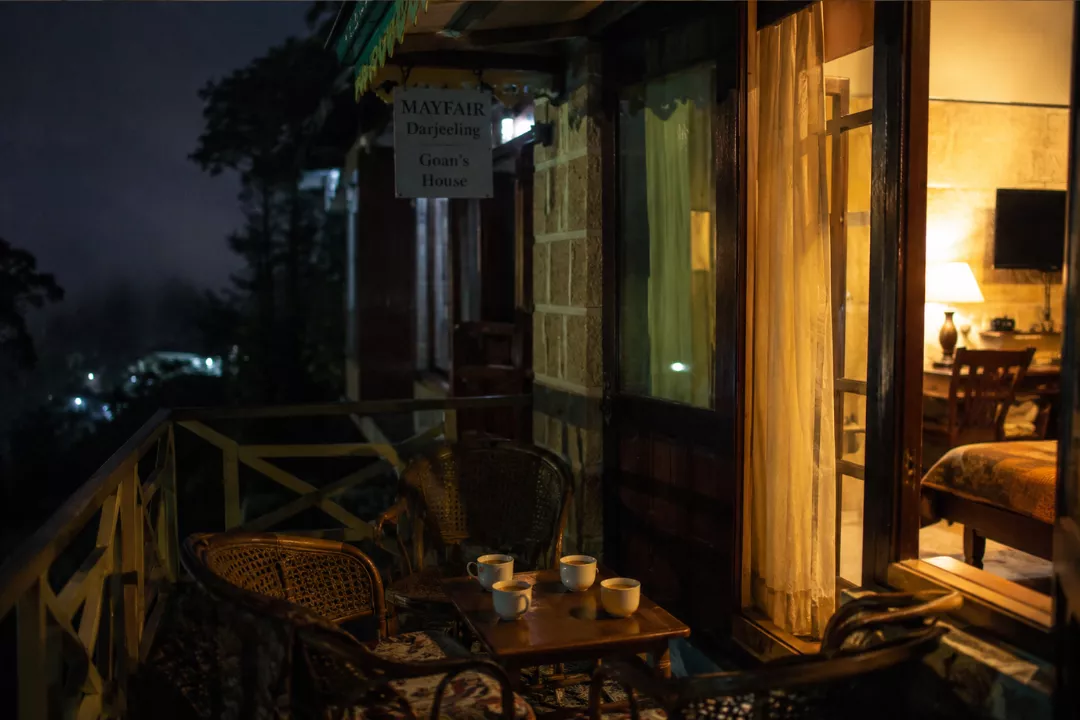
I sat with this on the first evening. We had Sunfeast Marie Light and chai on the hotel veranda and his parents were inside and my husband was sitting next to me and I was thinking about the holiday we had planned and the holiday we were having and the gap between them.
The gap was real. The holiday we were having was also real.
What Had Changed
The logistics had changed. The shape of the days had changed. The particular kind of slowness we had planned, the just-us slowness, was not available.
What had not changed: we were still somewhere different from home. We were still not working. We still had mornings and evenings together. We still had the meals, even if two of them were with four people rather than two. We still had the walking, even if the walking was sometimes at a pace that suited four people rather than two.
The holiday we had planned was not available. A different holiday was available.
I have thought about this since and I think the planned holiday and the actual holiday are always different and the difference is always the point.
My friend Priya planned a holiday with her husband to a beach. They had been talking about the beach for a year. They booked. They arrived. The beach was crowded in a way they had not anticipated. The weather did one unexpected thing. The place they had wanted to eat at was closed. None of these were significant individually. Combined they meant the holiday they had arrived at was not the holiday they had planned.
She said the second day she stopped grieving the planned holiday. She said the grieving was taking up space that the actual holiday needed. She put down the planned version and picked up the actual version. The actual version was good. The beach was still a beach.
What the Parents Added
His parents added things I had not planned for.
His mother told me things about his childhood on the second evening. Things I had not heard. Specific things, the kind that do not come up in ordinary conversations but that come up when you are somewhere different from usual and the usual context is not dictating what gets said.
She told me about a trip they had taken when he was eleven. What he had been like on that trip. The specific things he had said and done that she had remembered for thirty years and was now telling me in a hotel veranda while he was inside looking for something.
I sat with those stories for a long time after she told them.
The holiday I had planned would not have had those stories in it. The holiday I was having did.
My friend Meera's planned holiday became a family holiday when her sister had an unexpected situation that resolved itself partway through and her sister joined them for the back half. She said she had been frustrated when the sister joined. She had planned a particular kind of thing. The sister's arrival changed the kind of thing.
She said the back half of the holiday, with her sister, was the part she still thinks about. Her husband and her sister got on better than she had expected. She saw something between them she had not seen before. The planned holiday would have been good. The actual holiday gave her something the planned holiday could not have.
The Gap as a Feature
I have started thinking about the gap between the planned holiday and the actual holiday as a feature rather than a problem.
You plan the holiday you want. The plan is the intention. The actual holiday is the intention meeting the world, which has its own plans that are not always aligned with yours. The gap is where the world's plans and yours negotiate.
The negotiation produces things. Not always the things you wanted. Sometimes better things. Sometimes just different things that turn out to have a different value than the planned things.
His parents came. I heard about the eleven-year-old version of my husband on a hotel veranda at night. His mother told the story with the fondness of someone who has been carrying it for thirty years and was glad to finally put it down somewhere.
I am glad she put it down with me.
The planned holiday would have been good. The actual holiday had that story in it.
I would not trade the story.
My husband came back from inside with whatever he had been looking for. He sat down. We had chai. His parents came out and joined us. The four of us sat on the veranda and the evening was not the evening we had planned.
It was fine.
It was, in the end, exactly the kind of slow that we had been looking for.
Just with more people in it.


