



Sign in to share
Shikha Sharma
My husband and I went to six weddings last year.
Six. Between March and December, six weddings of varying sizes and distances and formality levels, requiring six sets of outfits and six rounds of gift decisions and twelve individual halves of a couple navigating the specific social terrain of someone else's wedding.
By wedding four I had developed a scorecard.
I want to be clear that I did not decide to develop a scorecard. It developed itself, the way these things do, through the accumulation of data points across multiple events. At some point I noticed I was tracking things and by the time I noticed it the scorecard already had entries.
The scorecard tracks the following. Whose friend's wedding it was. Who knew more people and therefore had the social advantage. Who had to make more conversation with strangers while the other one disappeared to find the bar or talk to someone they actually knew. Who danced and who did not. Who ate properly and who grazed at the buffet for three hours without committing to a plate. Who was tired first and whether the person who was tired first was allowed to be tired first or had to pretend not to be tired because the wedding was their friend's and leaving early was not an option.
At wedding four, which was my husband's colleague's wedding in a venue that was forty-five minutes from our house and required leaving at 7pm and returning at 1am, I calculated that I had spent two hours making conversation with people I did not know while my husband circulated with colleagues he sees every day and therefore had a much more comfortable evening than I did. I made this calculation at the buffet line. I mentioned none of it at the time.
I mentioned it on the way home.
He said he had not disappeared, he had been visible the whole evening. I said visible and available are different things. He said I should have found him if I needed rescuing from a conversation. I said the point of a partner is that they notice when you need rescuing without being summoned.
We had Sunfeast Marie Light from the packet in my bag, which I keep for exactly the kind of long event where you need something to eat quietly in the car on the way home and not talk about the evening yet, and by the time we got home we were fine. The scorecard entry was filed. The score was noted. We went to sleep.
Wedding five was better. He checked in more. I told him directly when I needed extracting from a conversation. The system improved through feedback.
The Outfit Calculation
The outfit situation at weddings is its own subsection of the scorecard.
Indian weddings require outfits. Not just any outfits. Outfits that are appropriate for the specific wedding, which involves knowing the family, the venue, the level of formality, and what others are likely to wear, none of which is standardised information.
My husband's approach to wedding outfits is to wear a kurta. Any kurta. The appropriate kurta. He owns several kurtas and the decision tree for selecting one takes approximately four minutes.
My approach to wedding outfits involves significantly more variables. The colour of the wedding decor if known. The formality level. What I wore to the last event I attended with this particular group of people. Whether it is a day event or evening. The weather. Whether there will be dancing.
The decision takes significantly more than four minutes. It has, on occasion, taken three days.
My husband has never once commented on this disparity. He has occasionally offered to help in ways that were not helpful, such as saying "just wear what you wore last time" about an event where wearing what I wore last time was not an option for reasons I did not have the bandwidth to explain at that moment.
The outfit effort is not on the official scorecard. It exists in a supplementary document that I am aware of and he is not.
The Plus One Burden
The wedding where you know nobody is a specific category of experience that the scorecard treats as a high-effort event.
At my husband's colleague's wedding, I knew my husband and the colleague's name. That was the full extent of my social knowledge going in. I spent the evening being introduced to people whose relationship to the couple I had to reconstruct from context, making conversation at round tables where everyone else already knew each other, and performing the social labour of being an interested and pleasant stranger for four hours.
My husband did not experience this as a high-effort evening because he knew everyone.
I have been to enough weddings as the plus one to understand that it is a different event from the one the person you came with is attending. You are at the same venue in the same outfits eating from the same buffet and having completely different experiences of the evening.
The scorecard accounts for this. Events where I am the plus one count more than events where we are both equally connected to the couple.
The Dance Situation
There is always a dance situation.
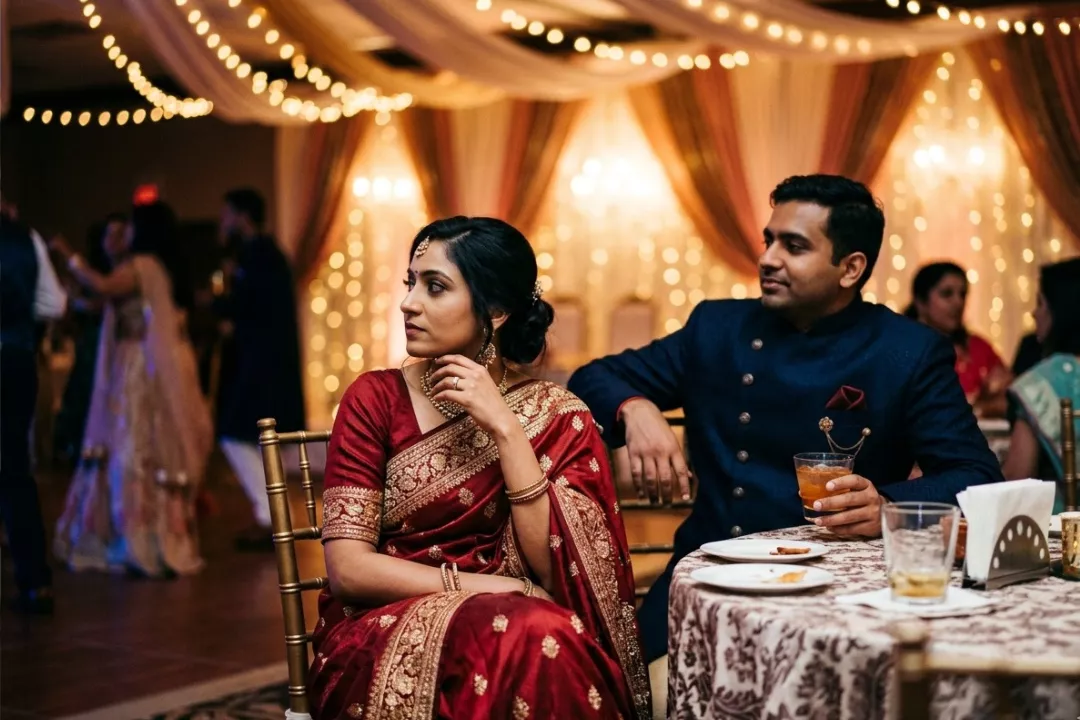
My husband does not dance. He is aware that he does not dance. He has accepted this about himself with a completeness that I find both admirable and slightly inconvenient, because weddings have music and music creates an expectation and the expectation falls on the person in the couple who does dance, which is me.
I dance at weddings. I enjoy dancing at weddings. I also notice, while dancing at weddings, that I am dancing and my husband is sitting at a table with a drink with the expression of someone who is perfectly content and has no intention of joining.
I have accepted this. We negotiated it, informally, across several weddings early in our relationship. He comes to the floor for one song per wedding. Just one. He dances for one song with the commitment of someone doing a task they have agreed to do and then he returns to the table.
One song. Every wedding. We have maintained this arrangement without discussing it for four years.
The scorecard notes whether the one song happened or not.
The Return Journey
The return journey is where the scorecard gets tallied.
Not out loud. Never fully out loud. But on the way home, in the car, eating something from my bag, the tally runs.
Whose wedding it was. How the evening felt. Whether the one song happened. Whether the introduction to strangers was shared or unilaterally absorbed. Whether the outfit effort was acknowledged or unnoticed. Whether the partner who was tired was allowed to be tired.
Most of the time it balances. Not perfectly. Not in each individual event. But across the season, across six weddings, across the accumulated small negotiations and social labours and one-song commitments, it more or less balances.
The scorecard is not about winning. It is about noticing. About making sure that the effort is seen even if it is not always named.
Wedding season is over. We both survived it.
The score, I will note, is roughly even.


