



Sign in to share
Shikha Sharma
My husband and I were both sick last October.
Not the same thing. Two different things, overlapping. He had a cold that had been going on for four days. I developed a fever on day three of his cold, which meant we were sick simultaneously but at different points in our respective illnesses and therefore in different states of need at the same time.
This is worse than being sick alone.
When you are sick alone, the flat is quiet and you manage it and it is not pleasant but it is manageable. When you are sick together, neither of you can be the person who makes things better because you are both the person who needs things to be better. The role of the well person is vacant. Nobody has applied for it. The flat waits.
I realised this on day two of my fever. I needed tea. Not a complex request. I lay on the couch and thought about getting up to make tea and concluded that getting up was not available to me at that moment. I would have asked my husband to make tea. My husband was in the bedroom with the cold, horizontal, also not available for tea-making. I made the tea myself. The making took longer than it should and I had to sit down twice during it.
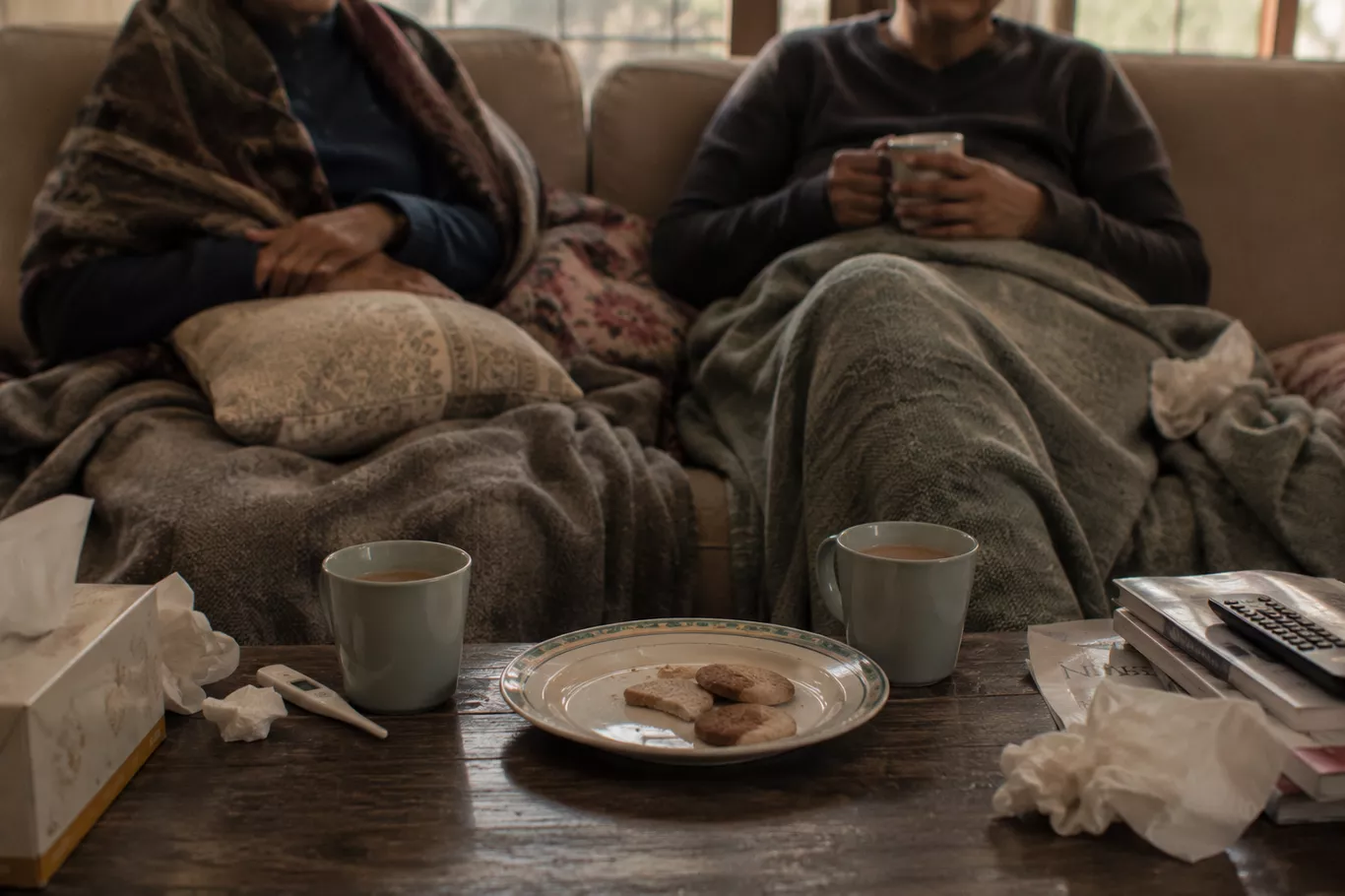
We were both on the couch later, Sunfeast Marie Light on the table because neither of us had the energy to get anything requiring preparation, and I said I thought us being sick at the same time was specifically worse than either of us being sick separately. He said he agreed and he had been thinking the same thing since yesterday. I said why had he not said anything. He said he had not wanted to make me feel bad for being sick at the same time as him.
I said that was very considerate given that I had not chosen the timing. He said he knew. We ate biscuits. We were both still sick.
The Role That Is Vacant
The well person in a sick household has a specific set of functions.
The well person makes tea. The well person gets water. The well person provides the update on what the temperature reading is and whether the temperature has gone up or down. The well person finds the specific medicine that is definitely in the flat somewhere and has been in the flat for six months and is now needed and cannot be located. The well person goes to the medical store when the medicine cannot be located.
The well person also does the less tangible things. The well person checks in. The well person says you should sleep and means it in the way that has care behind it rather than the way that means I want quiet. The well person makes the sick person feel slightly less alone in the being sick.
When both people are sick, none of this is available from outside the situation. Both people need the things. Neither person can provide the things. The things must be obtained through individual effort at a time when individual effort is in short supply.
My friend Priya was sick with her husband last winter and described the same situation. She said the specific lowpoint was when they both needed water at the same time and looked at each other for a moment and then both got up to get their own water because neither of them was in a position to get the other person's water as well as their own. She said they passed each other in the kitchen, both moving slowly, both getting their own water, and the comedy and the misery of it arrived at the same time.
She said they both laughed. The laughing made them both cough.
The Coordination Problem
Sick together introduces a coordination problem that sick separately does not have.
Sick separately, the well person organises the day around the sick person. The sick person has no obligations. The sick person rests. The sick person gets what they need.
Sick together, both people have needs at unpredictable intervals and the needs have to be coordinated without a coordinator. We developed a system over the two days. Not a formal system. An informal one based on who felt marginally less terrible at any given moment being the person who did the thing.
He made the second cup of tea because I had made the first and he had rested in between and was therefore marginally better positioned to make tea than I was. I got the medicine because he had gone for water twice and his legs were tired in the way that legs get tired when you are ill and have used them more than the illness allows for.
The marginal-wellness system is inefficient and requires continuous assessment of relative wellness, which is itself tiring when you are unwell. It was the best available system.
My friend Kabir told me he and his wife have been sick together twice and the second time was better than the first because they had experience of the first time. They had learned from being sick together before. He said this was not knowledge he had ever expected to accumulate in a marriage. He said it was surprisingly useful.
What It Does
Here is the thing about being sick together.
The specific loneliness is real. I have named it and it is real. But underneath the loneliness there is something else.
You are sick and the person who is usually the person you would turn to is also sick and cannot be that person right now and you both know this and you are both managing with that knowledge and neither of you is making it worse for the other. He did not complain that I had introduced a fever into the already-sick household. I did not complain that his cold had used up the household's allocation of sympathy before my fever arrived. We were just both sick, on the couch, eating biscuits, managing.
There is a version of closeness in that. Not romantic closeness. The closeness of two people in the same difficult thing together, neither of them performing wellness or cheerfulness, both of them just being honestly in the thing.
The tea I made alone was fine. The couch with him on it, both of us sick, Marie Light on the table, was better than being sick alone would have been.
I would not have predicted this.


