



Sign in to share
Shikha Sharma
The first time we forgot the house keys, it was funny.
The second time, it was annoying.
The third time, it became governance.
This is how rules enter a marriage. No one wants them at first. Everyone believes they are the sort of person who can remember a small object before leaving home. Then one evening you are standing outside your own door, hungry, tired, and holding vegetables, while your husband pats his pockets with the slow horror of a man discovering his own plot.
"Keys?" I asked.
He looked at me.
I looked at him.
The lift door opened behind us and Mrs. Rao from the fourth floor stepped out with her shopping bag. She saw our faces and knew immediately. People in apartment buildings can identify key failure from twelve feet away.
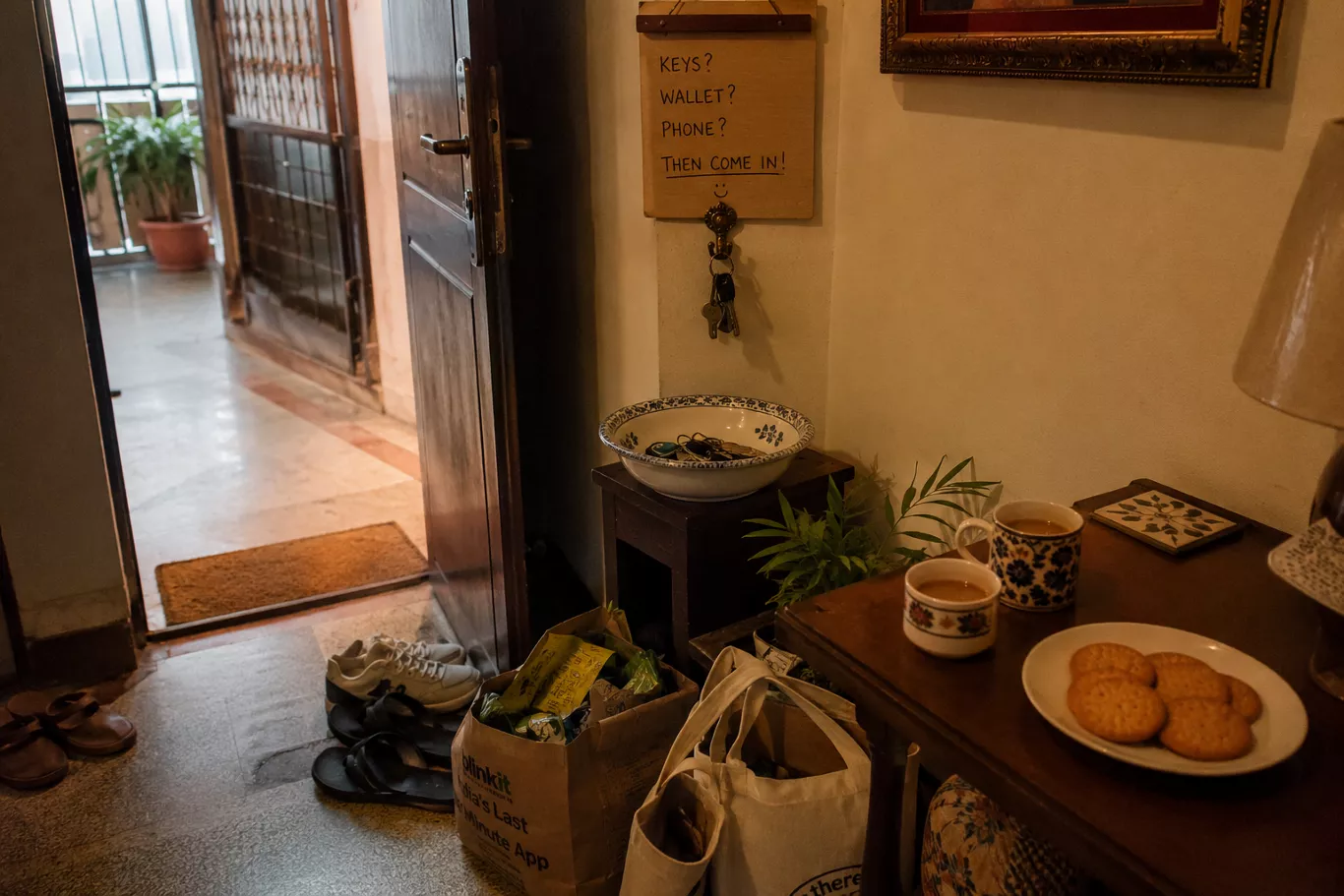
We had tea and Sunfeast Marie Light biscuits later that night, after the spare key had been collected from the watchman and the vegetables had stopped judging us. But at that door, in that hallway, we were not snack people. We were two adults locked out by optimism.
**The First Time Was Cute**
The first time happened two months after we moved in.
We had gone downstairs to collect a delivery. The door closed behind us. The keys were inside. Our phones were inside too, because we had gone "just for a second," which is how many domestic stories begin badly.
We laughed.
Then we stood in the lobby, barefoot, because neither of us had worn proper shoes.
The delivery man waited with the parcel and watched our marriage receive its first procedural warning.
We borrowed the security guard's phone, called my husband's brother, who had a spare key, and spent forty minutes sitting near the reception desk pretending this was charming.
It was a little charming.
Newly married people can make inconvenience look like an anecdote if it ends before lunch.
Priya says she and her husband once locked themselves out on a Sunday morning and ended up eating dosa downstairs in night clothes. She says it became a sweet memory only after she stopped being angry about the wet hair.
Time is generous with first mistakes.
**The Second Time Had Less Romance**
The second time happened six months later.
We were leaving for a movie. I asked if he had the keys. He said yes. I heard yes and believed it, which was generous of me and foolish of both of us.
At the parking lot, he said, "Actually..."
There are few words more dangerous after a person has asked a direct question.
Actually, the keys were on the dining table.
Actually, the door had locked.
Actually, we had to go back upstairs and call the neighbour who had our spare.
Actually, we missed the first fifteen minutes of the movie.
I did not handle it with elegance. I gave a speech in the lift about the purpose of questions and the cost of confident answers. He said he thought the keys were in his pocket. I said thinking and knowing are cousins, not twins.
Meera later said this line was good but maybe wasted in a lift.
She was right.
**The Third Time Brought the Rule**
The third time was the vegetable evening.
We had gone to the market together, which already means one person wanted company and the other person wanted coriander chosen correctly. We returned with two bags, a packet of curd, and one debate about brinjal quality still unfinished.
At the door, there were no keys.
This time, neither of us laughed.
The watchman had the spare key, but he had gone for tea. The spare key was in his drawer. His drawer was locked. The drawer key was with him. Somewhere in the neighbourhood, a man was drinking tea while our dinner ingredients warmed gently in a cloth bag.
My husband called him.
He said he would come in ten minutes.
He came in twenty-two.
The corridor became our waiting room.
Karan says every couple needs one public embarrassment to create a private system. In his house, it was forgetting the car keys inside the car. In ours, it was standing outside the flat with coriander and curd while Mrs. Rao asked if we had "again" forgotten keys.
Again is a cruel word from a neighbour.
**The Bowl by the Door**
That night, we created the key bowl.
It is not really a bowl. It is a small ceramic dish near the entrance. But "key dish" sounds too fragile, and "key bowl" has authority.
The rule is simple.
Keys enter the bowl before shoes come off.
Keys leave the bowl before humans leave the house.
No pocket storage. No dining table parking. No "I kept it near the bag." No mysterious side locations. Bowl or hand. That is the system.
My husband said this was too formal.
I said three lockouts had made formality attractive.
For the first week, we performed the bowl ritual with exaggerated seriousness. He would come in, place the keys in the bowl, and say, "Deposited." I would say, "Recorded." This is how adults recover from shame.
Nikhil says he and his wife have a similar system for the car keys, except their bowl also contains coins, one safety pin, a broken keychain, and old parking slips. The system works, he says, if you are willing to search under the useless items.
Our bowl is still clean because I monitor it like a border post.
**The Spare Key Politics**
Spare keys are their own marital subject.
Who gets one?
Parents? Neighbour? Watchman? Friend nearby? The person who will not judge you? The person who will judge you but arrive fastest?
We gave one to Mrs. Rao after the watchman tea incident.
This was my husband's idea, which annoyed me because it was good.
Mrs. Rao accepted the key with the dignity of a bank manager. She labelled it with our flat number and placed it in a small pouch. I felt both safe and slightly exposed. There is something intimate about another person having access to your locked-out future.
Two weeks later, she rang our bell to return a pressure cooker whistle my husband had left with her after borrowing it. She said, "Good you opened. Otherwise I have key."
She smiled.
I laughed politely.
Power had shifted.
**The Rule Has Mostly Worked**
We have not been locked out since.
This is not because we became better people. It is because the bowl is better than both of us.
The bowl does not rely on memory. It waits by the door and makes one small demand every time we enter. Put the keys here. Take the keys from here. Do not turn the house into a guessing game.
Last week, we were leaving for dinner. My husband had his phone, wallet, and shoes. I had my bag and a small list of things to buy on the way back. He opened the door.
The bowl made its silent accusation.
I said, "Keys."
He looked down.
There they were.
He picked them up and said, "See? System."
I said, "The system saved you."
He said, "It saved us."
Fine.
Us.
When we came home, he put the keys in the bowl before removing his shoes. Then he looked at me to make sure I had seen it. I had.
I gave him one Sunfeast Marie Light biscuit from the packet on the dining table.
Positive reinforcement works on husbands too.


