



Sign in to share
Dhruv Saxena
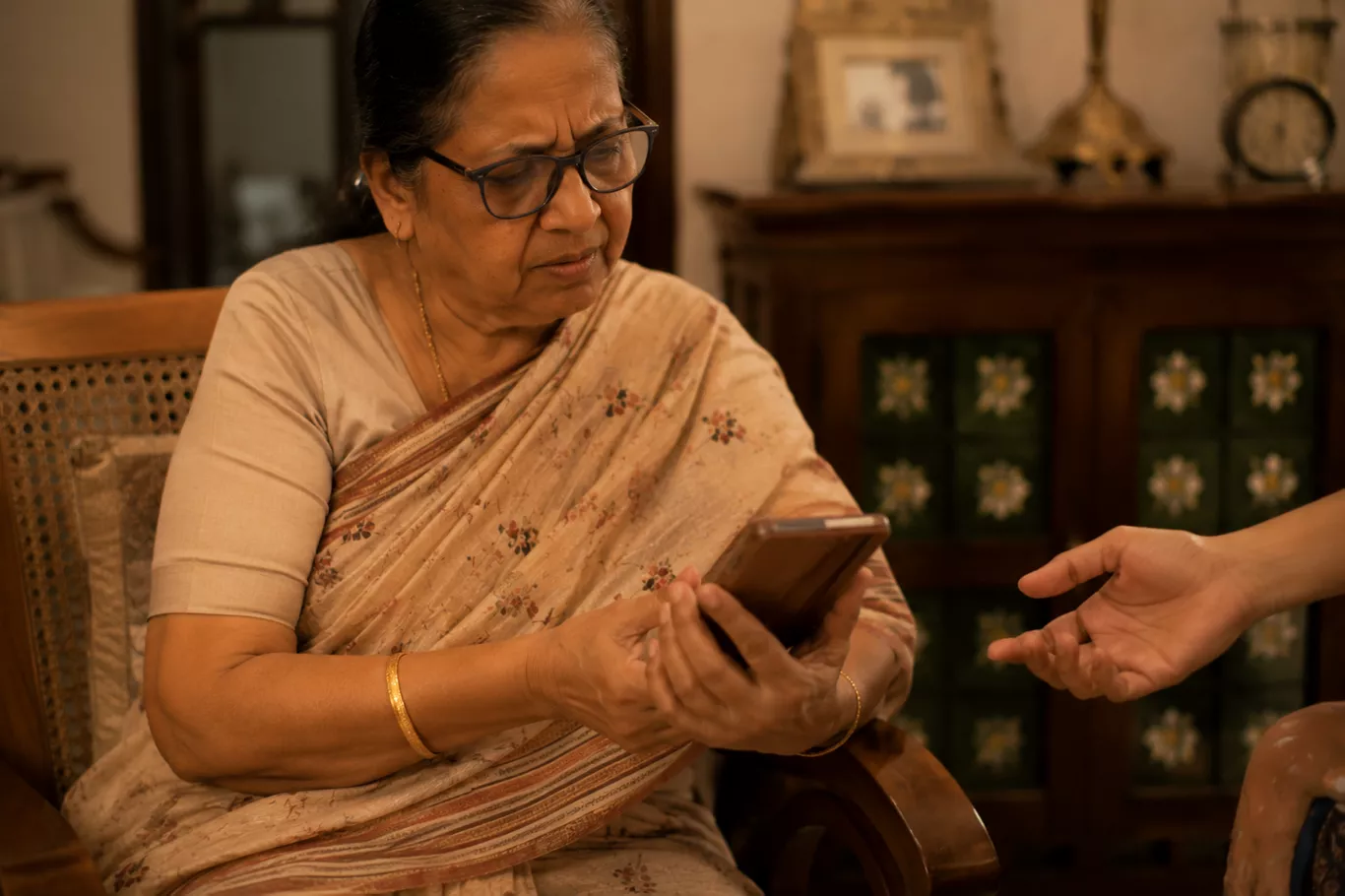
My mother sent me a screenshot of her phone screen to ask me why her phone screen looked like that.
The screenshot was taken of the phone that she was using to take the screenshot. I am not sure how she accomplished this technically. The screenshot showed the home screen. The home screen looked exactly as it should look. There was nothing wrong with the home screen. I stared at the screenshot for a long time trying to identify the specific wrongness she had observed and could not find it.
I called her. I asked what she meant by it looks like that. She said it just looks different. I asked different from what. She said from before. I asked what it looked like before. She said normal. I asked if anything had happened before it started looking like that. She said she had pressed something. I asked what she had pressed. She said she did not know, that was why she was calling me.
We spent twenty-three minutes on this call. The issue was that she had accidentally changed the text size to large. The fix took thirty seconds once I understood the problem. The diagnosis took twenty-two and a half minutes.
I was home last month. We were at the kitchen table, chai between us and Mom's Magic biscuits on the plate, and she said while I was there she wanted to show me some things on the phone that she did not understand. I said of course. She produced a list. The list was on paper. She had written down the things she wanted to ask me. There were seven items on the list.
We spent an hour on the list. Five of the seven items were settings she had accidentally changed. One was a WhatsApp feature she had discovered and wanted to understand. One was a question about why her phone got hot sometimes, which was not a settings issue and which I could not fully resolve but which I explained as best I could.
She thanked me. She seemed genuinely relieved. I packed up my things and went to get more chai and she called out from the kitchen: beta, one more thing.
There was an eighth item not on the list.
The Evolution
I did not become my mother's IT support overnight. The role accumulated gradually over years.
It started with cable television, around 2009. She could not work the new remote. I showed her. I was home for a weekend. This took twenty minutes and was fine.
Then it was the first smartphone, around 2013. I was home for four days. Two of the four days were substantially devoted to the smartphone. This was still fine.
Then it was WhatsApp, then photos, then video calls, then the apps her friends were using, then the UPI payment system which took three sessions across two visits, then the phone upgrade and the attendant crisis of everything looking different, then the streaming service her sister had recommended, then the settings my father accidentally changed and which she discovered and which she called me about from Delhi at 9pm on a Tuesday.
I received that call in Bangalore. I guided her through the settings remotely. This took forty minutes. I did this in my flat, in my own time, because the phone being wrong was causing her genuine distress and I was the person who knew how to fix it.
This is the role. I am the person who knows how to fix it. I did not apply for this role. I was assigned it by virtue of being the youngest person in the family who understands technology and the person most likely to explain it without making her feel bad for not knowing.
My friend Nikhil has the same role in his family. He has remote access set up on his mother's phone so that when something goes wrong he can fix it directly rather than guiding her through the fix verbally, which he calculated was taking on average forty minutes per issue and which remote access reduced to seven. He considers this a significant quality of life improvement. For both of them.
What She Is Actually Asking
I have thought about the IT support calls and I think they are not entirely about the phone.
The phone is the reason for the call. The call is also a check-in. She has a reason to call me and she uses it. The twenty-three-minute call about the text size was twenty-three minutes of talking to me. The problem could have waited. She did not want to wait.
My friend Karan noticed this when his mother started texting him photos of things in the house asking if they looked right. Not broken things. Just things. A photo of a plant. A photo of the dinner she had made. A photo of the view from the window on a nice day. He said at first he did not understand what she was asking. Then he understood she was not asking about the things. She was sharing them. The phone had given her a mechanism for sharing ordinary moments of her day with him and she was using it.
He said he started responding more to the photos. He sends a short reply to each one now. She sends more photos. He is glad she sends more photos.
The List
The list on paper is the part I want to stay on.
She wrote down the things she wanted to ask me. Seven items, on paper, before I arrived, because she did not want to forget and she did not want to waste my time by being disorganised. She prepared for the IT support session the way she prepared for parent-teacher meetings when I was in school: with notes, with specific questions, with the goal of being efficient.
She is seventy-two years old and she made a list on paper so she would not waste my time when I visited.
I looked at the list when she showed it to me. The handwriting is the same handwriting she has always had. The handwriting I have known my whole life. It was on a piece of paper torn from a small notebook.
I kept the paper after we finished the session. I did not tell her I kept it. It is in my bag right now, in Bangalore.
I do not know exactly why I kept it. I know it is not going in the bin.


