



Sign in to share
Shikha Sharma
We cancelled plans last Saturday and it was the best Saturday we have had in months.
The plans had been in the calendar for three weeks. A dinner with people we both like, at a restaurant we had been meaning to go to, on a date that had seemed fine when we booked it and seemed considerably less fine by the time Saturday arrived. By Thursday I had started hoping something would come up. By Friday my husband said he was not sure he was feeling up to it.
I said I was also not sure I was feeling up to it.
We looked at each other.
The conversation that followed took about four minutes. We went through the motions of the question, which is: do we go or do we cancel. The motions involved acknowledging that we liked the people, that the restaurant would be good, that we had been meaning to go, that cancelling last minute was not ideal. These acknowledgements are mandatory. You cannot skip to the cancellation without performing the acknowledgements first.
The acknowledgements were performed. We cancelled.
My husband texted the other couple. They texted back almost immediately. The response had the quality of people who were also relieved. Plans officially cancelled. Both parties free.
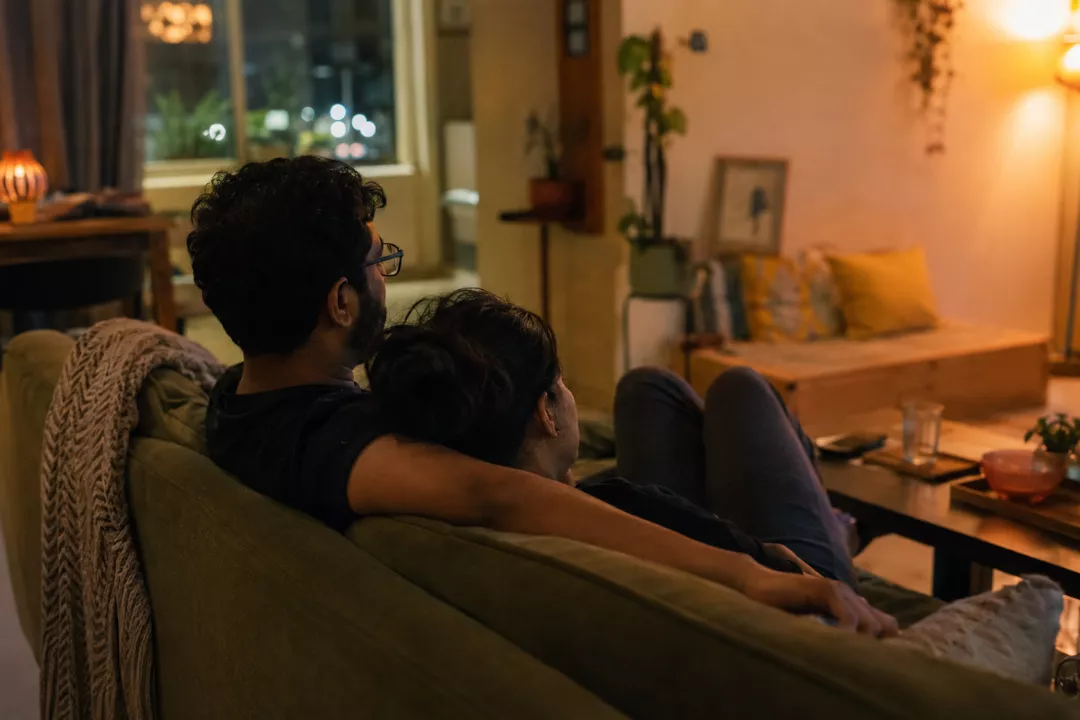
What followed was one of those evenings that only happens when the alternative evening has been removed. We did not plan it. We did not decide what to do instead. We were simply at home, with no obligation, and the home received us in the way that homes receive you when there is nowhere else to be.
We had chai and Sunfeast Marie Light at the kitchen table at seven in the evening because that is the thing we do at the kitchen table when there is no specific reason to do anything else. We watched something. We talked about things we had been meaning to talk about. We went to bed at a reasonable hour.
It was very good.
The Relief Specifically
The relief of cancelling plans is not just the relief of not going somewhere.
There is a secondary relief, which is the relief of finding out that the other person also did not want to go. This is the part that makes it specific to couples. If you cancel plans alone, you feel the relief but also a mild guilt and a mild suspicion that you are becoming someone who cancels plans. If you cancel plans together, the guilt is distributed and diluted and the thing is mutual and shared and you are both relieved and the relief is therefore twice as present.
My friend Priya cancelled plans with her husband last winter and described the conversation exactly. She said she had been hoping he would bring it up first so she would not have to be the one to bring it up. He had been hoping the same thing. They had both been waiting for the other person to say the thing. She said it eventually became a game of who would blink first. He blinked. She agreed immediately. She said the speed of her agreement told him something and the speed of his agreement told her something. They both knew each other had been wanting to cancel for days.
She said neither of them mentioned this to the other. They simply cancelled and enjoyed the evening.
The Conversation About It After
There is always a conversation after the cancellation that involves some amount of analysing whether the cancellation was the right call.
This conversation does not happen immediately. It happens sometime during the relief evening, usually when the immediate relief has settled and you have space to reflect. One of you says something like it was the right call, wasn't it, and the other says yes, definitely, and you both feel slightly more confirmed in the decision.
My husband and I had this conversation at around nine on Saturday. He said he was glad we had cancelled. I said I was also glad. He said we should do this more often, meaning not go to things when we do not want to go to things. I said we could not cancel everything. He said not everything. Just the specific things we did not want to go to. I said identifying those things in advance was harder than it seemed. He said he was getting better at it.
This is a conversation we have had before. It does not result in us cancelling more things. We still go to most things. But the conversation is part of the ritual of the cancelled evening and it is a good conversation.
The Friends Who Also Cancelled
The other couple texted again later in the evening.
They had also had a good evening at home. They had cooked something and watched something and were clearly also glad to have cancelled. The text had the quality of mutual relief confirmed by both parties. We should reschedule, the text said. Yes, we said. We meant it but we also knew that the rescheduled dinner would feel different. It would have been planned with care and anticipation. It would be good. But it would not have the specific quality of the evening that resulted from the cancellation.
The cancelled evening has its own quality that cannot be planned. It is the quality of a space that opened unexpectedly and that you occupied without agenda.
My friend Meera told me she and her husband have started being more honest about this with friends. When plans are being made, they sometimes say upfront that they might need to cancel closer to the date depending on how the week has gone. The friends have responded well to this. Most people, it turns out, appreciate the option being available. Plans made with an acknowledged exit are easier to attend and also easier to cancel without drama.
She said it changed how they socialise. Less obligation, more actual wanting-to-be-there.
What the Evening Was
The Saturday was good because it was ours.
Not ours in the sense of exclusive. Every evening is ours in some technical sense. Ours in the sense of chosen without agenda. We had not decided to have a good evening. We had simply cancelled something and the evening had arrived and we had been in it together without any particular plan.
The kitchen table at seven with chai and biscuits. The something we watched. The conversation we had. The bed at a reasonable hour.
We go to things and we enjoy things and the things matter. But sometimes the best thing is the thing you did not go to and the evening that opened because you did not go.
We are rescheduling the dinner. We are looking forward to it.
We are also, quietly, hoping the week before it is tiring enough that we cancel again.


