



Sign in to share
Shikha Sharma
My husband and I have a stress division system.
I did not know this until the washing machine broke.
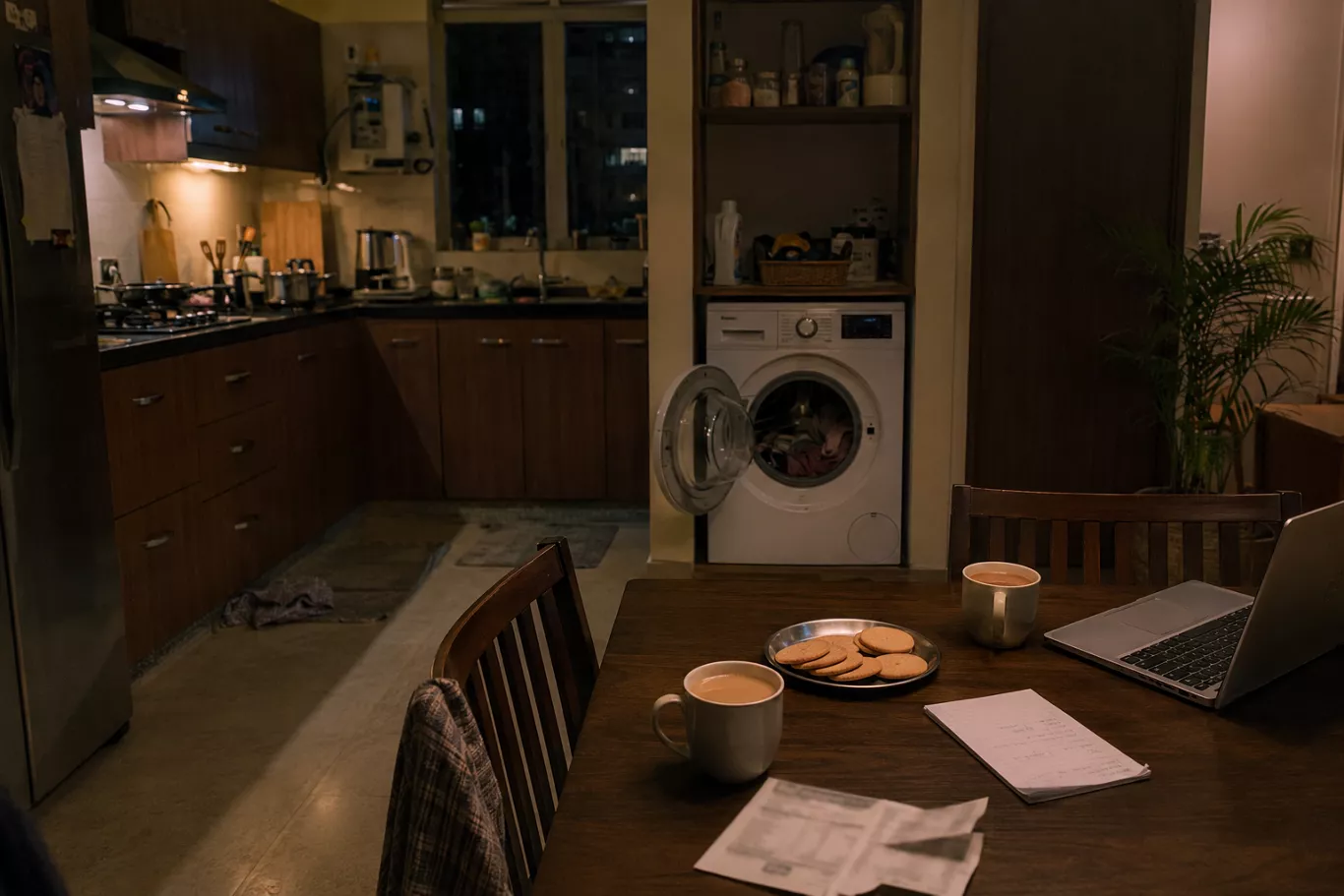
It happened on a Wednesday morning, which is the worst possible time for an appliance to develop a personality. I had a call in twenty minutes. He had already left for work. The machine made a sound that suggested it was either giving up or making a point. Then it stopped with a full load of wet clothes inside and a small blinking light that meant nothing to me.
I stood in front of it for a while.
Then I called him.
He picked up and said, “What happened?”
I said, “The washing machine has stopped.”
He said, “Switch it off and on.”
I said, “I have obviously done that.”
He said, “Okay, send me a photo.”
I sent him a photo of the blinking light. He called the service centre. He found the warranty details. He sent me a number. I went into my call. By the time I came out, he had spoken to someone and scheduled a visit for the next day.
I remember feeling relieved.
Not grateful in a dramatic way. Just relieved in the specific way you feel when a problem has moved from your head to someone else’s head for a bit.
That evening, I made chai. There was Sunfeast Marie Light on the table because that is what we eat on evenings when dinner is still far away and both of us need something to make the day feel less sharp. He told me about a work issue. I listened, asked three questions, and helped him think through a response he had been postponing.
It was only later that I noticed what had happened.
He had taken the washing machine.
I had taken the work issue.
Nobody assigned anything.
It just moved.
The Things We Pick Up
Every couple has things one person picks up first.
In our house, he picks up appliance problems, bank emails, anything involving a warranty, and most conversations with customer care. I pick up social planning, family temperature checks, gifts, travel details, and the question of whether we have enough food in the house for the next two days.
These are not strict departments. They are tendencies.
If the fridge starts leaking, he is more likely to open YouTube and watch a video by a man explaining something in a patient voice. If someone in the family sounds off, I am more likely to notice and say, “We should call.”
If we are travelling, I will think about snacks, chargers, medicines, weather, and whether the hotel check-in time makes sense. He will think about route, documents, cab timing, and the fact that I have packed as if we are relocating.
Both things are useful.
Both things are also slightly invisible to the other person until they are not done.
My friend Priya says she and her husband have a similar split. He handles car things, insurance things, and anything where someone has to speak sternly but politely to a service provider. She handles their parents, their domestic help, their calendar, and the quiet emotional work of knowing who is upset with whom before it becomes public.
She told me, “I didn’t realise how much he was carrying until he travelled for two weeks and the car insurance renewal came up.”
He told her the same thing when she was unwell and he had to remember three birthdays and one house help salary in the same week.
The system became visible only when it failed.
The Stress We Don’t Count
The trouble is that we often count only the stress we recognise.
I know when I am carrying emotional stress because it looks like stress to me. I know when I am thinking about my mother’s tone on the phone, a cousin’s upcoming visit, a friend’s bad week, or whether we should show up somewhere even though both of us are tired.
My husband does not always see that as stress. To him, some of it looks like talking. Or planning. Or caring in a general way.
He knows when he is carrying logistical stress. The service call. The bill. The bank form. The broken thing. The person who has to be followed up with four times because they said “tomorrow” and meant no such thing.
I do not always see that as stress either. To me, some of it looks like tasks.
This is where the mismatch begins.
You start feeling like your stress is the real stress and the other person’s stress is just something they are doing.
That is a dangerous place.
Not because anyone is wrong. Because both people are partly right and partly blind.
The Evening It Became Clear
The washing machine week became a strange week.
The appliance got fixed. Then something happened at work for him. Then my mother had a small health thing that was not serious but required phone calls. Then we had guests coming over that weekend and the house had to be made presentable in the way a house has to be made presentable when guests are close enough to notice things but not close enough for you to fully stop caring.
By Friday night, both of us were irritated.
Not with each other exactly. Around each other.
That is a different thing.
He was answering a message from the service technician because one part still had to be replaced. I was making a list of things to buy before the guests came. He asked me if we really needed to do so much for tea. I asked him if the washing machine conversation was really still happening. Neither of us said anything terrible. But both of us used a tone that suggested terrible things were available if required.
Then we stopped.
I think we were too tired to continue.
He said, “I feel like I’ve been dealing with one problem after another all week.”
I said, “Same.”
There was a small silence.
Then I said, “Maybe they were different problems.”
He said, “Yes.”
That was the whole breakthrough.
Not that one of us was doing more. Not that one kind of stress was more valid. Just that we had both been carrying stress the other person had not fully counted.
The Count
Since then, I have started trying to count better.
If he has spent twenty minutes on the phone with someone about a bill, I try not to treat it like a small thing just because I did not do it. If I have spent the afternoon coordinating a family plan, I try to say that it took effort instead of pretending it was nothing and then resenting him for not noticing.
This is the hard part.
Saying the effort out loud before it turns into a complaint.
My friend Meera and her husband do something I used to find too formal and now find sensible. On Sundays they ask each other, “What are you carrying this week?”
Not emotionally carrying in a very large way. Just practically. Work deadlines, family calls, bills, errands, decisions, things pending in the mind.
She said the question helped because half the stress in a relationship comes from one person assuming the other person knows what is in their head.
They do not.
They may love you very much. They may know your restaurant order and your bad mood face and how you take tea. They still do not know the full contents of your mental list unless you say it.
This has been useful to remember.
The Transfer
Sometimes the best thing your partner can do is not solve your stress.
It is take one item off the list.
The week after the washing machine, I had a work deadline and a family dinner on the same day. The dinner was not complicated, but it required decisions. What time. What to take. Whether to book a cab or drive. Whether we should eat before going because my family says dinner at 8:30 and means 9:45.
My husband said, “I’ll handle the logistics.”
He booked the cab. He checked the time. He asked if we needed to carry anything. He did not ask me five follow-up questions that would have made the help feel like another task.
This last part is important.
Help that requires supervision is sometimes just stress wearing a new shirt.
He handled it.
I noticed the difference immediately.
The dinner still happened. The work deadline still happened. But one part of the day was no longer mine to manage.
That is what I think couples do when they are working well. They do not divide everything equally. Equal is too neat for real life. They pass stress back and forth depending on who has more room that day.
Some days he has more room.
Some days I do.
Some days neither of us does and we order dinner, ignore the laundry, and call that wisdom.
What We Know Now
The washing machine is fine now.
I am saying this because my mother asked about it twice, which means it has entered the family record.
But the useful thing was not that the machine got fixed. The useful thing was seeing the system for a moment.
The way stress moves between us.
The way we pick up different things.
The way both of us can feel overburdened at the same time and both be telling the truth.
I think that is the part I did not understand earlier. Two people can both be carrying a lot even if they are carrying different kinds of things. A relationship becomes difficult when each person can see only their own load clearly.
So now, when one of us seems irritable, I try to ask a better question.
Not “why are you in a mood?”
Not “what happened now?”
“What are you carrying?”
It sounds slightly earnest. I know. We do not always say it in those exact words. Sometimes it is just, “Tell me the list.” Sometimes it is, “What is sitting in your head?” Sometimes it is, “Do you want chai first or the problem first?”
The chai usually comes first.
This is not a solution, but it helps.
Most things in marriage are not solved once. They are noticed repeatedly.
The broken machine. The family dinner. The work issue. The bill. The guest visit. The small heaviness of a week that had too many moving parts.
You notice what the other person picked up.
You say thank you before the thing becomes invisible again.
You take the next item when you can.


