



Sign in to share
Dhruv Saxena
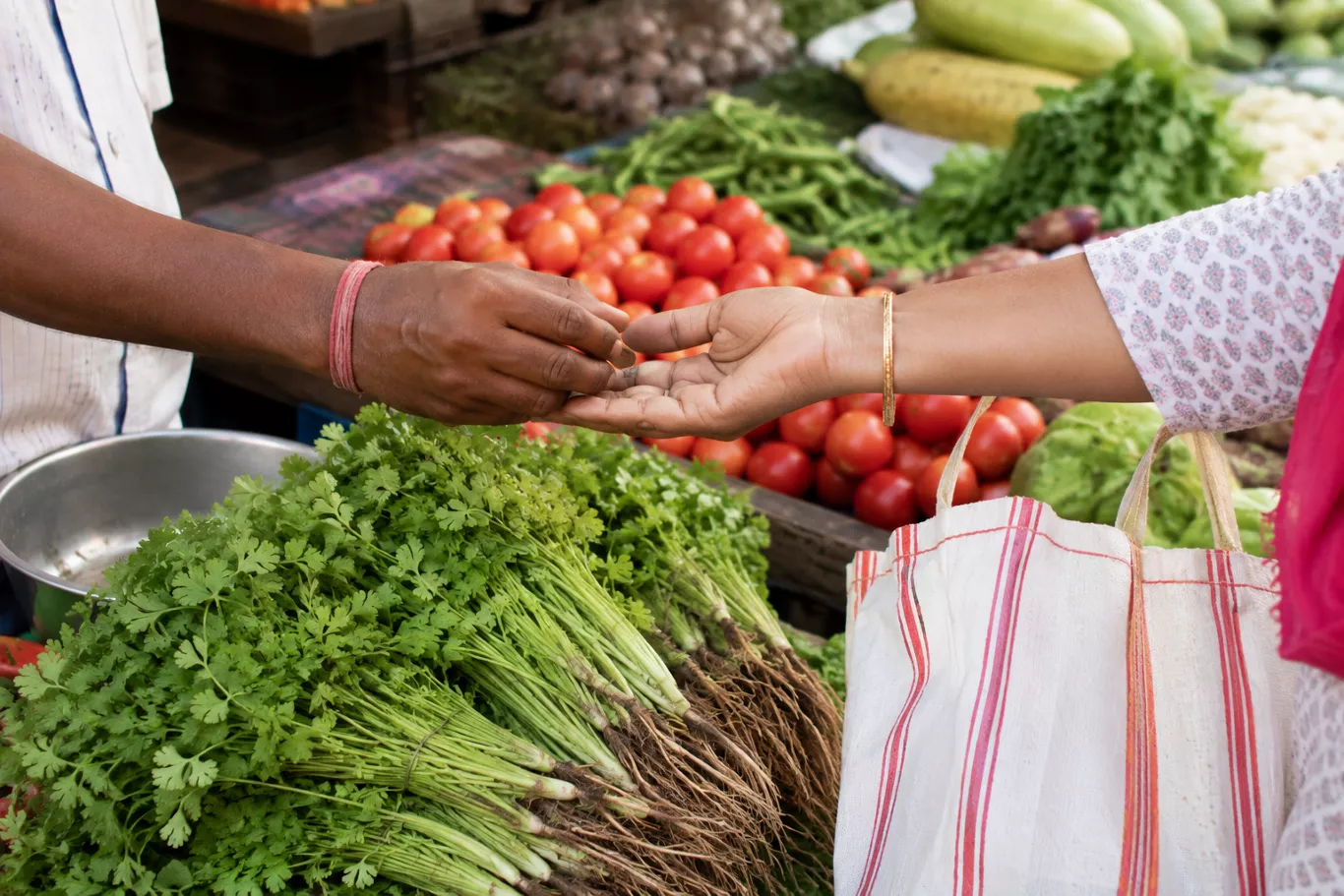
My mother bargained over five rupees for seven minutes.
I timed it.
This was not because we needed the five rupees. It was not because the coriander was expensive enough to alter our family finances. It was because the vegetable vendor had said one number, my mother had heard the number, and both of them understood that the number was only the opening sentence of a conversation.
I was standing beside her holding a cloth bag and trying to look useful.
She had already bought tomatoes from the correct vendor. She had inspected the bhindi, rejected one batch of beans with a face that should have made the beans reconsider their life, and was now discussing coriander.
"Twenty," the vendor said.
"Fifteen," my mother said.
"Madam, today rate is high."
"Then keep it."
She turned away.
He called her back in less than two seconds.
By the time we got home, she had got the coriander for fifteen and also two green chillies. We sat at the kitchen table with chai and Mom's Magic biscuits, and she told the story again to my father as if the household had narrowly survived a commercial attack.
My father said, "Good."
That was the correct response.
**It Is Not About the Five Rupees**
I used to think bargaining was about saving money.
This is because I was young and did not understand theatre, fairness, local relationships, or my mother.
The five rupees matter, but not in the way I thought. They are not the point. They are the arena. The point is that both people know the real price lives somewhere between the first number and the final number, and reaching it requires participation.
If my mother accepts the first price, she feels she has failed to participate properly.
If the vendor gives the final price too early, he has also failed.
There is a dance. Everyone knows the steps.
My friend Karan's mother bargains with auto drivers even when the difference is ten rupees. Karan once asked why she bothered. She said, "If I say yes to anything, tomorrow he will say more to someone else."
This is the public-interest version of bargaining. She is not bargaining for herself. She is defending future passengers from inflation caused by laziness.
I respect that. I also fear it slightly.
**My Mother's Face Changes**
At home, my mother is expressive in a familiar range. Concerned. Amused. Suspicious. Mildly disappointed in the way I cut fruit.
In the market, a different person appears.
Her face becomes very calm. Too calm. The kind of calm that means she has heard a false price and is allowing the vendor one chance to correct himself before she begins.
She does not shout.
This is important. Shouting would make it crude. My mother does not bargain crudely. She bargains with memory.
"Last week you gave eighteen."
"The other stall is giving fifteen."
"These are not that fresh."
"You always do this when I bring my son."
The last line is unfair because I have no role in the coriander pricing. But the vendor laughs, she laughs, and the number moves.
Priya says her mother uses silence. The vendor says a price. Her mother looks at the vegetables. Then at the vendor. Then at the vegetables again. No words. Priya says she has seen grown men reduce prices under the pressure of that silence.
There are methods.
**The Vendor Enjoys It Too**
This is the part I missed as a child.
The vendor is not always suffering.
Sometimes he is enjoying the contest. He knows my mother. He knows she will object. He knows he will defend the price. He knows she will accuse him of changing his rate because she came late. He knows he will say the wholesale market was bad. He knows she will say every wholesale market cannot be bad every day.
This is not a fight. It is a relationship with a script.
My mother has vendors she trusts and vendors she does not trust, but even the trusted ones must be kept alert. Trust does not mean she will accept soft tomatoes or lazy pricing. Trust means the conversation can begin from a better place.
Nikhil told me his mother has a fruit seller who always says, "For you, madam, best rate." His mother always replies, "Then why are you saying the other rate first?"
He has no answer.
He still says it every time.
Some lines survive because everyone likes the rhythm.
**I Am Bad at It**
I am terrible at bargaining.
The vendor says a number. I hear the number. I pay the number. My only technique is looking mildly confused and hoping the vegetables are honest.
My mother finds this troubling.
She says I do not have to fight, but I have to ask once. Asking once is a minimum requirement. "Thoda kam karo" is not aggression. It is citizenship.
I tried this in Bangalore.
The vendor said eighty.
I said, "Thoda kam?"
He said seventy-five.
I paid seventy-five and felt like I had completed a public exam.
I told my mother. She asked what the vegetable was.
I said capsicum.
She asked how many.
I said three.
She said I had still paid too much.
Progress is not always celebrated.
Meera says bargaining has posture. You cannot ask for a lower price while already opening your wallet. That shows weakness. You cannot smile too early. You cannot look too eager. You must be willing to walk away, even if you absolutely need the coriander.
I am not yet willing to walk away from coriander.
My mother says this is why they win.
She has also told me that the cloth bag matters. You cannot hold it like a tourist holding evidence. You keep it open, relaxed, ready. The wallet stays inside until the number has settled. Eyes remain on the vegetables, not the money. If the vendor sees your fingers already searching for notes, the discussion is over. I did not know market economics had body language, but my mother says most things do. She says people believe you before they hear you.
**The Victory Is Brought Home**
After the market, the bargains become stories.
Not long stories. Small reports. Coriander for fifteen. Beans not worth buying. Mango man trying nonsense today. Good lauki at the corner. Mahendra's brother back from his village. The potato rate has become rude.
These reports are delivered while the vegetables are washed, sorted, and assigned futures.
The coriander went into a steel bowl. The tomatoes went on the counter. The chillies were placed in the tiny container that I once mistook for something disposable and was corrected for touching.
My mother took one Mom's Magic biscuit, dipped it in chai, and told my father the coriander story again because he had not appreciated the green chilli part enough the first time.
I came home and told her.
She asked if he added chillies.
I said no.
She said, "Then you are halfway."
Which, from her, is not bad.
He said, "Very good."
Better.
That evening, the coriander went into chutney. I asked if the chutney tasted better because of the bargain.
She said, "Obviously."
I laughed.
She did not.
The next time I went to the market alone, I asked the vendor to reduce the price. He did. By five rupees.


