



Sign in to share
Dhruv Saxena
My mother was standing on a chair when I walked into the room.
This is not a sentence any adult child wants to encounter without warning.
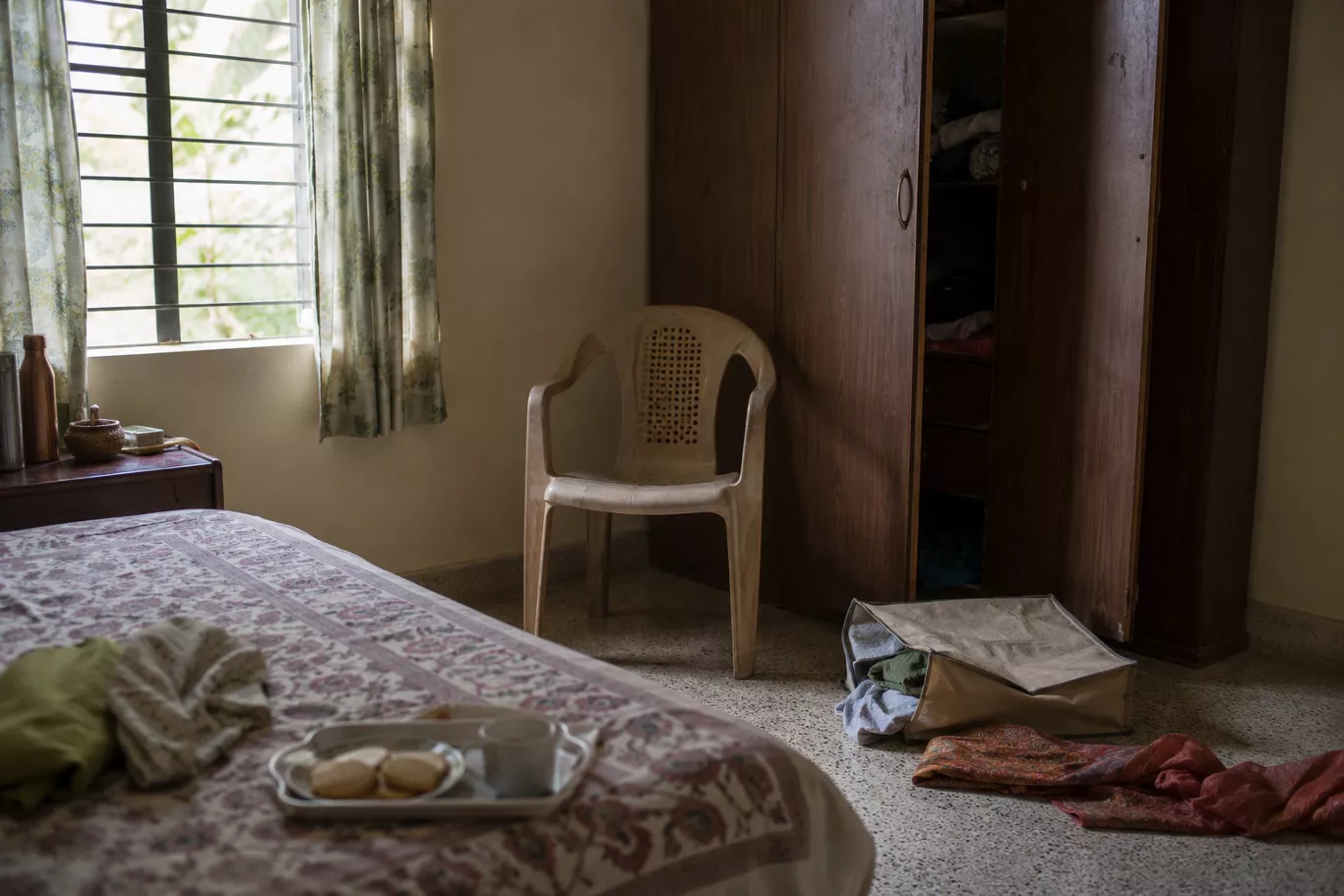
It was a plastic chair, which made it worse, because plastic chairs have no interest in family stability. She was reaching for something on the top shelf of the cupboard in the guest room, one hand on the cupboard door, one hand stretched upward, her dupatta tucked at the waist in the manner of someone who had decided this was a serious operation.
I said, “Maa.”
She said, without turning, “Haan?”
“Why are you standing on a chair?”
“I’m just taking this down.”
“Get down. I’ll do it.”
“It’s done only.”
It was not done.
The thing she wanted was still on the shelf. She was still on the chair. I was standing there with the specific fear of someone imagining the rest of the day turning into an emergency room visit because his mother refused to ask for help removing a suitcase cover.
I made her get down.
She protested in the way mothers protest when you interrupt a task they have decided is theirs. Not angrily. Just with mild offence.
“I can do small things.”
“I know you can do small things. This is not the point.”
“What is the point?”
“The point is that I am standing here.”
She looked at me, considered this, and then said, “Fine, take it.”
I took it down in four seconds.
She acted like this was unnecessary.
Ten minutes later, she made tea. There were Mom’s Magic biscuits on the plate because I had come home after a few weeks and she still treats my arrival as a situation requiring biscuits, tea, and at least two comments about my face. We sat at the table and I kept looking at her knees.
She said, “Why are you staring?”
I said, “Because you were on a chair.”
She said, “Arre, nothing happened.”
This is the whole problem.
Something has to happen before our mothers will admit help was needed.
The Sentence
Every mother has a version of the sentence.
“Ho jayega.”
“I’ll manage.”
“It’s small only.”
“Why trouble you?”
“You do your work.”
“I’ve been doing this for years.”
The sentence changes. The meaning does not.
The meaning is: I would rather struggle quietly than make my need visible.
My mother says “I’ll manage” for things she should not have to manage alone. Opening a stuck jar. Moving a mattress. Figuring out a new app. Calling the bank. Reading a medical report. Standing in a queue. Carrying too many bags from the market because she thought calling someone from downstairs was too much trouble.
Too much trouble for whom, I am never sure.
For me, apparently.
My friend Priya says her mother once carried a pressure cooker, a bag of vegetables, and two packets of milk from the gate to the lift because she did not want to call Priya, who was upstairs and doing nothing important.
When Priya asked why she had not called, her mother said, “You were resting.”
Priya said, “I was scrolling Instagram.”
Her mother said, “Same thing.”
The logic was not sound, but the love was visible.
The Help They Accept
The strange thing is that mothers accept some kinds of help easily.
They will ask you to fix the Wi-Fi. They will ask you to book tickets. They will ask you to explain why the phone is showing some message that, after careful inspection, turns out to be an app update. They will ask you to order something online because they do not trust the payment page.
This help is allowed.
But physical help, emotional help, help that suggests they are tired or ageing or unable to do something they once did without thinking, that help is resisted.
My mother will hand me her phone and say, “See what happened to WhatsApp.”
She will not hand me a bag and say, “This is heavy.”
The first kind of help makes me the child who understands technology.
The second kind makes her the mother who needs support.
That difference matters to her.
I do not think she would say this. I do not think she thinks of it this way. But I have watched it enough to know there is a line. On one side of the line is convenience. On the other side is dependence.
She is comfortable with convenience.
She is not comfortable with dependence.
The Pride
There is pride in it.
Not ego exactly. Something older and more complicated.
My mother has run a household for decades. She has handled things before anyone else noticed they needed handling. She has remembered bills, medicines, plumbers, school projects, gas bookings, relatives’ visits, exam dates, birthdays, grocery lists, and the exact location of every missing object in the house.
A person who has spent that long being the one who manages does not easily become the one who asks.
I understand this intellectually.
Emotionally, I still want her to stop climbing chairs.
My friend Karan says his mother once went to the bank alone to sort out something with her passbook even though he had told her he would come with her the next day. She went because the work was pending and she does not like pending work. She stood in line for forty minutes, came home tired, and then told him casually at lunch.
He got annoyed.
She got annoyed that he was annoyed.
Then both of them sat there, annoyed, over dal.
He told me later that the problem was not the bank. The problem was that she had removed him from the equation before giving him a chance to show up.
That is what it feels like sometimes.
Not that they need help.
That they do not let us help.
The Timing
My mother usually tells me after.
After she has lifted the thing.
After she has gone to the doctor.
After she has had a fever for two days.
After the tap was leaking and she called the plumber and paid him and checked the work and made tea for him and wiped the floor after he left.
Then she mentions it casually.
“The plumber came yesterday.”
“What plumber?”
“For the kitchen tap.”
“What happened to the kitchen tap?”
“It was leaking.”
“Since when?”
“Two-three days.”
“Why didn’t you tell me?”
“What would you do from there?”
This is an unbeatable question because, practically speaking, she is often right. I may not have been able to do anything from another city or another part of town. But that is not the point.
The point is not always action.
Sometimes the point is being told.
Sometimes the point is being allowed to worry in real time, not as a post-event summary.
But mothers do not always see it that way. They think informing you means giving you a task. If there is no task you can do, why inform you?
This is how entire small hardships disappear inside their days.
The Ask
I have started asking differently.
Not “do you need help?”
She will say no.
Not “should I do this?”
She will say it is done.
I ask, “What are you doing today that I can do before I leave?”
This works better.
It makes help a scheduled thing, not a rescue. It lets her assign something without admitting inability.
Sometimes she says nothing.
Sometimes she says, “Actually, move that box.”
Actually.
The most important word.
Actually means there was already something. Actually means she had decided not to say it. Actually means the box has probably been waiting for three weeks.
So I move the box.
Then I ask what else.
She says nothing.
Then, after ten minutes, she says, “If you have time, check the kitchen light.”
There is always a kitchen light.
The Body
The hardest part is watching the body change before the person has accepted it.
My mother still thinks of herself as someone who can do what she has always done. In many ways she can. She is active. She is capable. She is faster than me at most household tasks and would win any competition involving locating safety pins.
But the body keeps its own account.
The knees hurt more. The back stiffens. The jar does not open as easily. The top shelf feels higher than it used to. The market bag becomes heavier somewhere between the vegetable stall and the lift.
She knows this. Of course she knows this.
But knowing something privately and letting your child see it are two different things.
I think sometimes she protects me from her ageing the way she once protected me from bad news. She gives me the edited version. The version where everything is manageable.
But I live in the same world. I can see the chair.
Let Us Help
I do not want my mother to become helpless.
That is not what this is.
I want her to stop treating help as evidence of helplessness.
There is a difference.
Letting someone take down the box is not surrender. Letting someone carry the bag is not defeat. Letting your child come to the doctor with you is not old age announcing itself. It is just the relationship changing shape.
You carried us before we knew we were being carried.
Let us carry something now.
Not everything. Not even most things. Just the bag. The box. The appointment. The form. The thing on the top shelf.
The next time I saw my mother reach for something high, she did not climb the chair.
She called my name.
Not loudly. Not dramatically. Almost casually, as if she had always intended to ask.
“Can you take this down?”
I came from the other room.
The thing took four seconds.
She said, “Thank you.”
Then, because too much softness is not allowed to remain in the air for long in our house, she added, “Anyway you are tall. Some use should be there.”
Fair.


