



Sign in to share
Dhruv Saxena
My mother noticed my shirt before I had taken my shoes off.
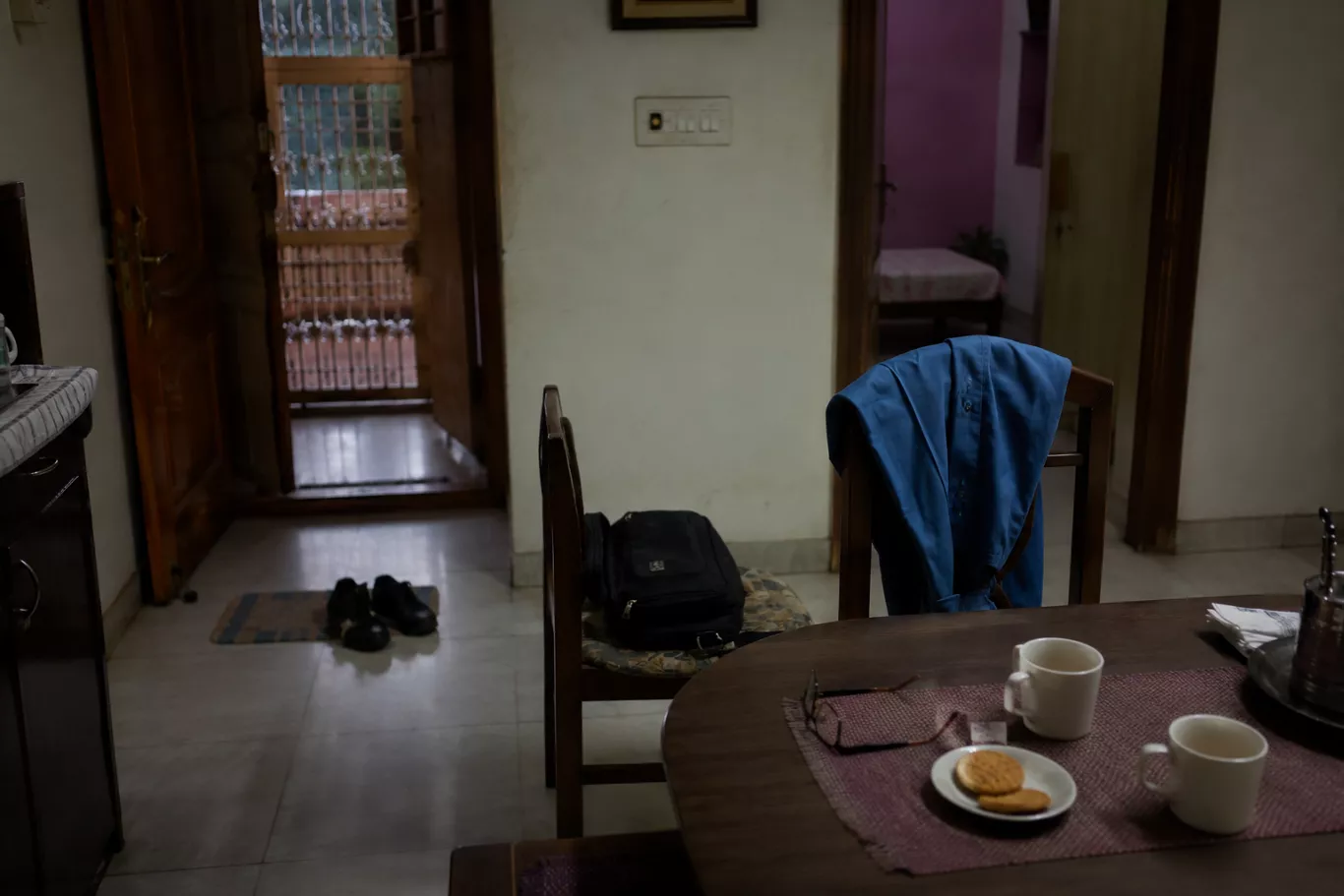
This was last month. I had come home on a Friday evening, carrying my laptop bag, slightly sweaty, slightly tired, and in the specific mood of someone who has been in traffic long enough to begin reconsidering several life choices.
I rang the bell. My mother opened the door.
She did not say hello first.
She looked at my shirt and said, “New?”
I looked down as if I had not known I was wearing a shirt.
It was new.
Not very new. I had bought it two weeks earlier for a meeting because I had decided, in a moment of professional self-improvement, that I needed to look like someone whose life had structure. It was a plain blue shirt. Nothing dramatic. The kind of shirt a person buys when they want to signal competence without seeming to have tried too hard.
My mother had not seen it before.
She clocked it in two seconds.
Then she stepped aside and said, “Come in. Tea?”
That was the order. Shirt. Then tea.
By the time I had put my bag down, she had already inspected the shirt, my face, my shoes, the tiredness around my eyes, and the fact that I had not cut my hair properly. None of this was announced at once. My mother does not dump observations. She distributes them through the evening.
Tea came first. Mom’s Magic biscuits came with it because I had arrived from outside and arrival from outside remains, in her mind, a category that requires something sweet.
Then she sat down across from me and said, “Meeting was there?”
I had not told her about the meeting.
The Shirt
I asked how she knew.
She said, “You don’t wear shirts like this normally.”
That was true.
This is the problem with mothers. Their data is old, but it is often accurate.
My mother knows my normal clothes. She knows the shirts I wear because they are comfortable, the T-shirts I have owned for too long, the jeans she thinks should be replaced, the shoes she dislikes but has accepted, the jacket I wear when I want to look serious and fail slightly.
So when something enters the system, she notices.
A new shirt is not just a new shirt to her. It is evidence. Something happened that required the shirt. A meeting. An event. A person. An attempt.
She may not know which one immediately, but she knows there is a which one.
My friend Priya says her mother once noticed she had started wearing earrings again after almost a year of not wearing them. Priya had not thought of this as information. She had simply begun wearing earrings again because she felt like it.
Her mother asked, “Office better now?”
Priya said the question stunned her because office was, in fact, better now. She had not connected the earrings to it. Her mother had.
The Face
The face is where mothers are most unfair.
You can control clothes. You can control what you say. You can control how long you stay on a call. The face gives them too much material.
My mother reads my face like a document she has edited before.
If I have slept badly, she knows.
If I have eaten badly, she claims to know, though I think this is sometimes guesswork supported by high probability.
If work has been difficult, she sees it in something around the mouth. I do not know what. She has never explained it in a way that would hold up in court.
Once I came home after a week that had been heavy but manageable. I had not told her anything because nothing specific had happened. It was just a week with too much work and too little satisfaction.
She looked at me and said, “You are looking stretched.”
Stretched.
Not tired. Not sad. Stretched.
The word was annoying because it was correct.
I said, “I’m fine.”
She said, “Fine people also look stretched sometimes.”
Then she went to the kitchen.
This is how she wins. She does not argue. She places the sentence in the room and leaves you alone with it.
The Names
My mother notices names.
This is one of her more unsettling abilities.
If I mention a person twice, she remembers them. If I mention them with irritation, she files that separately. If I mention them with warmth, she hears that too. If I stop mentioning someone I used to mention, she notices the absence.
I once referred to a friend by his full name instead of the shortened name I usually use.
My mother asked, “Fight happened?”
There had been no fight exactly. There had been distance. A small cooling. The kind that happens in adult friendships without announcement.
I had not told her. I had not even fully told myself.
But apparently the name had changed.
My friend Karan says his mother keeps a mental list of his friends that is more updated than his actual contact list. She knows who is married, who is in which city, who changed jobs, whose parents are unwell, and who “sounds like a good boy” despite never having met him.
Karan says he once mentioned that a friend had moved to Gurgaon and his mother said, “The one whose sister had dengue?”
He had no memory of telling her this.
She did.
The file was active.
The Things They Notice Online
Now there is a new category.
The digital noticing.
My mother notices if I do not post for a while, which is unfortunate because sometimes not posting is just not posting. She notices if I change my display picture. She notices if someone comments often. She notices if I am online late, although she pretends not to.
Once she asked, “Who is this person liking everything?”
I said, “Maa, please.”
She said, “I am only asking.”
She was not only asking.
Indian mothers have adapted to the internet in ways we did not prepare for. They may still ask where the download went, but they will notice patterns of social behaviour with full clarity.
My friend Nikhil’s mother does not understand LinkedIn properly, but she understands enough to say, “You are posting a lot these days. Work is okay?”
This is a devastating question because it recognises that over-activity can also be a signal.
He said work was fine.
It was not fine.
His mother did not push. She just said, “Okay. Eat on time.”
The usual exit line. The file had been updated.
The Detail Before the Announcement
What I find most interesting is how often my mother notices the detail before I make the announcement.
She noticed I was serious about work before I said I was worried about work.
She noticed I was tired of a friendship before I admitted I was tired of it.
She noticed I liked someone once before I had decided whether liking someone was information I was prepared to share. This was many years ago and she handled it with surprising restraint. By restraint I mean she asked only three questions and then looked pleased for two days.
She notices the preparation before the event.
A haircut before a meeting.
A cleaned room before someone visits.
A new seriousness in the voice before a decision is shared.
A different silence before bad news arrives.
We think we are revealing our lives through big updates. Job changed. Relationship ended. Moving cities. Health issue. Money problem. Something happened.
Our mothers often see the smaller updates first.
The shirt. The face. The name. The food left uneaten. The call avoided. The sudden politeness. The extra cheerfulness. The thing we did not say but dressed around.
The Annoyance
This can be very annoying.
I want to be clear about that.
There are days when you do not want to be noticed so closely. You want to enter the house as a general person, not as a full set of clues. You want to wear a new shirt without it becoming evidence. You want to say a name differently without opening a file.
My mother’s attention sometimes feels like too much.
But then I think about what the alternative would be.
To not be noticed.
To come home and have no one see that the shirt is new, that the face is tired, that the name has changed, that the silence is sitting differently.
That would be worse.
Attention is inconvenient until it is absent.
The Small Report
I have started telling her things earlier.
Not everything. I still maintain some privacy, mostly in theory and occasionally in practice.
But I tell her more of the small things.
“There’s a meeting tomorrow.”
“Work has been strange this week.”
“I haven’t spoken to him in a while.”
“I bought this shirt because I needed something decent.”
This helps both of us.
It reduces her detective work. It reduces my irritation at being detected.
It also gives her the pleasure of being included before the conclusion.
That evening, after she had identified the shirt and the meeting and the tiredness, my mother ironed the sleeve lightly because she said it had folded badly in the cab. I said it was fine. She said it was not fine. She was right. It did look better after.
When I was leaving that night, she said, “Wear this for important meetings. Colour suits you.”
I said okay.
Then she added, “But cut your hair.”
There it was.
The full report.


