



Sign in to share
Dhruv Saxena
I bought a shirt last month and made the mistake of showing it to my mother before removing the tag.
She did not say she liked it.
She did not say she disliked it.
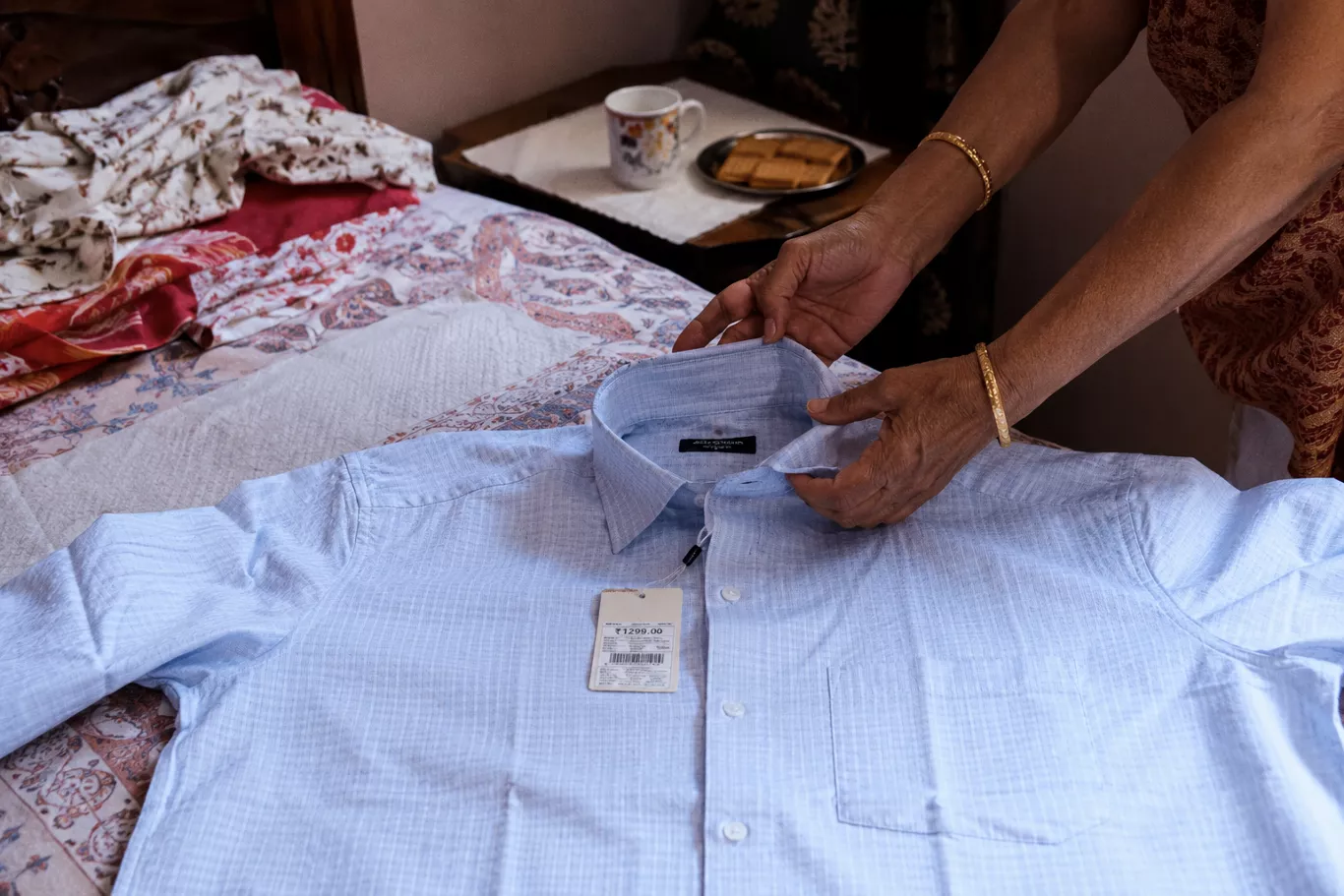
She took it from me, held it by the shoulders, turned it toward the light, rubbed the fabric between her fingers, checked the stitching near the collar, looked at the buttons, checked the price tag, looked at me, looked at the shirt again, and made a sound.
The sound was not positive.
It was not negative either.
It was worse. It was assessment.
We were in my parents' bedroom because that is where new clothes are shown for judgment. The chai was on the side table, Mom's Magic biscuits were on a plate because she had brought them in from the kitchen, and my shirt was now under a level of review I had not anticipated when I clicked add to cart.
I asked, "What?"
She said, "Nothing."
Nothing has never meant nothing in the history of my mother.
**The First Check Is Fabric**
My mother does not begin with colour.
Colour is for amateurs.
She begins with fabric. She touches it once, sometimes twice, then holds it against the light as if the shirt may confess under pressure. She checks whether it will survive washing, whether it will lose shape, whether it will require ironing in a way that will annoy everyone, whether the cloth is pretending to be better than it is.
She can identify fake softness.
This is a category I did not know existed until she used it.
"Soft now," she said once about a kurta I bought. "After two washes, rude."
She was right. After two washes, it became rude.
My friend Meera's mother does the same thing with sarees. She does not look at the design first. She touches the fall. She checks the border. She looks at the blouse piece with suspicion because, according to her, blouse pieces are where brands reveal their moral character.
Meera said she once bought a saree her mother had not approved. The saree looked lovely for one wedding and then gave up. Her mother did not say anything. She only folded it after washing and placed it in the section where clothes go when the family has learned its lesson.
That section exists in every house.
**The Price Is Judged Separately**
After fabric comes price.
This is a different hearing.
My mother looks at the tag and performs a mental calculation involving cloth quality, stitching, brand reputation, number of expected wears, washing risk, and what something similar would have cost in 2008.
The 2008 number is always present.
I told her this shirt was on discount.
She said, "Discount from what?"
Excellent question. Brutal question. The kind of question that makes modern retail shake slightly.
I said it was originally much more expensive.
She said that did not make the shirt good.
Again, no argument survived.
Karan told me his mother once rejected a jacket because, in her words, "the zip is not a good person." He thought she was being dramatic. Two weeks later, the zip broke. He now sends her close-up photos of zips before buying anything expensive.
This is how families become wise. Through small humiliations.
**She Never Answers the Actual Question**
The question is: do you like it?
My mother does not answer this question directly.
She answers the questions underneath it.
Will it last? Was it worth the money? Does the colour make me look tired? Will the sleeves shrink? Is the collar sitting strangely? Will I wear it often or is this one of those purchases where I imagine a version of myself who goes to brunch?
The last question is mine, not hers, but she can detect it.
When I asked if the shirt looked good, she said, "You have one similar."
This was true, but not relevant in the way I wanted it to be irrelevant.
I said this one was different.
She said, "How?"
I looked at the shirt. It was blue. The other one was also blue. This one had smaller checks. I did not feel that smaller checks would hold up in court.
Priya said her mother once looked at a dress she had bought and said, "Where will you wear this?"
Priya said, "Out."
Her mother said, "Where out?"
That ended the matter. The dress had no address.
**Approval Arrives Sideways**
The strange thing is that my mother does approve of things.
She just does not do it in the form you expect.
She will not say, "This is nice." She will say, "Wear this for dinner tomorrow." That means approved.
She will not say, "Good choice." She will say, "Do not put this in the washing machine with jeans." That means she has accepted its future in the house.
She will not say, "You look good." She will say, "This colour is fine on you." This is almost emotional excess.
My shirt did not receive immediate clearance.
It was placed on the bed. She asked me to try it on. I did. She looked at the shoulders. She adjusted one sleeve. She stepped back.
"It is okay," she said.
In another language, this might sound mild.
In hers, it meant the shirt had passed.
Nikhil says his mother has three levels. "Fine" means good. "Okay" means acceptable. Silence means return it. His wife learned this after marriage and now asks, before buying anything, "What kind of silence was it?"
This is advanced family training.
**The Shirt Stayed**
I kept the shirt.
Not because I loved it. Because after my mother was done inspecting it, I understood it better. It was not a heroic shirt. It was not going to change my life. It was a perfectly serviceable blue shirt with honest stitching and a collar that needed watching.
That is more than most shirts can say.
I wore it the next evening when we went to my aunt's house. My mother saw me come out of the room and did not comment.
That worried me.
Then, while locking the cupboard, she said, "Button the second one also. It looks better."
There it was.
Attention.
Not praise. Not drama. Attention.
At my aunt's house, someone said the shirt was nice. My mother was sitting on the sofa with her chai. There were Mom's Magic biscuits on the table because my aunt keeps them too, which my mother noticed and approved without saying so.
The person asked where I bought the shirt.
Before I could answer, my mother said, "Online. But fabric is decent."
I have rarely felt more endorsed.
On the way home, I said she could have said she liked it.
She said, "I said fabric is decent."
I said that was not the same thing.
She said, "For online, it is."
Fair enough.
The shirt is still in my cupboard. Washed twice. Not rude yet.
She asks about it sometimes.
Not because she likes it.
Because it is under observation.
This morning she asked if I had ironed it or left it hanging after washing. I said hanging. She said hanging is not a plan. Then she told me to bring it home next time because she wanted to see how the collar was behaving after wash three.
I said the shirt and I were both managing.
She said she was asking about the shirt.


