



Sign in to share
Dhruv Saxena
My mother knows I am not fine before I do.
I do not mean this sentimentally. I mean this as a practical inconvenience.
There are days when I have successfully convinced myself that I am fine. I have gone through the day. Sent emails. Answered messages. Paid bills. Behaved like a functioning adult with a working understanding of his own emotional state.
Then my mother calls.
I say hello.
She says, “What happened?”
Seven seconds.
That is all it takes.
Not even seven sometimes. Once she got it from the way I said “haan.” Apparently there is a normal haan and a not-fine haan and I have been using both without authorisation for years.
The first time I paid attention to this properly was in April. I had had a bad day, but not a dramatic bad day. Nothing had collapsed. Nobody had shouted. There was no single event that could be narrated as the reason. It was just one of those days where many small things arrange themselves into one large heaviness.
I came home late, ate something standing near the kitchen counter, and told myself I was fine because there was nothing else to do with the information.
My mother called around 10:30.
I picked up and said, “Haan Maa.”
She said, “Why is your voice like this?”
I said, “Like what?”
She said, “Tired-sad.”
Tired-sad.
A category I had not created for myself but which was, unfortunately, accurate.
I denied it immediately, because that is what adult children do when their mothers identify something before they are ready to admit it.
“No, no. All okay.”
She waited.
This is her most dangerous move. The waiting.
Then she said, “Eat something sweet and sleep. We’ll talk tomorrow.”
She did not push. She did not ask for a report. She did not make the call heavy. She just left the door open.
The next morning I called and told her the whole thing.
The Archive
I have been thinking about how she knows.
Not in a mystical way. Although I understand why people make it mystical. It does feel mystical when someone hears one syllable and finds the exact drawer in which you have hidden the feeling.
But I think it is simpler than that.
She has heard me longer than anyone else has.
She heard me before I had sentences. She knew which cry meant hunger and which one meant sleep and which one meant fever. She knew when I was pretending to have a stomach ache before school and when I actually had one. She knew when I came home from tuition quieter than usual. She knew when a friend had said something. She knew when exams had gone badly even before I removed my shoes.
By the time I became an adult and started saying “all good” like it meant something, she had decades of evidence against me.
My friend Nikhil says his mother can identify his mood by the length of his WhatsApp replies. If he sends “haan” she knows one thing. If he sends “haan haan” she knows another. If he sends “ok” instead of “okay” she calls immediately.
He finds this intrusive.
He also picks up every time.
Because there is something comforting about being known at that level, even when it is annoying. Especially when it is annoying.
The Too-Cheerful Voice
My mother is most suspicious when I sound cheerful.
This is unfair because sometimes I am genuinely cheerful. But she has correctly identified that I often use cheerfulness as a cover.
If I am too energetic on a call, she slows down.
“What happened?”
“Nothing.”
“You’re talking too fast.”
“I am not.”
“You are.”
Then I become annoyed because she is right and because being accurately read by your mother is one of the great defeats of adulthood.
My cousin Rhea says her mother can tell when she has cried even if the crying happened hours earlier and Rhea has washed her face and applied kajal and spoken to three other people normally. Her mother will look at her once and say, “Who upset you?”
Not “are you upset?”
Who upset you?
Straight to investigation.
There is a confidence in that question that comes only from years of observation.
I used to think this was over-involvement. Now I think it is a kind of long attention. We are not used to being watched that carefully by anyone else. Everyone else mostly receives the version we offer. Mothers compare the version we offer with every older version they still remember.
That is why they catch the difference.
The Food Test
At home, my mother does not ask if I am sad first.
She asks if I have eaten.
This used to frustrate me because I wanted the emotional thing to be named emotionally. If I was upset, why were we discussing dal?
Now I understand that food is often her way into the room.
If she asks directly, I may deny it. If she puts food in front of me, I may sit down. Once I sit down, something may come out.
This is not strategy in the formal sense. She has not read about emotional regulation. She would find the phrase unnecessary. She just knows that people talk differently when they are eating.
In May, I came home after a difficult meeting. I had not told her anything. I thought I looked normal. I was, apparently, wrong.
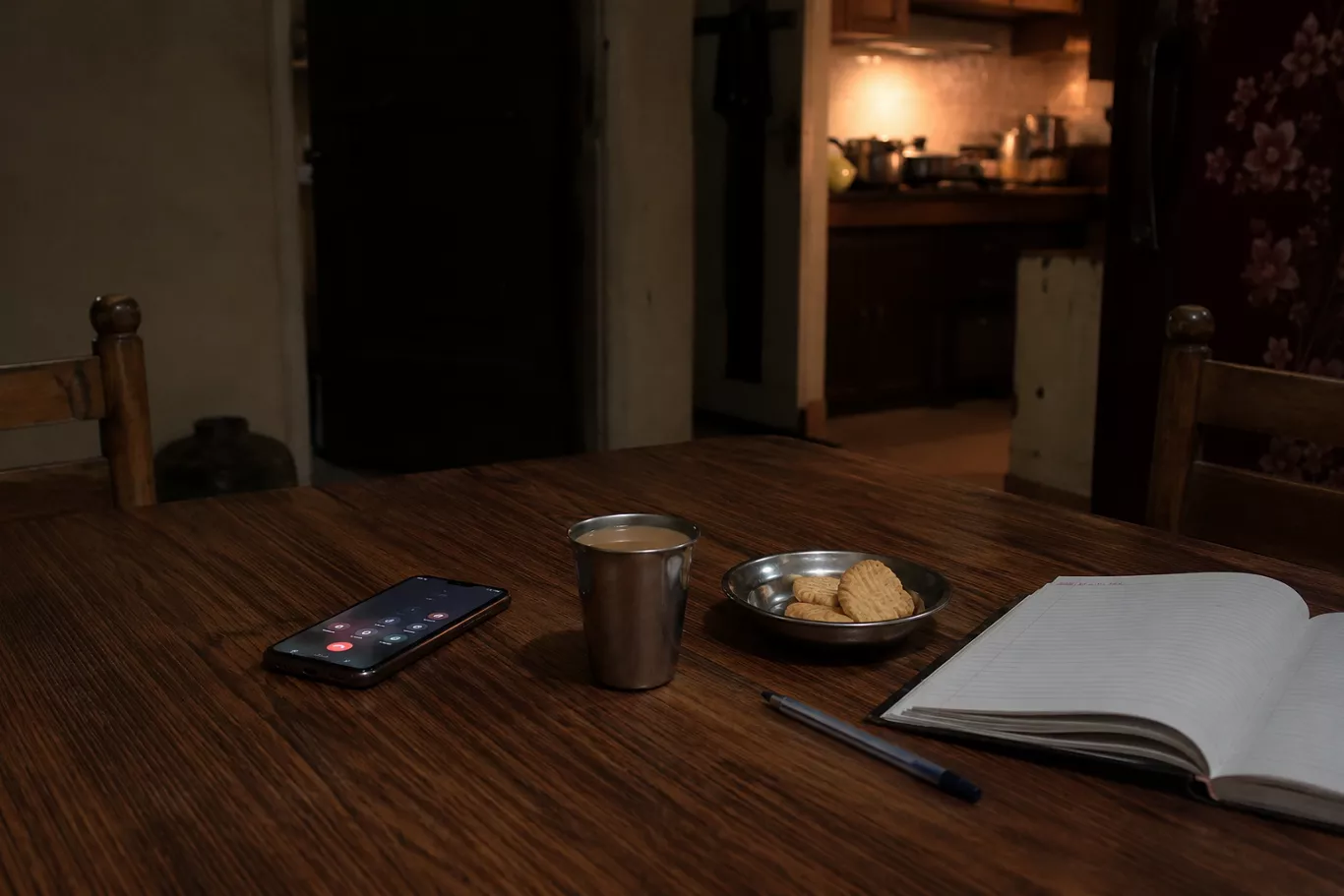
She looked at me once and said, “Tea?”
I said no.
She made tea anyway.
Then she put Mom’s Magic biscuits on a plate and sat across from me. Not beside me. Across. Like we were having a meeting, except the agenda was my face.
For ten minutes we talked about nothing. The maid. The heat. The neighbour’s son. The price of tomatoes. Then she said, “Now tell.”
I told.
That is how she does it. She lets the ordinary things loosen the difficult thing.
The Parts She Gets Wrong
To be fair, she is not always right.
Sometimes I am just tired.
Sometimes I am quiet because I am thinking about work and not because there is some deep emotional disturbance.
Sometimes my voice is strange because the network is bad.
Sometimes she asks what happened and nothing has happened and I get irritated because being monitored emotionally is still being monitored.
But even when she is wrong, she is wrong from attention.
There is a difference between someone projecting and someone noticing. My mother notices. Then she sometimes over-interprets. That is allowed, I think. After thirty-two years of noticing, some false positives are acceptable.
My friend Priya says her mother once called her after seeing a photo she had posted from dinner and asked if she was upset. Priya was not upset. She was chewing.
Her mother said her eyes looked tired.
Priya said she was eating noodles.
Both things may have been true.
The Resistance
The real issue is not that mothers know.
The issue is that we do not always want to be known.
There are days when I want to decide privately that I am not okay. I want to hold the feeling for a bit before anyone asks me to explain it. I want to be the first person to know my own state.
My mother’s question interrupts that.
It says, I saw it before you were ready.
That can feel like a trespass.
But it can also feel like rescue, depending on the day.
Because sometimes I do not know I am not fine until she asks. Sometimes the question gives the feeling permission to become visible. Sometimes I have been moving through the day with a heaviness I have not named and her voice gives it a name.
Tired-sad.
I still think about that.
A ridiculous phrase. Also a precise one.
What I Say Now
I am trying to lie less.
Not because I owe my mother every detail of my life. I do not. No adult child does. Some things are private. Some things need time. Some things are not ready to be discussed with someone who will immediately suggest food, sleep, and possibly a blood test.
But I try not to say “all good” when all is not good.
I say, “Bad day. I’ll tell you later.”
Or, “Nothing serious. Just low.”
Or, “I don’t want advice right now.”
This last one is important. She does not always follow it, but she tries. Sometimes advice leaks out because she is my mother and her system is not built for pure listening. But she tries.
The other day she asked what happened and I said, “I don’t know yet.”
She accepted that.
“Okay,” she said. “Call when you know.”
That felt like progress for both of us.
The Line That Stays Open
Maybe that is the point of being known by your mother.
Not that she gets access to everything.
Not that she is always right.
Not that you have to collapse into the role of child every time she hears something in your voice.
Just that there is one person in the world who has been listening long enough to know when the song is slightly off.
That has value.
Even when it irritates you.
Especially when it irritates you.
Last week she called and I was actually fine. Not performatively fine. Properly fine. I had eaten. I had slept. The day had been normal.
She asked, “You sound okay today.”
I said, “I am okay today.”
She said, “Good.”
Then she told me about the neighbour’s daughter, the maid, the electricity bill, and a recipe she had changed slightly and was not sure about.
The conversation became ordinary.
That is the best part. She is not always waiting for something to be wrong. She is just listening. If something is wrong, she will hear it. If nothing is wrong, she will talk about tomatoes.
Both are love.


