



Sign in to share
Shikha Sharma
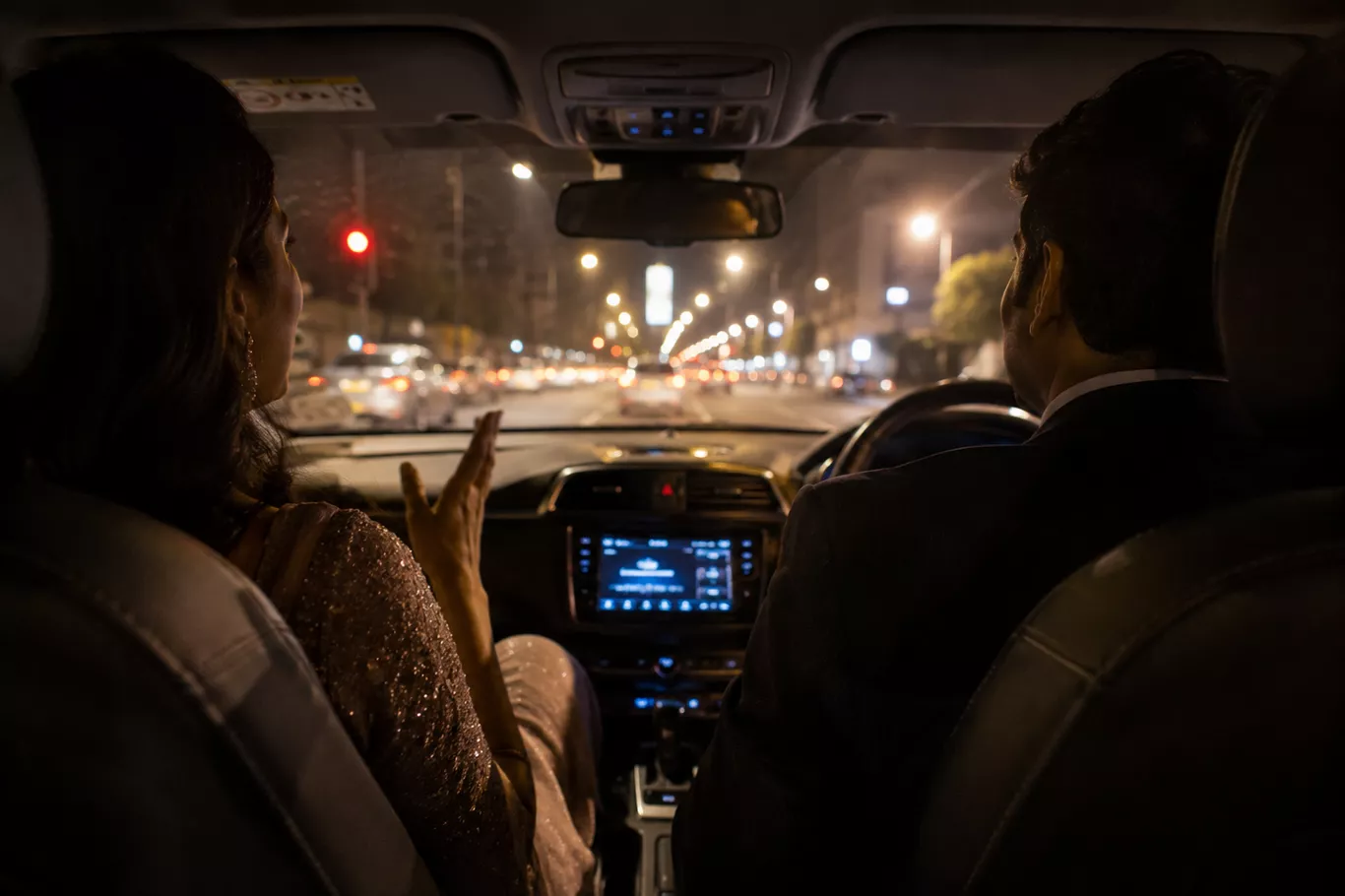
My husband and I were in the car on the way to a wedding last February that neither of us had wanted to go to.
Not a wedding we disliked attending. A wedding we simply had no energy for. The couple was fine. The venue was fine. The date had looked manageable when we RSVPd four months earlier and was not manageable now that it was here because the week had been the kind of week that leaves you with nothing left by Saturday evening.
We were in the car. We were dressed. We were going.
The car on the way to a function you did not want to attend has a specific quality. It is not quite a bad mood. It is a pre-performance mood. The performance is the function. The performance requires a version of both of you that is social and present and glad to be there. The car is the backstage. In the backstage you do not have to be any of those things yet.
We drove in silence for about eight minutes. Not an uncomfortable silence. A strategic silence. Both of us conserving energy for the performance ahead.
Then my husband said something about a thing he had heard that week. Something low-stakes and mildly interesting. I responded. He said something else. I had Sunfeast Marie Light in my bag because I always have something and the pre-function hunger is real, and I opened the packet and we ate biscuits in the car and the conversation became, in the way car conversations do, more honest than conversations at tables.
He said he was tired. I said I was also tired. He said we would leave by ten. I said nine-thirty. He said nine-thirty was ambitious. I said watch me. He said we could try for nine-thirty.
We left at ten-fifteen. I conceded nine-thirty was ambitious. We drove home and the drive home was better than the drive there because the performance was done and we were back in the backstage.
The Pre-Function Car
The drive to a function is not the same as any other drive.
The regular drive has no particular quality. It is just getting from one place to another. The function drive has a trajectory. You are moving toward something that requires something of you and the requiring begins before you arrive. You are already becoming the function version of yourself in the car.
The function version of both of us is fine. We are not bad at functions. We talk to people and we are warm and we find things interesting about the people we talk to because people are generally interesting. The function is fine. The function is just also work.
The car is where we acknowledge that the function is work without the function hearing us say so.
My friend Priya has the function car conversation regularly with her husband. She said they always have a version of the same exchange. He says how long do we need to stay. She says at least an hour. He says what if we say ninety minutes and leave at the hour mark. She says that is dishonest. He says it is strategic. She says they will stay for the agreed time and enjoy themselves, which they always do, which is the part he always forgets when he is in the pre-function mood.
She said he is always glad they stayed. She said she has started telling him this preemptively now, in the car, before he asks about leaving. She says we will be glad we stayed, you always are. He says he knows. They arrive. They stay. They are glad.
What Gets Said in the Car
The car extracts things.
I have noticed this across four years of marriage. The things that do not come out at the dinner table or in the flat come out in the car. Especially the car in transit, going somewhere, neither of us quite in the domestic mode or the social mode, in the gap between.
The function car is a specific version of this. The pre-performance state makes both of us slightly more honest than usual. We have not yet put on the version of ourselves for the function. We are just ourselves, in formal clothes, tired, eating biscuits.
My husband said something in the car on the way to a different function two months ago that I have thought about since. He said it the way people say things in cars, without looking at me, watching the road, like the thing had been waiting for the right environment to come out. The environment was the car. The thing came out. We talked about it properly when we got home, after the function, but the beginning of the conversation happened in eight minutes on the way there.
My friend Meera said the best conversations she has with her husband happen in the car. Not the function car specifically. Any car. She said something about the forward-facing posture, the not-looking-at-each-other, the being in motion, makes things easier to say. I said I thought that was right. She said her husband agrees. She said her husband does not agree with many things about communication but he agrees about the car.
The Drive Home
The drive home is always better than the drive there.
The performance is done. The function version of both of us has been deployed and retired. We are back in the backstage and the backstage on the way home is more relaxed than the backstage on the way there because the work is finished.
We debrief in the car. The debrief is not formal. It is: that person was interesting, that other person was not, the food was good, we should have left at nine-thirty, we are glad we went, we are glad it is done.
The drive home from the February wedding was twenty-two minutes. It was the best twenty-two minutes of the evening. We talked about the people we had talked to. He said the person he had spoken to most had been unexpectedly interesting. I said I had watched him speaking to that person and thought the same thing from across the room.
He said how long had I been watching him.
I said not long.
I had been watching for a while.


