



Sign in to share
Shikha Sharma
My friend Rhea got a promotion, started therapy, ran a half marathon, and read fourteen books last year.
Her husband watched a lot of cricket.
I want to be clear that watching cricket is a completely valid use of one's time and I mean no disrespect to cricket. But Rhea told me, over coffee last month, that she had started to feel like she and her husband were moving at different speeds. She was changing, quickly, in ways she hadn't anticipated. He was largely the same person she'd married four years ago.
This is not a complaint about him. She said it carefully, the way you say something you've been thinking about for a long time and are only now putting into words for the first time. She loves him. She's not going anywhere. But something had shifted and she didn't know what to do about it.
I've heard versions of this story more times than I expected to this year.
The Growth Gap
Here's what nobody tells you about personal growth. It's rarely simultaneous.
In the movies, couples grow together. They go through things, they come out the other side changed, they look at each other with new understanding. Very tidy. Very cinematic.
In real life, one person starts therapy in March and the other one thinks therapy is for people with serious problems. One person gets a job that changes how they see themselves and the other person's job stays the same. One person discovers running or reading or meditation or some other thing that rewires their entire relationship with themselves, and the other person is just there, unchanged, wondering why things feel slightly different.
The growing person is not doing anything wrong. The not-growing person is not doing anything wrong either. They're just at different points in their own timelines. Unfortunately, they share a flat.
My colleague Priya spent the year after her promotion in a kind of personal renaissance. New ambitions, new friends, new sense of what she wanted her life to look like. Her husband, who works in a stable job he has no particular desire to leave, watched this happen with a mixture of pride and something he couldn't quite name.
She asked him once if he felt left behind. He said no immediately, which she said was the wrong answer, not because she wanted him to feel bad but because the speed of it suggested he hadn't actually thought about it.
They talked about it properly eventually. It was uncomfortable. It was also, she told me, one of the most important conversations they'd had in years.
The Version of Them You Married
Part of what makes this hard is that you didn't sign up to keep updating your picture of each other. You formed an image, you fell in love with that image, and now one of you is changing and the image needs updating and that requires effort that nobody mentioned at the wedding.
My friend Kabir's wife started a business two years ago. Before that she had worked a regular job, come home, cooked dinner, watched TV. He had a comfortable and accurate model of who she was and what their life looked like.
Then she started the business and became someone he didn't entirely recognise. Not a stranger. Just a more complicated version of the person he'd known. She had opinions he hadn't encountered before. She had stress he didn't know how to help with. She had ambitions that changed what she wanted their weekends to look like.
He told me it took him about a year to catch up. To update his picture of her. To fall in love with the new version the way he'd fallen in love with the original one.
"It's like she upgraded," he said, "and I had to figure out the new interface."
He said it fondly. He'd figured out the interface. But the year of figuring it out had been genuinely hard.
What Actually Helps
The couples I've watched navigate this well share one thing. They talk about it before it becomes a crisis.
Not in a formal, serious, we-need-to-discuss-something way. Just in the ongoing, casual, Sunday-morning way that keeps two people updated on each other's inner lives.
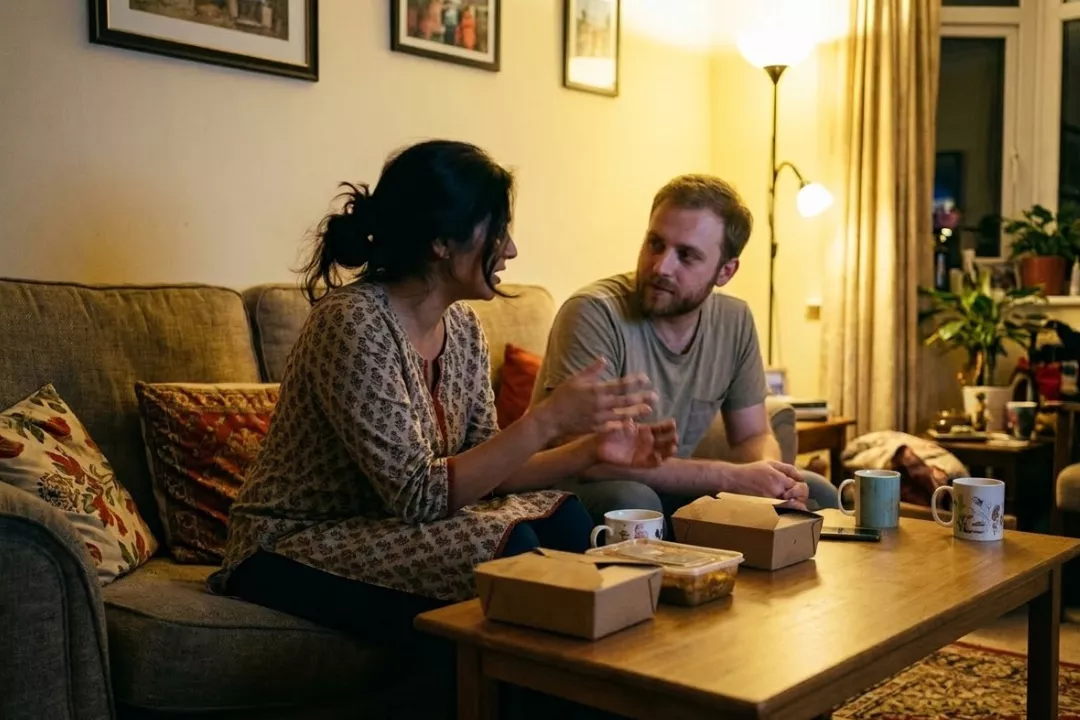
Rhea and her husband had their conversation three months ago. She told him she'd been feeling like they were moving at different speeds. He told her he'd noticed she seemed further away but hadn't known how to bring it up. They sat there for a while with that between them.
Then he asked her to tell him about the therapy. Not in a skeptical way. In a genuinely curious way. What was she figuring out. What was changing for her. He wanted to understand the new version of her, even if he wasn't going through the same thing himself.
She talked for a long time. He listened. She told me afterwards it was one of the better evenings they'd had in months.
They ordered in and ate on the couch and she had brought Sunfeast Marie Light home from a grocery run earlier in the week, the kind of small domestic detail that somehow makes an evening feel normal when you've just had a heavy conversation. They watched something forgettable on TV and didn't talk about serious things anymore that night.
But something had shifted. The gap had been named. Named things are easier to work with than unnamed ones.
The Thing Worth Saying
Growing at different speeds doesn't mean you've grown apart. It just means you're at different points on the same road.
The question isn't whether your partner is keeping pace with you. The question is whether you're still curious about each other. Whether you're still interested in who the other person is becoming, even when who they're becoming is someone slightly different from who they were when you met.
Rhea's husband signed up for a running club last month. She didn't ask him to. He just decided he wanted to see what she kept coming home so energised about.
She told me about it with the specific smile of someone who is quietly, privately delighted.
He's very slow, apparently. He doesn't mind.


