



Sign in to share
Shikha Sharma
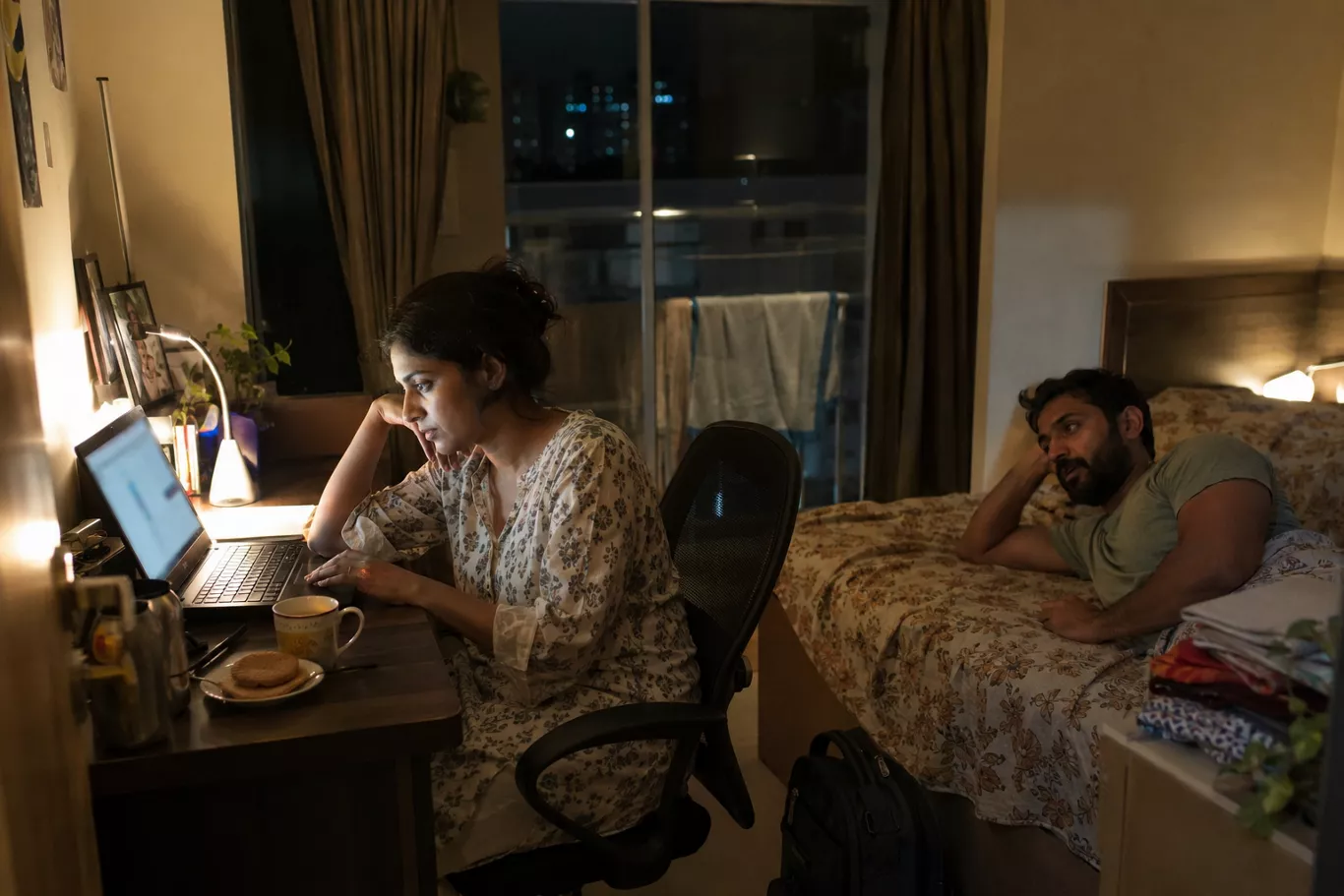
My husband was asleep when I opened my laptop again.
It was 10:42 on a Tuesday night. I remember the time because I looked at it and did the small calculation people do when they are about to make a bad sleep decision. If I worked for one hour, I could still sleep before midnight. If I worked for two, the next day would be damaged but not ruined. If I worked for three, I would wake up with the face of someone who had made her own life harder voluntarily.
I opened the laptop anyway.
There was a proposal I wanted to finish. Not urgently. No one had asked for it by morning. But I wanted it done. I wanted to send it before sleeping. I wanted the day to end with something moved forward.
My husband was on the bed, turned to one side, already half asleep. He had come home late, eaten quietly, and said he had a headache. His work had been heavy for weeks. Not dramatic-heavy. Just the kind of everyday heaviness that makes a person answer questions with fewer words than usual.
When the laptop light came on, he opened one eye.
“You’re working?”
“Just for a bit.”
He said nothing.
This was worse than if he had complained.
I sat at the table with tea that had gone lukewarm and a plate with two Sunfeast Marie Light biscuits left from earlier. I ate one without thinking and looked at the proposal.
From the bed he said, “You don’t get tired?”
I said, too quickly, “Of course I get tired.”
He said, “Doesn’t look like it.”
This was not a fight yet.
But it was walking towards one.
The Different Speeds
There are phases in a marriage when two people are moving at different speeds.
Nobody tells you this properly.
You hear about big differences. Values. Money. Children. Families. Cities. Career choices. Those are real. But there are also smaller, quieter differences that arrive without announcing themselves.
One person is building.
The other is recovering.
One person is restless.
The other wants stability.
One person wants the next thing.
The other is still trying to finish the current thing without collapsing.
For a while last year, I was the restless one.
I wanted more work, better work, sharper work. I wanted to apply for things. Write more. Meet more people. Say yes to opportunities. Fix my routine. Wake earlier. Use weekends better. Become the kind of person who had a plan and followed it with a clean seriousness I have never naturally possessed.
My husband, meanwhile, wanted to be less tired.
That was his ambition.
Not a small one.
He wanted to come home before 9. He wanted his back to stop hurting. He wanted one Saturday without a family plan, a work call, or a list. He wanted to sleep without dreaming about unread emails.
I understood this.
I also did not fully understand it.
Because when you are in a moving phase, stillness can look like lack of drive.
And when you are in a tired phase, movement can look like madness.
The Weekend Problem
The real conflict showed up on weekends.
Weekdays already belonged to work, commute, food, chores, and whatever version of conversation was left after all of that. Weekends were the only open space.
I saw open space as possibility.
He saw open space as recovery.
This difference sounds simple. It was not simple in practice.
On Friday evenings, I would say, “There’s this thing on Saturday morning.”
He would ask, “What thing?”
“A talk. Could be useful.”
“For work?”
“Kind of.”
“What time?”
“10.”
He would look at me like I had suggested we catch a 5 am flight for fun.
Sometimes the thing was useful. Sometimes it was not. Sometimes I went and came back energised. Sometimes I went and came back annoyed because the panel said the same five things everyone says and I had wasted both cab fare and hope.
But I still wanted to go.
He wanted to wake up late, have a slow breakfast, and not optimise his personality before noon.
My friend Priya says she and her husband went through this when she started preparing for a career switch. She wanted weekends for courses, calls, applications, and meeting people who had made similar moves. Her husband had just come out of a brutal year at work and wanted weekends to feel like weekends again.
She said the problem was not that he did not support her.
He did.
The problem was that support also takes energy, and he did not have much spare.
That sentence stayed with me.
Support also takes energy.
The Resentment
I did not like admitting that I resented his tiredness sometimes.
It sounds cruel.
He was genuinely tired. I could see it. He was not pretending. He was not being lazy. He was carrying his own work, his own pressure, his own family responsibilities, and the general exhaustion of being an adult in a city that takes too much from everyone before breakfast.
Still, there were moments when I felt alone in my wanting.
I would talk about something I wanted to do and he would say, “Good,” but without the brightness I wanted from him.
I would send him a link and he would reply later than I hoped.
I would come back from a meeting excited and he would listen, but with tired eyes.
The practical support was there. The emotional matching was not always there.
I wanted him to be excited because I was excited.
This is a common but unreasonable wish in marriage.
Your partner can love you and still not have the exact energy required for your current dream at the exact time you want it. This is annoying. It is also true.
The other side was also true.
He told me later that my ambition sometimes made him feel as if rest had become morally inferior.
I did not mean to make him feel that.
But I can see how I did.
The Language of Ambition
Ambition has a way of making ordinary life sound insufficient.
Growth. Momentum. Next level. Better version. More disciplined. More serious. These words can be useful. They can also make the person sitting beside you with a headache feel like they are failing at being alive.
I had started speaking in that language too much.
I did not notice it while doing it.
I would say things like, “We should make better use of Sundays.”
He would say, “We are using it. We are resting.”
I would say, “But we should also plan.”
He would say, “Can we plan after lunch?”
I would feel unsupported.
He would feel hunted.
Neither of us was completely wrong.
That is the difficult part.
My friend Meera said something similar about a phase in her marriage. Her husband was trying to build something on the side while she had just returned to work after a difficult health period. He wanted late-night brainstorming. She wanted the lights off.
She said, “I supported the dream. I just did not want to live inside it every night.”
That felt fair.
There has to be a door between the dream and the house.
The Night We Said It Properly
The laptop night became useful because we finally said the thing directly.
He said, “I feel like you are always chasing something.”
I said, “I feel like you want me to slow down because you are tired.”
He said, “I don’t want you to slow down.”
I said, “Then what?”
He thought about it.
“I want to not feel bad for being tired.”
That was the sentence.
It changed the room.
Because I had been hearing his tiredness as resistance. He had been hearing my ambition as judgment. We were both translating badly.
I closed the laptop.
Not because he asked me to. He did not. But because the proposal could wait and the conversation probably should not.
We sat at the dining table. The tea was cold by then. I made fresh tea. He took the last Marie biscuit from the plate and split it into two, which is something we do when neither of us wants to admit we want the whole thing.
We talked for half an hour.
No solution came out immediately.
But the atmosphere changed.
That matters too.
The Agreement
We made a small agreement later.
Not a grand couple agreement. Those rarely survive contact with real life.
A small one.
I would tell him clearly when something mattered to me and when I was just generally spiralling into productivity. These are different categories and deserve different levels of household attention.
He would tell me when he was too tired to respond properly, instead of giving half-responses that made me feel dismissed.
We would keep one weekend morning protected for rest unless something genuinely important came up.
We would also keep one block of time every week where I could talk through work, plans, ambition, all of it, without feeling like I was dragging him into something at the wrong time.
This helped.
Because sometimes I did not need him to match my energy all week.
I just needed a place to put it.
And he did not need me to become less ambitious.
He needed rest to not be treated like a lack of character.
The Different Seasons
I think every couple goes through this in some form.
Maybe not ambition and tiredness exactly. Maybe one person is social and the other is withdrawn. One is ready for change and the other needs sameness. One wants to save aggressively and the other wants one year of breathing room. One wants to talk now and the other can only talk after sleeping.
The hard part is not difference.
The hard part is when each person starts making a moral story out of the difference.
I am ambitious, therefore you are complacent.
I am tired, therefore you are selfish.
I am practical, therefore you are reckless.
I am hopeful, therefore you are negative.
Most of the time, these stories are too harsh.
People are usually more complicated than the role they are playing in your irritation.
My husband was not against my ambition.
He was tired.
I was not against his rest.
I was scared of stopping.
Those are different truths.
The Later Phase
Things changed after that, slowly.
Not perfectly. I still open the laptop at bad hours sometimes. He still says “hmm” in a way that makes me want to ask whether the “hmm” has a subtext. We still misread each other when the week has been long.
But we recover faster.
Last Sunday, I had a meeting I wanted to attend. He did not want to come. Earlier, I would have made this mean something about support. This time I went alone.
Before I left, he asked, “Is this important-important or exploratory-important?”
This is now our language.
I said, “Exploratory-important.”
He said, “Then come back if it’s useless.”
Fair.
I went. It was partly useful and partly not. I came back, told him the useful part, skipped the rest, and we had tea.
He had bought Marie Light because he said we were out.
A small thing.
But small things are often where support actually lives.
Not in becoming the same speed.
In noticing the other person’s speed and still staying kind.
The Balance
There will be times when I move faster.
There will be times when he does.
There will be times when ambition belongs to him and tiredness belongs to me. In fact, this has already happened. The roles do not stay fixed. Marriage has a way of rotating everyone through every position eventually.
That is probably good.
It keeps you humble.
For now, I am learning that ambition does not have to fill the whole house. It can have a room. A desk. A few hours. A conversation. It does not need to sit on every chair and make rest feel guilty.
And tiredness does not have to shut the house down. It can be named. Protected. Respected. It can ask for quiet without making the other person feel abandoned.
The night I opened the laptop at 10:42, I did not finish the proposal.
I sent it the next afternoon.
Nothing terrible happened.
The world did not punish me for sleeping.
This is information I am still absorbing.


