



Sign in to share
Shikha Sharma
When my husband moved back to the same city, I thought the difficult part was over.
This was a reasonable thing to think.
We had spent eight months in different cities because of work. He was in Bengaluru. I was in Delhi. The arrangement was supposed to last three months, then five, then “just till this project ends,” which is one of those sentences companies use when they want your personal life to remain flexible without saying so directly.
By the end of it, we were tired of airport goodbyes, tired of planning weekends like military operations, tired of discussing flights, tired of saying “network is bad” in the middle of conversations that were already not easy to have on the phone.
So when he got the transfer back, we were happy.
Properly happy.
I remember the day he came back. Not for a weekend. Not with a return ticket already booked. Back.
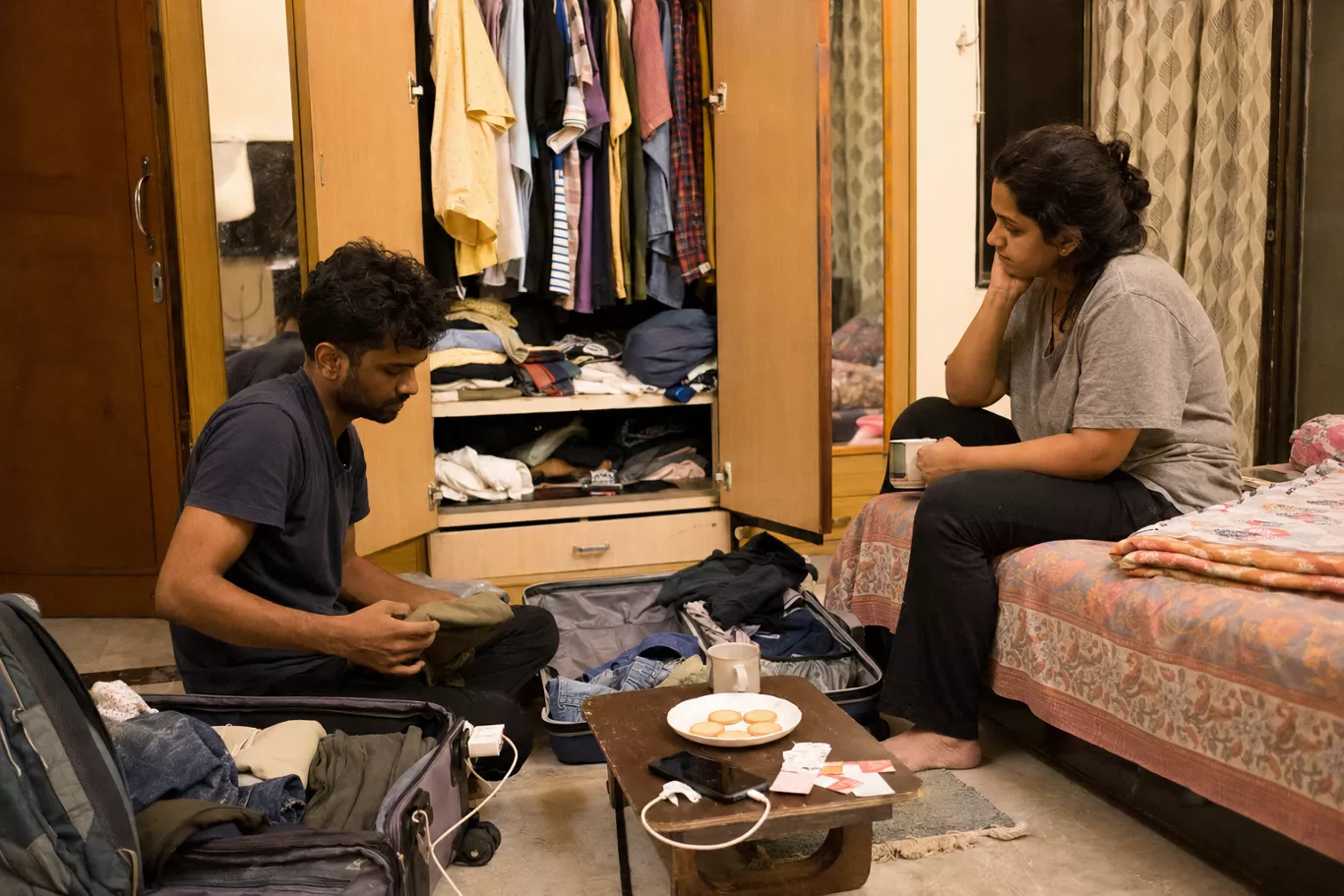
There were two suitcases near the door, one backpack on the sofa, and a cardboard box full of things he had insisted were “not much.” The house looked temporarily occupied by a man who had returned from a small migration. I made tea because that is what I do when I do not know how to arrange a feeling. There was Sunfeast Marie Light on the table. He took one, then another, then said the flight had been bad and the cab driver had taken a strange route.
It was all very normal.
That was the strange part.
The Return
We had imagined the return as an event.
Not consciously. We are not dramatic people in that way. But somewhere, privately, I think both of us had expected the reunion to feel like a problem being solved.
He would come back. The distance would end. The calls would become conversations. The tiredness would reduce. The relationship would return to its old shape.
Instead, what happened was that he came back and there was laundry.
There were groceries to buy. His side of the cupboard had to be cleared because I had slowly expanded into it over eight months. The Wi-Fi password had to be given to one more device. His toothbrush returned to the holder. His shoes appeared near the door. His charger occupied a plug point I had begun to think of as mine.
The first evening was nice.
The second evening was also nice.
By the fourth evening, I realised something had shifted.
Not badly. Just visibly.
We had become slightly unused to each other in daily life.
The Phone Habit
Long distance creates habits.
Some are obvious. Good morning messages. Late night calls. Photos of meals. Flight updates. Long voice notes sent when one person is in a cab and the other is free enough to listen.
Some habits are less obvious.
You begin to compress your day into reportable parts. You learn to save stories. You decide what is worth mentioning and what is not. You become slightly edited, not because you are hiding anything, but because phone calls have a shape. You cannot share everything. You choose.
When he came back, I still had the habit of saving things to tell him.
Then I would remember he was in the other room.
This sounds sweet. It was sometimes sweet. It was also awkward.
I would begin a story at dinner and realise I had already texted him half of it at 4 pm. Or he would ask me something about my day and I would answer too briefly because, in my head, the real conversation was supposed to happen later on the phone. But there was no later phone call. He was there.
My friend Priya said the same thing happened when her husband returned after six months in Pune. She said they had become excellent at missing each other and slightly clumsy at being around each other.
That felt accurate.
Missing someone and living with someone are related skills, but they are not the same skill.
The Space Issue
The house had changed while he was away.
Not in a big way. I had not renovated anything or painted a wall or become a person with indoor plants, though I did consider it briefly and then remembered who I am.
But small changes had happened.
I had moved the coffee table because it made more sense near the window. I had started keeping my work bag on his chair. I had become used to eating dinner at a slightly different time. I watched things he did not like. I slept diagonally more often than I should admit. I used his side of the bed for folded clothes, then unfolded clothes, then clothes that had lost legal status.
When he came back, he did not complain.
This somehow made me more aware of it.
He just looked for a place to put his bag.
That is when I realised I had not kept space. Not really.
I had kept the idea of space.
His cupboard was still technically his. His chair was still technically his. His side of the bed was still technically his. But daily life had covered these spaces quietly.
This is what absence does.
It makes room and then fills it with routine.
The Small Irritations
The first irritation was about the fan.
I like the fan at a speed he finds excessive. He likes the AC at a temperature I consider financially and morally irresponsible. Earlier, before the long-distance months, this was just one of our small domestic negotiations. After he returned, it felt new again.
Then there was dinner timing.
Then the bathroom shelf.
Then his habit of taking calls while walking around the house.
Then my habit of leaving cups near the bed, which I had been doing peacefully in his absence without anyone looking at them with judgment.
None of these things mattered.
All of them mattered a little.
Not because they were serious. Because they reminded us that the relationship had to become physical again. It had to return to objects, timings, noise, temperature, cupboard space, plates, chargers, towels, sleep.
On calls, you can be very loving and still not deal with where someone keeps wet towels.
In the same house, the towel will eventually make its case.
My friend Meera said something useful about this. She said after long distance, the first fight is usually not about what it is about. It is about re-entry.
Her husband returned after a year abroad and they fought about where to keep his suitcase.
She said the suitcase was not the issue.
The issue was that both of them had lived complete versions of life without the other person physically present, and now those versions had to merge without anyone saying, “Please submit your revised floor plan.”
The Distance Had Helped Too
This is the part no one says nicely.
Long distance is difficult, but it also simplifies some things.
You miss the person. You wait for the call. You plan the visit. You count days. There is ache, yes, but there is also structure. The relationship has a clear enemy: distance. This is useful because both of you can be on the same side against it.
When the distance ends, the enemy becomes less clear.
Now the problem is not cities. It is tiredness. Mood. Work. Mess. Timing. Expectations. The fact that one person wants to talk at the exact time the other person has finally stopped talking for the day.
Long distance had hidden some of this.
Not deliberately. Just practically.
If he was tired in Bengaluru, he could say, “Long day, call tomorrow?” and I could be disappointed but understand. If he is tired in the same house and says nothing for an hour, I have to see the tiredness. Sit beside it. Not convert it into a story about us.
That took some relearning.
The Same City Is Not the Same Life
I also thought same city meant more time.
It did, technically.
But the time was not automatically better.
He came back to a city with office traffic, delayed evenings, family obligations, domestic work, and all the ordinary things that make two people available in theory and tired in practice.
During long distance, if we had one weekend together, we protected it. We made plans. We went out. We made the relationship feel like an event because the time was limited.
In the same city, time became available and therefore easier to waste.
We could meet tomorrow. Talk later. Go out next weekend. Watch that film some other day.
There was no urgency.
This was good.
It was also dangerous in a quiet way.
Because sometimes urgency had been doing the work that intention should have done.
The Adjustment
We are better now.
I do not want to make it sound like this was a large crisis. It was not. It was just a slightly uncomfortable adjustment that nobody warns you about because everyone is busy congratulating you for no longer being long distance.
What helped was admitting that coming back was not the same as returning to before.
There was no before to return to.
Eight months had happened. We had both developed routines, shortcuts, moods, ways of spending evenings, ways of handling loneliness, ways of not depending on the other person for every small thing.
Some of that was good.
We did not need to erase it.
We needed to make a new version of being in the same city.
So we did small things.
We cleared the cupboard properly. Not symbolically. Actually. I gave back the space I had occupied.
We made one weekday dinner non-negotiable, even if it was at home and even if both of us were tired.
We stopped assuming that being in the same house counted as spending time. Sometimes it does. Sometimes it is just two people using the same Wi-Fi.
We also kept some long-distance habits that had worked. Sending photos during the day. Sharing small updates. Saying when the day was bad instead of waiting for it to become visible at dinner.
The End of Missing
The hardest part, strangely, was losing the missing.
Missing someone gives love a certain clarity. You know what you want. You want them here.
When they are here, love becomes less clear and more practical.
You want them to sleep well. You want them to not leave socks in that place. You want them to come home safely. You want them to remember the electrician is coming. You want them near, but also not always in your way. You want the person and the life with the person, which are not exactly the same thing.
I think that is what same-city love asks for after distance.
Less drama. More adjustment.
Less ache. More room on the shelf.
The suitcases are gone now. His charger is back in the plug point. The toothbrush holder has accepted him. His chair is mostly his again, though I still put my bag there sometimes and pretend it is temporary.
Last night we had tea after dinner. He asked if there were biscuits. I said they were in the second shelf. He knew which one.
That felt like a small return.
Not to the old life.
To this one.


