

Why Couples Who Grocery Shop Together Stay Together. No, Really.


Sign in to share
Shikha Sharma
I learned more about my relationship at Big Bazaar than I did in six months of date nights.
I know how that sounds. But hear me out.
This is before we got married. We’d been together for maybe eight months. Things were good. We liked each other. We had fun together. But we hadn’t really tested the relationship yet.
Then one Saturday, we decided to do the weekly grocery run together.
It was supposed to be simple. In and out. Forty-five minutes max.
But guess what? We were in there for two hours.
And by the time we got to the checkout counter, I knew more about whether this relationship would work than I’d learned from any deep conversation we'd ever had.
What Grocery Shopping Actually Tests
Grocery shopping, I feel, is not a simple errand. It’s a series of micro-negotiations.
What do we need? What can we afford? What do you want versus what do I want? Who decides? How do we split this? Do we stick to the list or improvise?
Every single aisle is a tiny test of how you make decisions together.
And unlike a date, where you're both on your best behaviour, grocery shopping strips all that away. You’re tired. The store is crowded. You’re trying to remember if you already have coriander powder at home.
There’s no romance to hide behind. It’s just two people trying to get through a task together. And how you handle that task tells you almost everything about how you’ll handle life together.
The First Fight We Almost Had
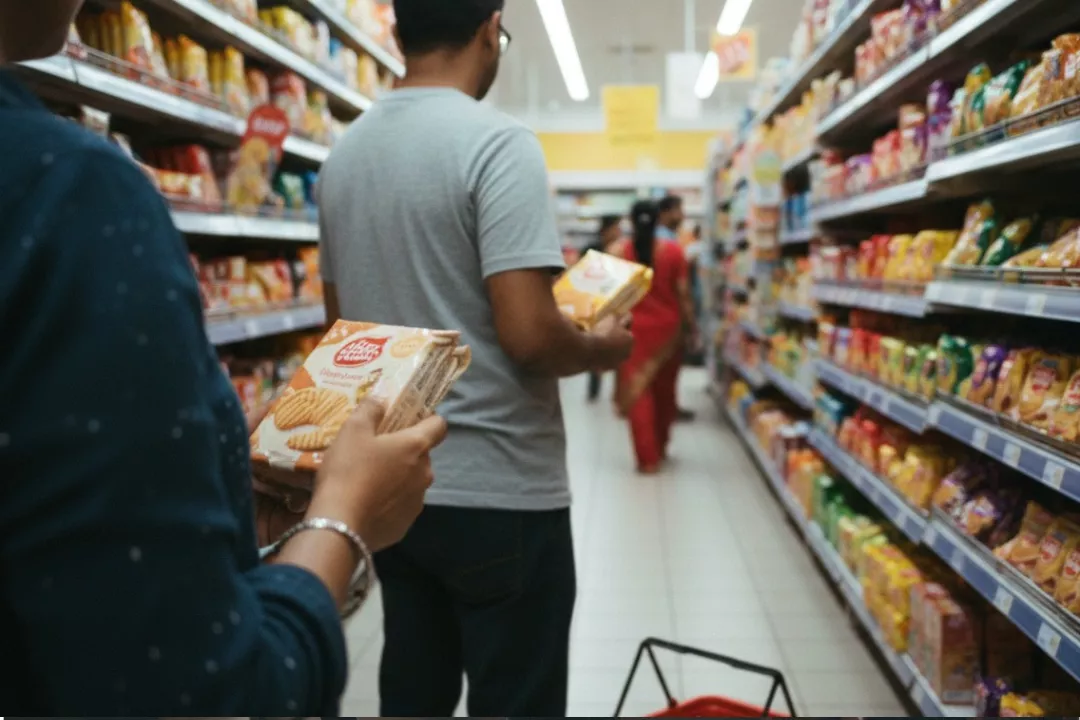
We were in the biscuit aisle.
He reached for the Sunfeast Marie. I reached for some chocolate cream cookies.
“We don't need both,” I said.
“I want the Marie,” he said.
I looked at me. “But I want these.”
This wasn’t about the biscuits. It was about whether we could both get what we wanted. Whether compromise meant one person always giving in.
I watched him think about it. I could see him doing the math. It’s just biscuits. Does it matter?
Then he picked up both packets. “We'll get both. I'll eat mine, you eat yours.”
It was a tiny moment. But I noticed it. (I usually do.)
He didn’t make me justify my choice. He didn’t say it was wasteful or unnecessary. He just made space for both of us to have what we wanted.
Now, that’s partnership.
What the Vegetable Section Reveals
My friend told me she knew her relationship was in trouble in the vegetable section.
They were picking out tomatoes. She was checking them carefully, looking for the ripe ones, avoiding the bruised ones.
Her boyfriend stood there, scrolling on his phone.
“Can you help?” she asked.
“You're already doing it,” he said. Not mean. Just... absent.
And she realised, standing there holding a bag of tomatoes, that this was the pattern. She managed everything. He showed up physically but not actually.
In big decisions, he’d participate. But in the day-to-day? In the unsexy work of just running a life together? She was alone.
The vegetable section didn’t create the problem. It just made it visible.
The List vs. No List Divide
Some people shop with a list. Some people wing it.
I’d say neither is wrong. But if you’re a list person and your partner is a wing-it person, grocery shopping becomes a negotiation about planning versus spontaneity.
List people want efficiency. They want to get what they came for and leave.
Wing-it people want to browse. They want to see what’s on offer, what looks good, what they might be in the mood for later.
Again, not about groceries. About how you move through life.
My partner is a wing-it person. I am very much a list person.
First few times, I got frustrated. We were taking forever. We kept backtracking. We’d get home and realise we forgot half the things we actually needed.
But I also noticed something. He was having fun. He wasn’t stressed. And he’d find things I never would have thought to buy that ended up being great.
So we found a middle ground. I make the list. We get those things first. Then we have fifteen minutes to browse. And it works.
The Budget Conversation You Can't Avoid
This is the big one.
You’re standing in front of two versions of the same thing. One costs sixty rupees. One costs ninety.
What do you do?
Some people automatically go for the cheaper one. Some people go for quality. Some people split the difference.
And if you're shopping together, you find out real quick whether you’re aligned on money.
I’ve watched couples have tense, whispered arguments about this. “We don't need the expensive one.” “But it's better quality.” “It's pasta, how different can it be?”
It’s not really about the pasta. It’s about what you think is worth spending money on. About whether you feel judged for your choices.
If one person feels like the other is being wasteful, or cheap, or impractical, that doesn't stay in the grocery store. That comes home with you.
How You Handle Crowded Aisles
Can I be honest? I observe a lot. Like a LOT! I notice when the store is packed and the aisles are narrow and people are everywhere, how do couples move through the space together.
Do they stay together? Or they split up? Does one person lead and the other follows?
I notice couples who stay loosely connected, who check in with a glance, who make space for each other without having to discuss it.
Versus couples who drift apart and then have to search for each other. Or couples where one person is always three aisles ahead, impatient, while the other is still deciding on something.
It’s a small thing. But I feel it’s a preview of how you’ll move through life. Whether you’re a team navigating together, or two separate people happening to be in the same place.
The Checkout Line Is Where You See Everything
This is the final test.
You’re in line. You’re unloading the cart. Someone has to organise everything on the belt.
Who does it? Do you do it together? Does one person handle it while the other zones out on their phone?
And then the total comes up. Who pays? Do you split it? Does one person cover it this time, the other next time? Is there tension around it, or is it easy?
I've seen couples get weird at checkout. One person pays and the other just stands there, not offering, not acknowledging. Or one person pays and the other immediately says “I'll send you half” in a way that feels transactional, not generous.
The best couples I've seen? They trade off without discussing it. Or they split it without keeping score. There’s ease around it. No one feels taken advantage of. No one feels like they're doing more than their share.
That ease matters according to me. Because you’re going to have to navigate money together for the rest of your relationship. And if it's awkward at checkout, it's going to be awkward everywhere else.
What I Learned in the Cereal Aisle
Remember that first grocery trip? The one that took two hours. We got to the cereal aisle near the end.
I was exhausted. The store was hot. My feet hurt. I just wanted to leave.
My partner picked up a box of some sugary cereal. I raised an eyebrow.
“Don't judge,” he said.
“I'm judging,” I said.
He grinned, and put it in the cart anyway.
And I realised, standing there, that this was it. This was the relationship.
Not the romantic dinners or the late-night conversations. This. The compromises, and the differences. The ability to laugh about the cereal.
We left the store with way more than we planned for and way less than we needed.
But we did it together. And it was kind of fun. And we didn’t fight.
And I thought, yeah. We’ll be okay.
The Real Reason Grocery Shopping Matters
I am absolutely convinced that couples who grocery shop together stay together, not because grocery shopping is romantic. But because grocery shopping is real.
It's the unsexy, ordinary, weekly task that requires cooperation, compromise, patience, and humour.
And if you can handle that together, if you can navigate the crowded aisles and the budget decisions and the forgotten items without it turning into a fight, you can handle most of what life requires.
Shared hobbies are great. Shared values are important. Shared dreams matter. But shared tasks? That’s the foundation.
That's what you’ll actually be doing together. Week after week. Year after year.
I feel, love isn’t just how you feel about each other. It’s how you function together. And there’s no better place to test that than the grocery store on a crowded Saturday afternoon.
So next time you’re shopping together, pay attention.
Not just to what you’re buying. But to how you’re moving through the store. How you’re making decisions.
That’s your relationship. Right there. In the cereal aisle.


