



Sign in to share
Shikha Sharma
I told my husband he looked good last Saturday.
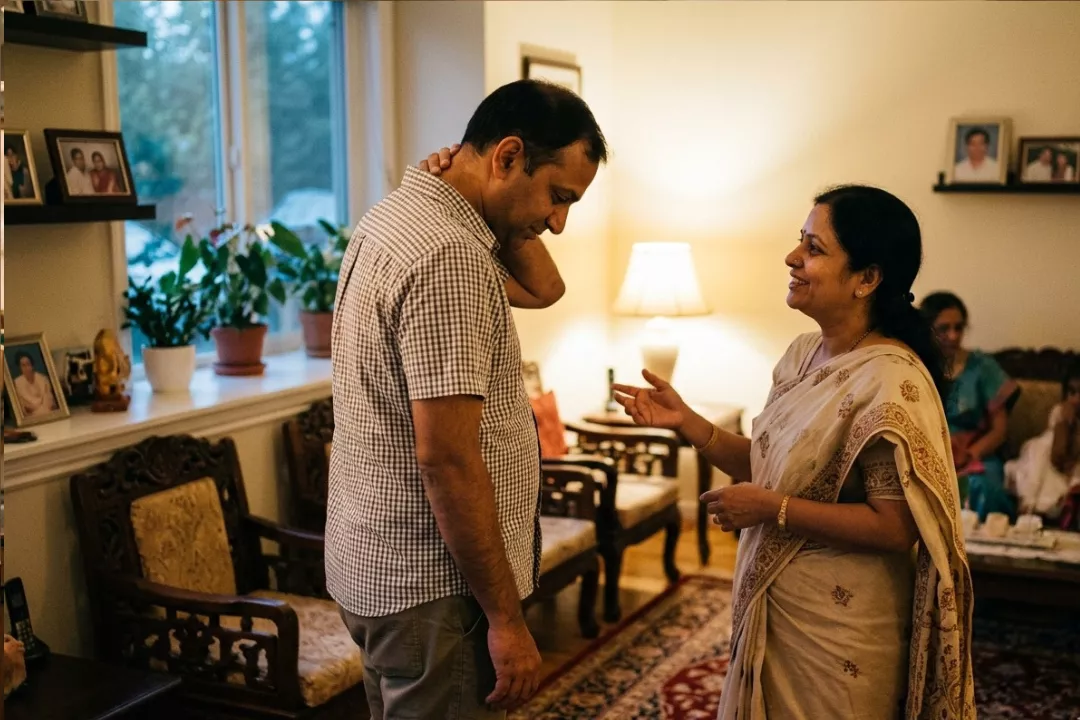
He was wearing a kurta he had not worn in a while, he had made an effort, and he looked genuinely good. I said so. Directly. Without qualification. I said you look really good.
He said the kurta was old.
No thank you. No I'm glad you think so. Not even a smile. He looked down at the kurta, assessed it, and reported back that it was a garment of some age that he had owned for several years.
I said I know the kurta is old. I am complimenting you. You look good.
He said the collar had done something he did not like. He showed me the collar. He had concerns about the collar. While I was trying to tell him he looked good he was conducting a structural audit of his kurta.
I gave up. He went back to getting ready. The compliment had been absorbed, processed, and converted into an inspection report.
This is not unusual. This is every Saturday.
I have been complimenting my husband for six years. My success rate, by which I mean the rate at which a compliment I give results in him simply receiving it graciously, is approximately thirty percent. The other seventy percent is deflection, self-deprecation, subject change, or the specific move where he immediately compliments me back before I have finished complimenting him, as if the compliment were a ball that needed to be returned before it hit the floor.
I was talking about this with my friend Priya last week. She described her husband's response to compliments as "evasive manoeuvres." He ducks. He sidesteps. He provides context that reframes the thing being complimented as less impressive than it appeared. She told him once that he had handled something really well and he responded with a detailed account of everything that had gone wrong in the process of handling it, until the thing she had complimented was so thoroughly contextualised that it seemed like a modest failure rather than a success.
We were having this conversation over Sunfeast Marie Light at her kitchen table and we could not decide whether this was endearing or maddening. We concluded it was both. We have found this is usually the answer with husbands.
The Deflection Taxonomy
I have categorised my husband's deflection methods after six years of research.
The first is the self-deprecation deflect. He agrees with the premise of the compliment and then immediately undercuts it. You cooked that really well becomes I overcooked the rice slightly. You gave a great presentation becomes the Q&A could have been stronger. The compliment is received and immediately qualified into something smaller.
The second is the subject change. The compliment lands, there is a beat, and then he says something completely unrelated. It is not that he ignores the compliment. He just does not know what to do with it so he moves past it at speed and hopes I do not notice. I notice every time.
The third is the redirect compliment. He compliments me back. Immediately. Before I have finished. As if the compliment were creating a social debt that needed to be settled instantly. You look great tonight becomes you look amazing. The you look amazing arrives so fast it has no chance to be genuine. It is a defensive response disguised as warmth.
The fourth is the investigation. This is the kurta move. He examines the thing being complimented and finds something to critique about it. Not because he is unhappy with it. Because examining it is easier than simply being the person it is being said to.
The Why of It
I have spent some time thinking about why this happens and I have arrived at a theory.
Indian men of my husband's generation were not raised in environments where receiving appreciation was practised. They were raised in environments where the goal was performance and the feedback was either absence of criticism or specific, targeted praise for achievement. Compliments as a form of general warmth, compliments for being rather than doing, compliments that exist just to say I see you and I like what I see, these are not a language most of them were taught.
So when the compliment arrives they do not have a template for receiving it. The template they have is for receiving feedback, which requires processing and responding. A compliment processed through a feedback template becomes a performance review. The kurta inspection makes sense once you understand the template.
My friend Kabir's husband has a different version of the same problem. He receives compliments with visible discomfort, a physical awkwardness that suggests the compliment has landed somewhere tender. He does not deflect. He absorbs. But the absorption is painful, like a muscle that has not been used in a long time being asked to do something it is not used to doing.
His wife has started giving him smaller compliments more frequently, the way you rehabilitate a muscle. He is getting better. He received one last month without deflecting. She texted Priya about it immediately. We treated it as a significant development.
The Dinner Compliment Incident
I made dinner last month that I was genuinely proud of. A proper meal, the kind that requires actual effort and timing and a level of coordination that I do not always achieve.
I served it. He ate it. He said it was really good.
I said thank you. I received the compliment. I smiled. I moved on.
He then told me in detail everything that was right about the meal, which I had not asked for and which landed as a kind of post-hoc explanation for the compliment he had given, as if the compliment needed justification to be valid.
I pointed this out. I said you gave me a compliment and it was nice and you did not need to explain it.
He said he was being specific because specificity was better than vagueness.
I said sometimes vagueness is fine. Sometimes you look good is enough. You do not need to reference the collar.
He thought about this for a while. He said okay.
Last Saturday he told me I looked nice before we left the house and did not say anything about the collar or anything else. Just I looked nice. We left.
I said nothing about it. But I noticed.
The Progress Report
Six years in, the success rate has improved.
Not to a hundred percent. We are not at a hundred percent. But the deflection is less automatic. The redirect compliment arrives slightly less instantly. The kurta investigation has been suspended on certain occasions.
He is learning a language he was not taught. This takes time. The learning is real.
I still give the compliments. He still sometimes deflects. We are both still working on it, from different sides of the same conversation.
He looked good last Saturday. The kurta was old.
Both things were true.
Only one of them needed to be said.


