



Sign in to share
Dhruv Saxena
My friend Priya found out by accident.
She'd come back to her parents' place after dropping her brother at the airport. He was moving to Canada. Long-term, possibly permanent. The goodbye had been at the departure gate, controlled, efficient, everyone holding it together because airports require a certain kind of composure and her family had always been good at composure.
Her mother had been fine. Calm, organised, said the right things, hugged him at the right moment, waved at the right time. Fine.
Priya had forgotten her phone charger. She came back forty minutes later and let herself in quietly.
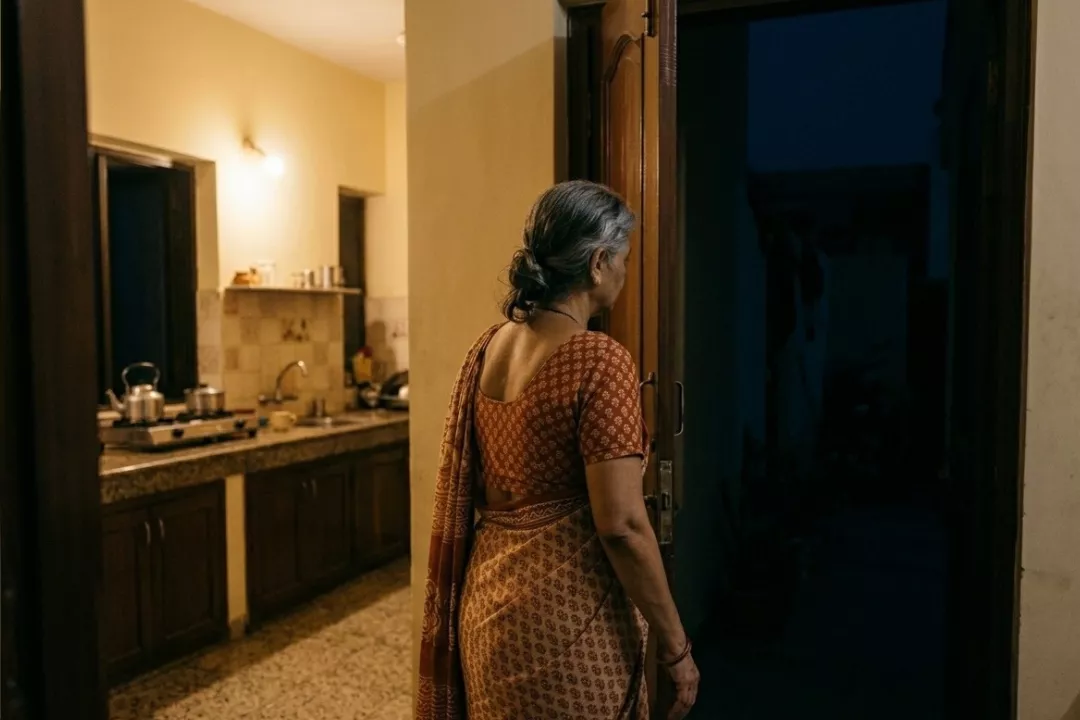
Her mother was in the kitchen. She didn't hear Priya come in. She was standing at the sink, not doing anything, just standing there, and she was crying. Properly crying, the way you cry when nobody is watching, without the management that goes into crying when someone is.
She heard Priya and turned around. In the time it took to turn around, she had composed herself. By the time she was facing her daughter, she was fine again.
"I forgot my charger," Priya said.
"It's on the table," her mother said.
Priya took the charger. She didn't say anything about what she'd seen. She left.
She called me from the car. She said she'd been sitting in the parking lot for twenty minutes because she couldn't make herself drive yet. She said, "she was just standing at the sink, Dhruv."
I didn't have anything useful to say. I just listened.
The Kitchen
Every Indian mother has a place where she goes to be private. For most of them it's the kitchen.
The kitchen is where she has always been. It's her domain, her territory, the room where her presence makes the most sense and asks the fewest questions. Nobody follows her there. Nobody thinks it's strange that she's in there alone at odd hours. The kitchen provides cover in a way that no other room in the house does.
My friend Karan figured this out when he was about sixteen. He'd come downstairs late one night for water and found his mother sitting at the kitchen table by herself in the dark, not doing anything. He asked if she was okay. She said yes, she was just thinking. He went back to bed.
He's thirty-three now and he still thinks about that night. He doesn't know what she was thinking about. He never asked properly. He was sixteen and went back to bed.
I was home last month. My mother had put out Mom's Magic biscuits with the chai in the afternoon, the way she always does, and we'd had a normal visit, easy conversation, the usual things. I was leaving the next morning.
That evening I got up late to get water and the kitchen light was on. My mother was at the counter. She heard me and turned around immediately. She asked if I wanted something. I said just water. She got it for me. She was fine.
I went back to bed. I lay there for a long time thinking about what I might have interrupted.
What She's Protecting You From
Indian mothers cry alone because they have decided, somewhere along the way, that their grief is not something you should have to carry.
This is a choice made entirely out of love. She doesn't want to make your leaving harder. She doesn't want you to feel guilty. She doesn't want you to worry about her when you have your own life to be getting on with. She has decided that the most loving thing she can do is manage her own sadness in private so that yours can be lighter.
The result is that the people who love her most have almost never seen her grieve.
My friend Nikhil's mother lost her sister two years ago. Nikhil was home for the funeral and the days immediately after. He said his mother was capable and present and managing everything, the way she always managed everything. He didn't see her cry once during that whole week.
He knows she cried. He knows it because he heard her once, late at night, and he stood outside her bedroom door for a long time and then didn't knock and has regretted that ever since.
He didn't knock because he didn't know what to say. She didn't open the door because she didn't want him to see.
Both of them, on opposite sides of a door, protecting each other from the same thing.
The Loneliest Grief
There is a particular loneliness to grief that has no witness.
You feel it, it passes through you, and because nobody saw it, it leaves no mark on the shared record of the family. It happened only to you, only in private, only in the kitchen or the bedroom or wherever you go when you need to be alone with something difficult.
My friend Ananya thinks about this sometimes. She thinks about all the times her mother has been sad that she doesn't know about. All the private moments that happened in rooms she wasn't in, at hours when she was asleep or gone or simply not paying attention.
She said it's like realising there's an entire dimension of her mother's life that she has never had access to. Not because her mother kept it from her deliberately. Just because her mother never wanted her to have to hold it.
That is, in its way, the most complete expression of love I can think of. I will be sad alone so that you don't have to be sad with me.
What I Wish I'd Done Differently
I wish I'd knocked more often.
Not every time. Not in a way that removed her privacy or made her feel watched. But sometimes. When the kitchen light was on too late. When she turned around too quickly. When she said she was fine in the tone that means something else.
I wish I'd said, you don't have to be fine right now. I'm not going anywhere. You can be sad in front of me.
I haven't said that. I'm not sure I'd know how to say it without making her feel managed or observed in a way she wouldn't want.
But I'm going to try. The next time I'm home and the kitchen light is on too late, I'm going to sit down at the table and stay there for a while.
Not to fix anything. Not to ask questions. Just so she knows that if she wants to not be alone with it, she doesn't have to be.
The least I can do is be in the room.


