



Sign in to share
Dhruv Saxena
My mother has a bag full of bags.
Not a drawer. Not a shelf. A bag.
This distinction matters to her.
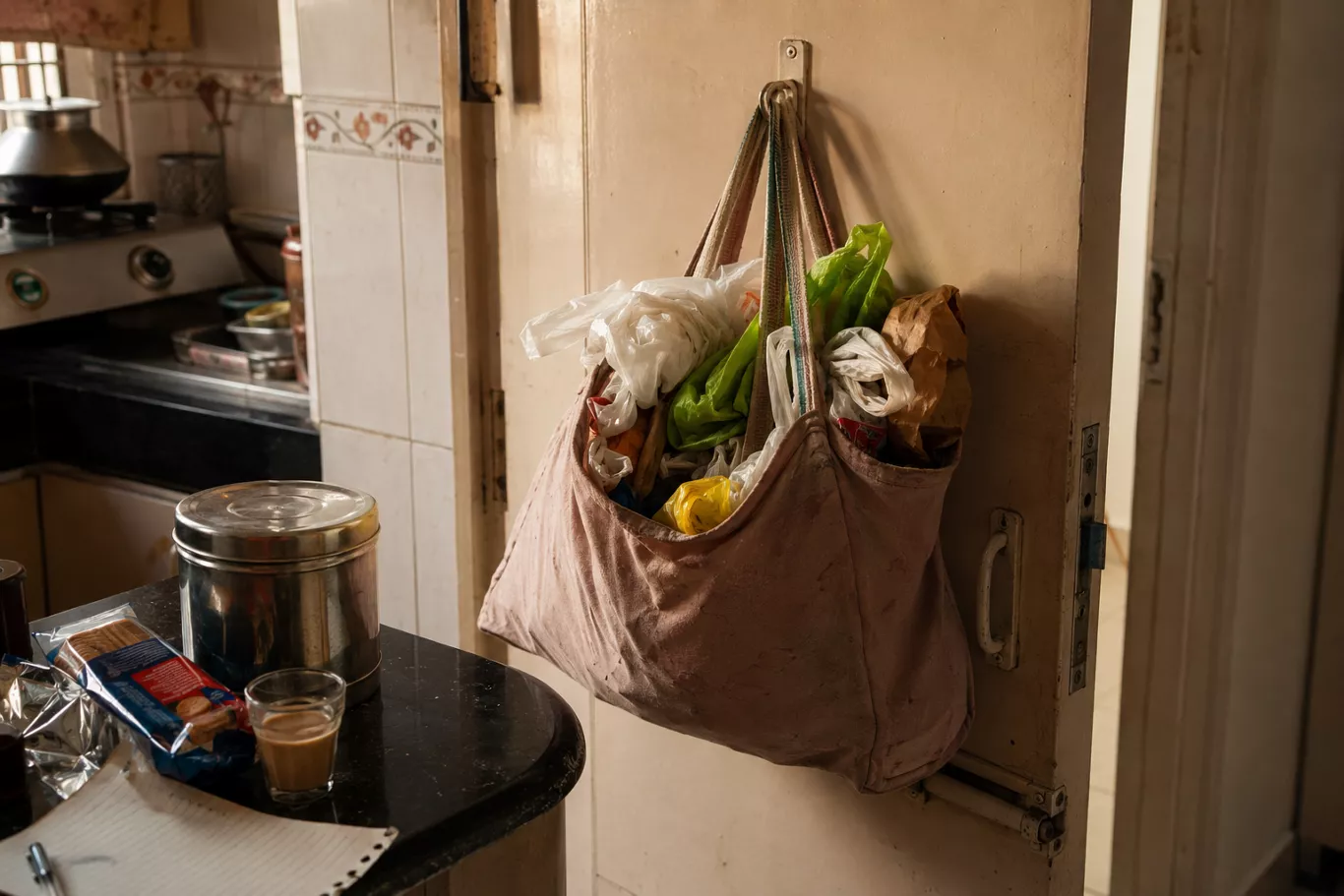
The bag lives behind the kitchen door, on a hook that has carried its weight for so many years that I think the hook has given up any ambition of being used for anything else. It is a large cloth bag from a jewellery store whose name has faded, and inside it are smaller bags. Plastic bags. Cloth bags. Paper bags. Gift bags. Bags from saree shops. Bags from medical stores. Bags from hotels. Bags that once carried dry fruits from a relative’s house and have now entered the domestic economy permanently.
I found myself looking for a bag last month because I had to take something to a friend’s place. My mother said, “Take from behind the door.”
I went behind the door.
There it was.
The archive.
I pulled one bag out and three others came with it, tangled together like they had formed a union.
I said, “Maa, why do we have so many bags?”
She said, from the kitchen, “They’re useful.”
This is the complete explanation.
They’re useful.
No further argument is entertained.
The Categories
There are categories inside the bag full of bags.
This is not visible to the untrained eye. To me, for years, it was just one chaotic pile of handles and crumpled plastic. To my mother, it is a system.
There are the good bags.
These are not to be used casually. A good bag is sturdy, clean, and has handles that can survive actual weight. These are for sending things to people. Mangoes. Clothes. A tiffin. Something that must reach respectfully.
Then there are the okay bags.
These are for vegetables, returning someone’s dabba, carrying old newspapers, giving the maid something, or sending me back with food when the container situation has got out of hand.
Then there are the small bags.
The small bags are somehow the most protected. Medicine bags. Jewellery pouches. Tiny paper bags from shops that sold one item three years ago and are now apparently too good to throw away.
And then there are the bags that I believe should be thrown out but which my mother says can be used “for dustbin.”
Every bag, if interrogated long enough, has a future.
My mother sees that future.
I see clutter.
This is one of the fundamental differences between us.
The Grocery Bag
When I was younger, I found the bag full of bags embarrassing.
If we went to a shop and the shopkeeper asked whether we needed a bag, my mother would produce one from her handbag before he could finish the sentence. Not always a clean, neat cloth bag either. Sometimes a folded plastic bag that had clearly lived several lives.
I wanted a new bag.
She wanted not to waste one.
At the time, this felt like a personality issue.
Now I carry a folded cloth bag in my own backpack.
I did not announce this transition to anyone. It just happened one day. I was at a supermarket, the cashier asked if I needed a bag, and before I could think, I said no and took one out.
I heard my mother’s voice in my own hand.
The worst part is that I felt proud.
Not dramatically proud. Just the small private satisfaction of having planned correctly.
I came home and told her.
She did not say she was proud. She did not say anything warm. She said, “Obviously. Why buy unnecessary bag?”
This is how approval is given in our house.
The Bags That Travel
My mother’s bags are never empty for long.
Something is always being sent somewhere.
A neighbour’s bowl is returned in one. A shawl is sent to an aunt in another. Snacks go to someone’s child. Documents go to my father’s office. A medicine strip goes to a relative. A blouse piece goes to the tailor. A box of sweets arrives in one bag and leaves in another bag three months later.
There is circulation.
My friend Priya says her mother writes people’s names on bags in pencil so she can remember what belongs to whom. Priya finds this both efficient and insane. One bag in their house says “Ritu dabba” even though Ritu has not lived in that building for four years.
When Priya asked why the bag was still there, her mother said, “If we meet her, we’ll return.”
“If we meet her where?”
“Somewhere.”
This is how mothers think. The future is always possible and therefore preparation is always justified.
My friend Karan’s mother has a bag specifically for returning things after weddings. He says every wedding produces a three-month period of bag movement. Saree covers, sweet boxes, dry fruit packets, gift bags, safety pins, blouse material, someone’s borrowed jewellery box. The house becomes a logistics company.
His mother knows what has to go where.
No one else does.
The Gift Bag Problem
Gift bags are the highest form of bag.
They are too pretty to throw away and too identifiable to reuse with the same person.
This creates complications.
My mother has a stack of gift bags that must be matched carefully to future occasions. If a bag came from my aunt, it cannot go back to my aunt. If a bag has a birthday design, it cannot be used for a housewarming. If a bag is too shiny, it is for someone formal. If it is slightly worn, it is for someone close enough not to judge.
I once used a very nice gift bag to carry shoes.
I did not know.
My mother saw it and reacted as if I had damaged family property.
“That was a good bag.”
“I needed a bag.”
“Not that one.”
“How was I supposed to know?”
“You can see only.”
Apparently I could not see.
Now I ask before using any bag that has structure, shine, or a ribbon handle.
This is growth.
The Bag Inside Her Handbag
The bag full of bags is only the main branch.
There is also the portable branch.
My mother’s handbag contains at least one folded bag at all times. Sometimes two. One cloth, one plastic. She says this is for emergencies.
The emergencies are never medical or dramatic. They are always things like suddenly buying coriander, receiving prasad, someone giving her something to carry, or needing to separate wet items from dry items. Her definition of emergency is broader and more practical than mine.
I used to laugh at this.
Then, last year, I was travelling and bought something fragile at a shop. The shop did not have proper packing. I opened my bag and found, at the bottom, a small folded cloth bag my mother had put there weeks earlier when I had visited home.
I had not noticed it.
Of course I had not.
My mother’s preparedness often travels with me without my consent.
I used the bag. The thing reached safely.
I did not tell her immediately because I knew she would say, “See?”
Later, I told her.
She said, “See?”
The Saving Habit
It is easy to make fun of the bag full of bags.
I have done it many times. So have you, probably.
But the older I get, the more I see what sits underneath it.
Our mothers were raised in houses where things were used fully. Not because it was a lifestyle choice. Because that is how houses were run. You did not throw away something that could still serve a purpose. A box became storage. A bottle became a water bottle for plants. A dupatta became a dust cloth. A bag became another bag’s future.
There is frugality in it, yes. But there is also imagination.
My mother can look at an empty biscuit box and see buttons. She can look at an old bedsheet and see cover cloth. She can look at a bag and see ten possible journeys.
I look at things and see disposal.
She looks at things and sees pending usefulness.
This is not a small difference.
The Snack Bag
When I leave home now, my mother sends food in one of the bags.
The bag is never the point, of course. The food is. But the bag is part of the ritual.
A box of poha. Some fruit. Mom’s Magic for the road. Something she says is “just in case” even if I am going only two hours away and have access to shops, apps, money, and adult decision-making.
She puts everything into a bag, ties the handles, and hands it to me at the door.
I say, “I don’t need so much.”
She says, “Keep.”
I keep.
Then, after reaching wherever I am going, I open the bag and find that she was right about at least one thing. Usually the biscuits. Sometimes the fruit. Occasionally the napkin I had not asked for and absolutely needed.
The bag comes back eventually, if it is a good one.
If it is an okay one, it enters another household’s bag economy.
This is how bags move through families. Quietly. Carrying things. Carrying care. Carrying evidence that someone thought through your hunger before you did.
The One I Kept
I have one of my mother’s bags in my flat now.
It is nothing special. A cloth bag from some shop, slightly faded, strong handles. She sent it with me last time because she had packed too many things and needed something sturdy.
I meant to return it.
I have not.
It hangs behind my own kitchen door now.
At first there was only that one bag. Then another bag went into it. Then a paper bag. Then one small medicine bag I did not throw away because it seemed useful. Then a gift bag I am saving for reasons I cannot fully explain.
I noticed this last week and stood there for a moment.
The bag full of bags had begun.
I considered clearing it out.
Then I thought, no.
They’re useful.


