



Sign in to share
Shikha Sharma
My husband drinks his chai at a temperature I find alarming.
Not dangerous. Just wrong. He lets it cool to a point that I would describe as tepid and he would describe as drinkable. By the time he picks it up I have finished mine, had a second thought about whether I want another, and moved on. He is still on his first cup, now at room temperature, drinking it with the same equanimity with which he approaches most things, which I find both admirable and deeply wrong in this specific context.
Chai should be hot. This is not a preference. It is a structural requirement of the beverage. The hotness is part of what the chai is. A tepid chai is a different product. It is tea that has been allowed to become something lesser.
He disagrees. He says the flavour is better when it has cooled slightly. He says hot chai cannot be tasted properly because the heat overwhelms the palate. He says this with the confidence of someone who has never been corrected on it and I have failed to correct him in four years of marriage because the argument goes nowhere.
I make chai. He lets it cool. I watch him let it cool with the expression I reserve for things I have decided to stop commenting on.
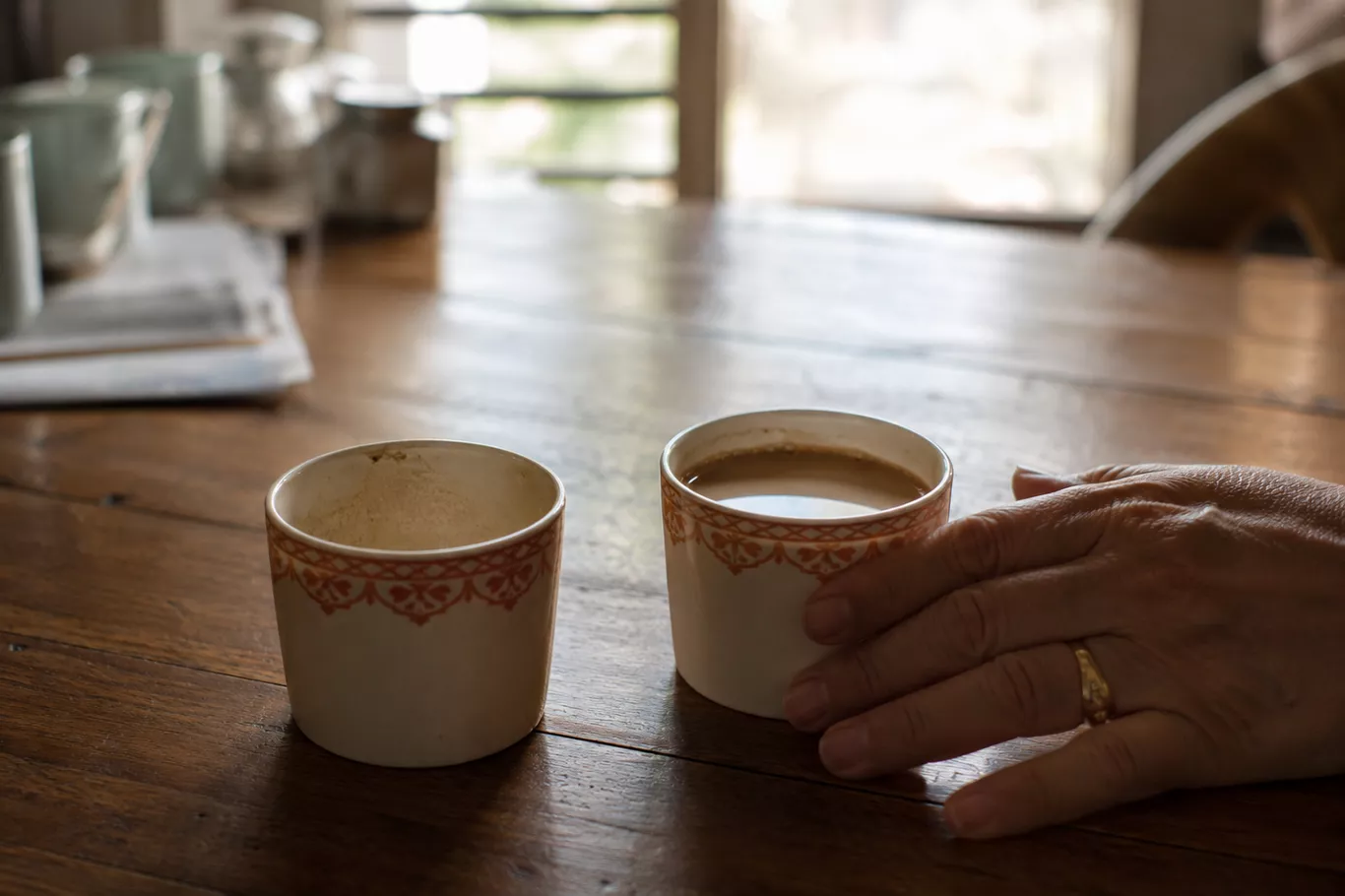
We were at the kitchen table last week, Sunfeast Marie Light between us, two cups of chai in front of us, and he let his cool for what I counted as four minutes before he touched it. Four minutes. The chai was made. It was ready. It was sitting there being chai and he was waiting for it to stop being properly chai before drinking it.
I said nothing. I drank mine. I registered his four minutes internally and added them to the file.
The Temperature File
I have a file on the chai situation. Not a physical file. A mental one.
The file contains: the specific temperature at which he considers chai ready, which I have estimated to be significantly below my preferred temperature; the number of minutes he lets it sit before drinking, which varies between three and six depending on how hot I made it; the fact that he has never once complained that the chai is too hot, which means he simply waits until it is not; and the fact that he does not understand why I find this remarkable, which means we are approaching the chai from entirely different frameworks.
My framework is: chai should be consumed at the temperature it is made. The hotness is the point. You drink it while it is right.
His framework is: chai is ready when it is ready for him. The cooling period is part of his process. He is not doing something to the chai. He is simply waiting for the chai to become what he wants it to be.
These frameworks are irreconcilable. We have been in this marriage for four years. We have each been drinking chai our own way for four years. Neither of us has updated.
My friend Priya has the inverse problem. Her husband makes chai hotter than she would like. He hands it to her at a temperature that requires her to hold the cup with care. She drinks it that way because she does not want to say anything. She said she has been quietly managing a slightly-too-hot chai for three years and has only recently told me about it.
I said why did she not just tell him to let it cool slightly. She said it seemed like a small thing to bring up. I said it had been three years. She said she was aware.
What the Temperature Represents
I have thought about the chai temperature situation more than it strictly deserves and I have arrived at something.
The way a person drinks their chai is a compressed version of how they approach most things.
My husband is patient in a way that I am not patient. He can wait for things without finding the waiting uncomfortable. He waits for the chai to cool because the waiting does not bother him. He waits for the right moment to say something difficult because rushing it bothers him more than the delay. He waits out situations that I would try to resolve faster, with less information, because I would rather do something than wait.
The tepid chai is patience. I am watching him be patient every morning with a cup of chai and I keep filing it under wrong when it is actually just different.
My friend Kabir pointed this out when I described the situation to him. He said his wife has a word for the way he rushes things. She says he is always early to the thing. He makes decisions before all the information is in. He sends messages before he has finished thinking. He drinks the chai too hot.
He said he had not made the connection before she named it. Then he made the connection and he could not unmake it.
I have made the connection now. My husband is patient. I am watching him be patient with the chai. This does not mean the chai is not too cold.
The Current Situation
We will not resolve the chai temperature disagreement.
This has become clear to me across four years of data. He is not going to start drinking hotter chai. I am not going to stop minding that he lets it cool. We have both made peace with our respective positions and the positions coexist at the kitchen table every morning without drama.
He makes the chai sometimes. I make it sometimes. He makes it slightly less hot than I make it. I make it slightly hotter than he would make it. When I make it and he lets it cool anyway, I register this. He knows I register this. He drinks his cool chai.
There are larger things to have unresolved in a marriage.
There are also very few things I observe as consistently and with as much sustained low-level feeling as the chai cooling in front of him while he reads something.
Four minutes.
Every morning.
I have counted.


