



Sign in to share
Shikha Sharma
My husband and I did long distance for fourteen months.
Delhi to London. He was there for work. I was here. We did what people in long distance do, which is call constantly and visit when possible and develop a relationship with each other's voices and a specific tolerance for time zones and the particular loneliness of waking up and the first person you want to speak to is asleep.
The distance was hard. I am not going to pretend the distance was not hard. It was.
But the year after the distance was harder. And I did not know it was going to be harder and I did not know why it was harder for a long time. I thought we were just adjusting. We were adjusting. The adjustment was its own difficulty.
Here is what I did not understand about long distance.
During long distance, the relationship exists in a very specific, concentrated form. The calls are the relationship. Every call matters. Both people show up to calls fully. You do not phone it in on a call when the call is the only place the relationship exists. You are present. You are specific. You say the things that are important because the important things are what you have time for.
You do not share a kitchen. You do not share the morning bad mood. You do not share the afternoon when both of you are tired and have nothing to say. The relationship exists in its concentrated form and it is good and it is also not the full form.
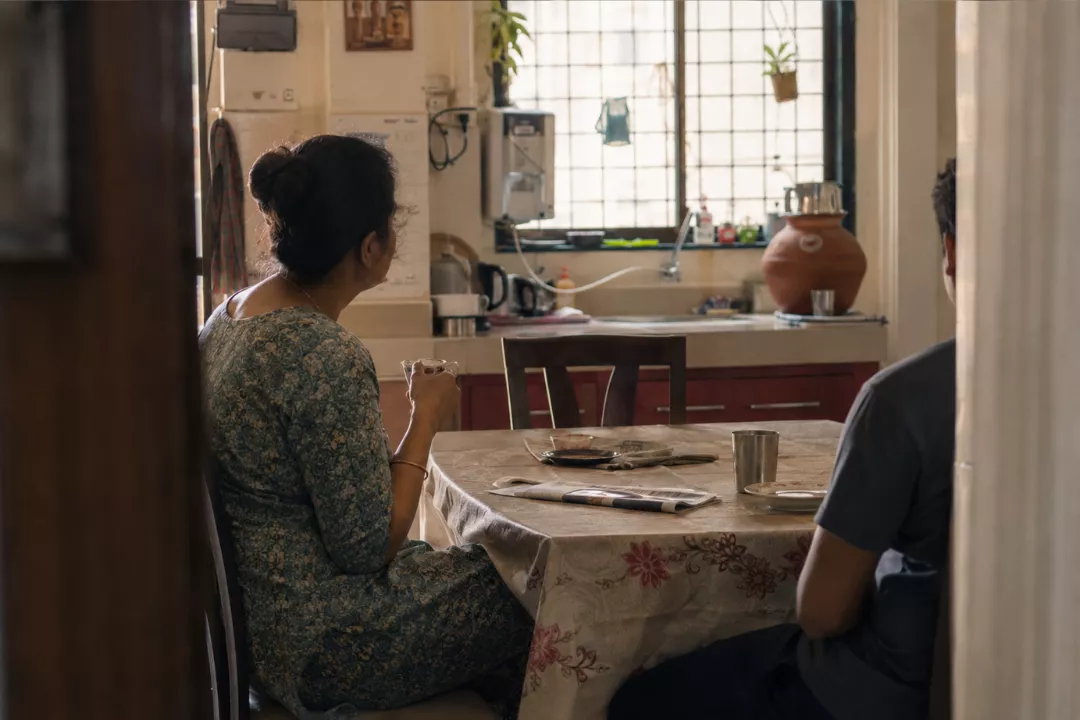
When he came back, we had chai and Sunfeast Marie Light at the kitchen table on the first morning and it was everything I had wanted. And then the second morning it was the same and by the fourth morning it was just a kitchen table and chai and we were in the full form now and the full form includes the afternoon tiredness and the morning bad mood and the weeks when nothing interesting happens and both of you are just coexisting in a flat.
The full form is the relationship. The concentrated form was a version of it.
What the Distance Protects
Long distance protects you from the ordinary.
When the relationship only exists in calls, the ordinary cannot get in. You cannot be boring on a call in the same way you can be boring in a flat. The call has a beginning and an end and in between you are present and specific. The flat has no beginning and no end. It just goes on. And in the going-on there are evenings when nothing is said because there is nothing to say and afternoons when you are both in the same room not quite connecting.
These evenings and afternoons are not bad. They are just the full form.
I had not had the full form with my husband before he left. We had been together for ten months before the distance. The ten months had been full of the early-relationship quality where both people are interesting all the time and the ordinary has not quite arrived.
He came back and the ordinary arrived and the ordinary felt, compared to the concentrated form, like a loss. It was not a loss. It was an expansion. We were more now. We had the calls and the kitchen table and the bad moods and the unremarkable Tuesdays. But it took me some time to understand that the unremarkable Tuesdays were the thing, not an absence of the thing.
My friend Priya did long distance for two years. She said the same thing in a different way. She said when her husband came back she kept waiting for the relationship to start. She was so used to the call as the relationship that the ordinary living felt like intermission. She kept waiting for the important conversation, the specific presence, the concentrated form. The concentrated form did not come back. The ordinary had replaced it. She said it took about eight months to stop waiting.
The Habits That Formed
Long distance creates habits that do not transfer.
In long distance you call when you have something to say. You think about what you want to tell the other person and you hold it until the call. You accumulate things to share. You arrive at calls with material.
When you are living together there is nothing to accumulate. The thing happens and you say it immediately because the person is there. There is no accumulation period. There is no material held in reserve.
The first few months after he came back I would occasionally start sentences with I have been meaning to tell you and then realise I did not need to have been meaning to tell him anything because he had been there. The habit of accumulation had nowhere to go.
My friend Kabir came back from long distance and noticed his wife had the same issue in reverse. She had been managing everything alone for a year. She had become completely self-sufficient in the practical sense. She did not need him for the logistics. She had her own systems. His arrival added a person to the systems without adding to the capacity, because the systems had been built for one. He had to find his place in a household that was already complete.
He said the first months felt like being a houseguest in his own life. She said she had not noticed she had done this. She had just been coping. The coping had become the system. The system had to be rebuilt to have two people in it.
The Other Side of It
The first year back is harder. I want to be clear that harder does not mean worse.
What we have now is the full form. Unremarkable Tuesdays and morning bad moods and evenings where nothing is said because there is nothing to say. Also the kitchen table and the chai and the concentrated form arriving occasionally, unscheduled, when both of us happen to be present in the same moment and the thing between us is briefly vivid again.
The concentrated form still comes. It is just not the only form anymore.
I would not go back to the distance. Not for the concentrated form. The full form is the relationship. The full form is harder and more and better.
It just took a year to understand that we had not lost anything.
We had just become the whole thing.


