



Sign in to share
Dhruv Saxena
You remember the moment, don’t you?
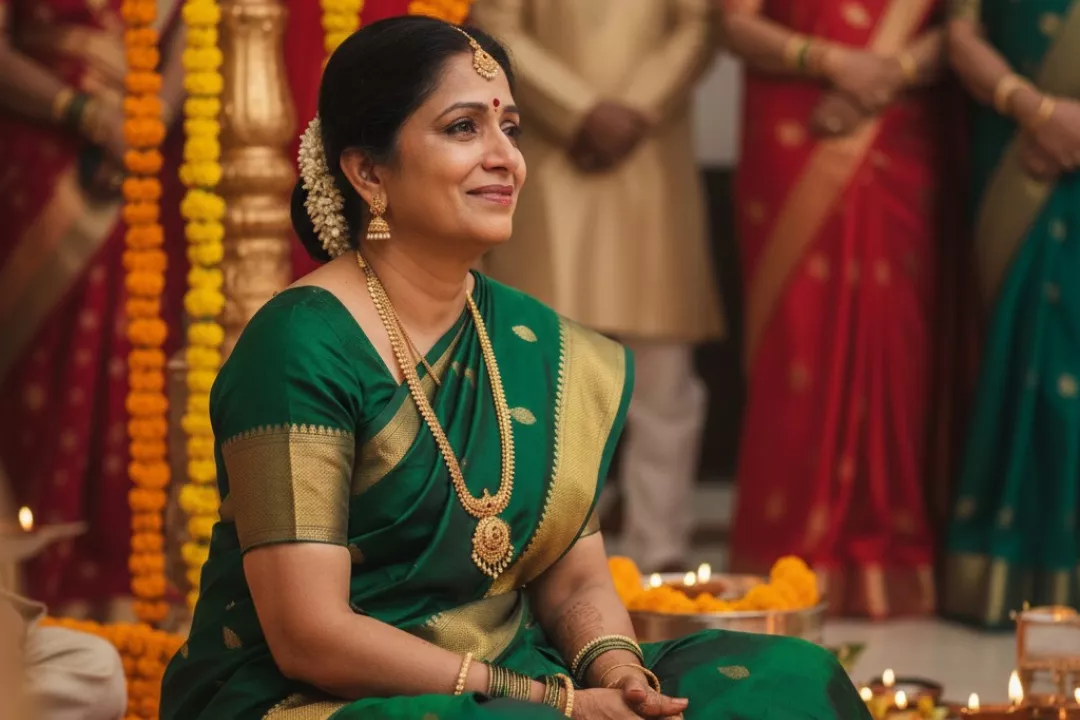
The mandap. The smoke from the havan. The pandit’s voice rising and falling in Sanskrit you only half-understood. And somewhere in that beautiful chaos, you looked over at your mother. She was crying. She surely didn’t care about the kajal she spent twenty minutes getting right that morning.
And you thought, of course. She’s happy. She’s emotional. It’s her child’s wedding.
You were right. But only partly.
What No One Tells You About Indian Wedding Tears
In our culture, a mother’s tears at a wedding get filed neatly under “khushi ke aansu.” Happy tears. Tears of completion. The inevitable overflow of a job well done. We don’t really ask what else might be in them.
But think about it. Your mother didn’t just wake up that morning and become emotional because the lehenga was beautiful or because the baraat arrived on time. Something older was happening inside her. Something she probably couldn’t name herself.
She was saying goodbye. Not to you, she’d never say that out loud. But to a version of you. The version that needed her first, always, without question.
The Job She Never Asked to Retire From
For Indian mothers, motherhood isn’t just a role. It’s an identity that gets built over decades, quietly and without fanfare.
She knew your food preferences before you could articulate them. She woke up before the alarm because her body had learned to track your schedule. She carried your worries inside her own chest without ever adding them to yours. And then one day, you found someone else to come home to.
There was no retirement ceremony. No speech. The shift just happened, gently, the way important things usually do. Your primary person became someone new. And she became, umm… what exactly? Your mother still, always. But no longer first in line.
She knows this is right. She raised you for this exact moment. But knowing something is right doesn’t stop it from aching. Does it?
The Fear She Won’t Say Out Loud
Indian mothers are exceptionally good at swallowing fear with a smile and serving it to you as a blessing.
Sitting underneath those wedding tears is a question she will never ask you directly. “Will you still need me?” Not in the way a child is dependent, she doesn’t want that back. But in the way that actually matters. Will you still call just to talk? Will you still come home not for a function, but because you missed her? When something goes wrong at 2 a.m., will she still be the person you reach for, or will that instinct now redirect somewhere else?
She doesn’t ask because she doesn’t want to burden you. That’s the quiet tragedy of Indian mothers. The bigger the love, the more carefully they hide the parts of it that might inconvenience you.
Pride and Grief Can Live in the Same Tear
We’re a culture that has never quite made room for two emotions existing at the same time. Joy is joy. Grief is grief. We keep them in separate rooms.
But a mother at her child’s wedding doesn’t have that luxury. She’s proud and she’s grieving, simultaneously. Proud that you found someone. Proud of who you’ve become. Proud that the years of dal and homework and 5 a.m. airport drops produced this. A person ready to build a life.
And also grieving the chapter that just closed. Grieving the mornings where you were still hers to worry about completely. Grieving, a little, her own youth, because your wedding marks that too, doesn’t it? The unmistakable proof that time moved.
Both of these things are true. Both of them are in those tears.
What You Can Do With This
You can’t go back and sit beside her at the mandap. But you can do something just as meaningful right now.
Call her. Not for a reason, not on the way to somewhere else. Just call. Tell her something small. A memory from your childhood that you still carry, something she cooked that you’ve been craving, something you only understood after you left home, like how much effort went into making everything look effortless.
She doesn’t need a grand gesture. She just needs to feel like she’s still part of your everyday, even if your everyday looks completely different now.
Because Indian mothers will never tell you they’re lonely. They’ll offer you chai the moment you walk through the door and pretend two hours was enough when you leave after three. They’ll eat cold rotis in the kitchen so yours are hot. They’ll be fine. They are always fine. Until one day you realise you should have asked more often whether they really were.
The Magic Is Still There
While writing this, I was wondering why a mammoth like ITC chose to name one of their biscuits Sunfeast Mom's Magic. I haven’t spoken to any of the folks there. I’m only guessing. I feel it’s only because moms are magical.
And that magic doesn’t expire when you get married. It doesn’t fade when you move cities or build your own family. It just needs to be reached for, the way you’d reach for a biscuit with your evening chai, without overthinking it, because some things simply belong together.
Your mother at your wedding was crying because she loves you in a way that has no appropriate expression. Not in any language. Not in any ritual.
The least we can do is make sure she knows we know.
Call her today. Don’t wait for the next wedding.


